
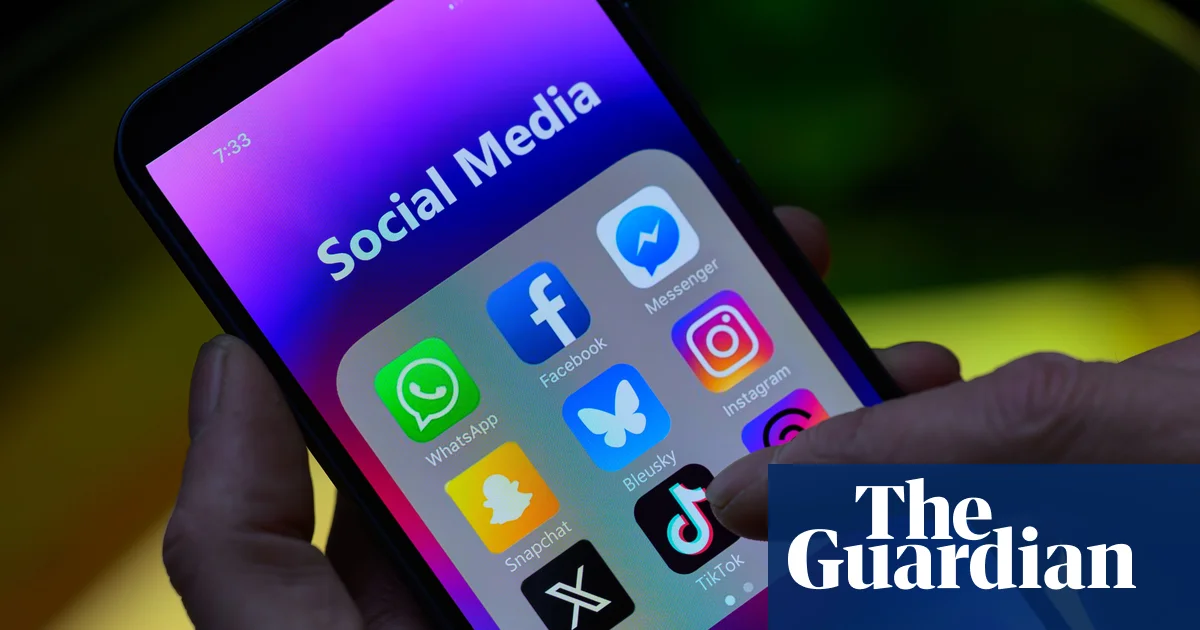
The Spanish government will ask prosecutors to investigate social media companies X, Meta and TikTok to determine whether they committed criminal offenses by allegedly allowing their AI to generate and disseminate child sexual abuse material.
Spain’s socialist Prime Minister Pedro Sanchez said his government had taken the decision to protect “the mental health, dignity and rights of our sons and daughters.” To end “impunity” Of huge social media platforms.
The government said it was taking action based on an expert report that analyzed the potential criminal liability of increasingly widespread practices in the digital environment, such as the generation and dissemination of sexual material and pedophilia through deepfakes and manipulating real images to create others with explicit sexual content, thereby undermining the dignity of victims.
The report warns of the potential involvement of social media firms in these acts as they “allow their massive dissemination with speed and obscurity that greatly hinder detection and prosecution, while also facilitating the formation of networks that produce, share and monetize this content”.
The move, agreed by the Cabinet on Tuesday, was announced as the Sanchez administration prepares a series of measures that would include a ban on social media for people under 16 and a law holding tech companies accountable for hateful and harmful content.
This comes less than a month after the European Commission launched an investigation into Elon Musk’s ex over the production of sexually explicit images and the dissemination of possible child sexual abuse material by the platform’s AI chatbot, Grok.
On Tuesday, Ireland’s Data Protection Commission (DPC) – which oversees tech companies with European headquarters in Dublin – said a “large-scale” investigation would focus on generative artificial intelligence functionality linked to the Grok large language model.
The regulator’s deputy commissioner, Graham Doyle, said he had spoken with Ax over the alleged ability of the @groc account to generate sexually explicit images of real people, including children.
“The purpose of this investigation is to determine whether
Spanish government spokesperson Alma Saez said Madrid would not allow digital sexual violence against children to be “amplified or protected” by algorithms, adding: “What is at stake here is the safety of our sons and daughters and the protection of their images, their privacy and their freedom.”
Saez said the Cabinet will formally ask the Attorney General to investigate, and if applicable, prosecute companies that break the law.
Meta said it could not comment on the proposed investigation as it had no detailed information on the matter. But it said it had an extremely strong stance on child sexual abuse and non-consensual intimate images – whether real or AI-generated – and removed all such material when found. X and TikTok have also been contacted for comment.
Sanchez’s effort to hold social media companies accountable and protect children from the “digital wild west” has drawn a furious response from the owners of some of the world’s largest tech companies.
Earlier this month, the Prime Minister said urgent action was needed as social media has become a “failed state where laws are ignored and crimes are tolerated”.
He also took Musk to task for using X to “amplify disinformation” over his administration’s decision to regularize 500,000 undocumented workers and asylum seekers, pointing out that Musk himself was an immigrant.
These comments enraged Musk, who called Sánchez “a tyrant and traitor to the people of Spain” and a “true fascist totalitarian.”
The Spanish government’s plans also angered Russian technology entrepreneur and Telegram co-founder Pavel Durov. In a wide-ranging message sent to all Telegram users in Spain, he accused the Sanchez administration of “pushing forward dangerous new rules that threaten your internet freedom”, adding that these measures could turn Spain “into a surveillance state under the guise of ‘security’.”
Spanish government sources hit back, saying that Durov’s unprecedented message to millions of users was designed to undermine trust in institutions and demonstrate the need to regulate social media and mobile messaging apps.
“Spaniards cannot live in a world where foreign tech oligarchs can preach at will on our phones because the government has announced measures to protect minors and enforce the law,” he said.
Growing concerns over the harmful effects of social media have led several governments, including Spain, Britain, Greece and France, to adopt or consider adopting more stringent laws. In December, Australia became the first country to ban children under 16 on such platforms.
