
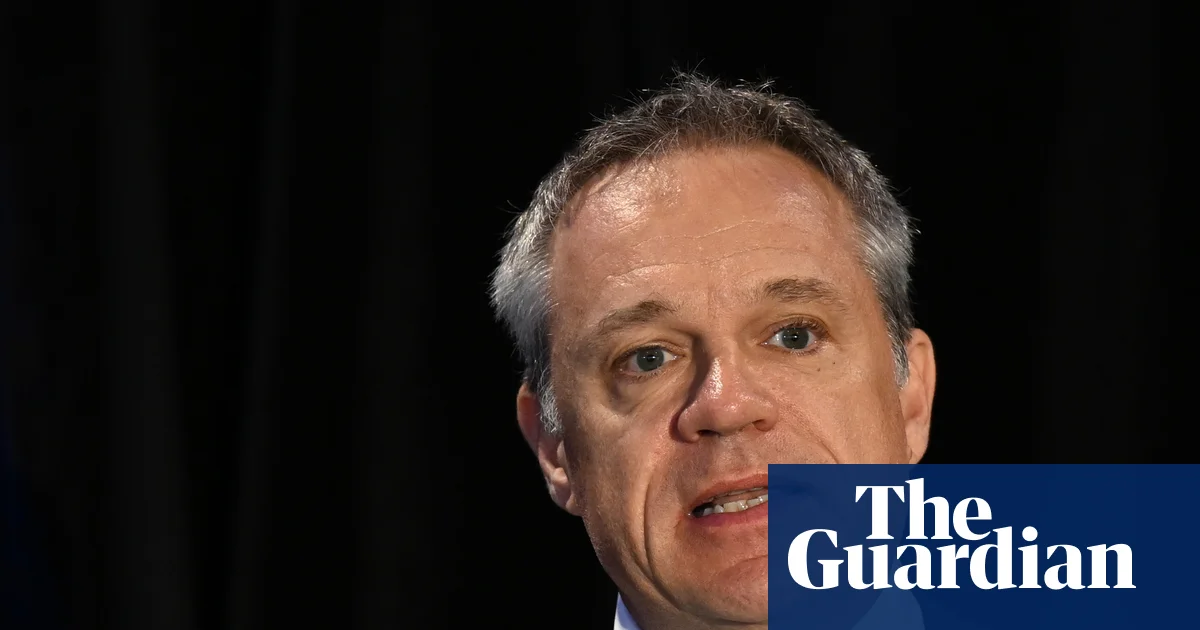
The head of Nine Entertainment has called on the Prime Minister to prioritize a policy of forcing global platforms to compensate local media as artificial intelligence-fuelled big tech disrupts the revenue models of publishers around the world.
Nine’s chief executive, Matt Stanton, said as he presented the company’s half-year financial results on Tuesday that there was a risk of further delays to the government’s long-awaited news bargaining stimulus.
Stanton said, “This policy is not only vitally important for Nine and the journalism we invest so much in, it will have long-term impacts on the health of our democratic nation, the voice of its communities and the broader economy.”
“We encourage the Prime Minister to give the News Media Bargaining Code a higher priority status on the policy agenda than it currently does to ensure implementation does not occur until late 2026.”
The policy, in addition to the basic voluntary news bargaining code, is designed to address the power imbalance between search or social media giants and media publishers when negotiating payments to display news content.
Many of the deals struck under the original policy have expired and there are concerns that the voluntary code may not properly address the power gap.
These concerns have increased in the AI era due to the rise of “zero-click search”, which occurs when users find desired information from engines and AI models without visiting the news sites that generated that information.
Stanton said the growing influence of global tech giants and the rapid development of AI are having a significant impact on the country.
“Australia faces some significant challenges from the growing influence of global tech giants and the rapid development of artificial intelligence,” he said.
The proposed legislation, which would capture Facebook owner Meta, Google and TikTok owner ByteDance, among others, has been delayed amid broader trade talks between Australia and the US, complicated by Donald Trump’s tariff regime.
The policy aims to incentivize agreements by imposing government fees on eligible tech companies, which can be offset when platforms strike deals with publishers.
AI deals
AI is proving to be a double-edged sword for media companies.
While AI-powered platforms change the way people access news, Nine said it has signed two licensing deals with “major domestic corporates” for the use of its content to train in-house large language models (LLMs), which are deep learning algorithms.
“Obviously there will be some efficiencies but there will also be some disruption,” Stanton said in response to a question.
“We have made some LLM deals that we have announced today, and there is a good pipeline of other opportunities, both locally and we will look at globally over time.”
Nine has reported a sharp fall in revenue in its six-month results as it faces a prolonged decline in advertising dollars and a struggling free-to-air television market.
The broadcaster and publisher reported a 4% decline in half-year revenue to $1.06 billion, with the sharpest decline recorded in its broadcast arm, which hit Nine television network and digital streamer 9Now.
Due to a cost-cutting program designed to reduce operating costs by approximately $160m over three years, Nine was able to increase its net earnings, which measure profitability, by 6% to $192.2m for the six-month period.
Nine has undergone significant structural changes, including selling off the real estate platform Domain as well as its radio stations.
It is changing its business model to focus more on assets it believes will yield better returns in a digital world. This includes the purchase of outdoor advertising group QMS Media.
Nine’s mastheads, The Age, Sydney Morning Herald and Australian Financial Review, were able to offset most of their print and digital advertising declines by increasing their subscription income by 12% in the half year.
The company’s growing subscription service, Stan, has profited from its deal to stream English Premier League games and remains a revenue growth engine for Nine.
Nine declared a 4.5 percent interim dividend and its shares rose more than 3% shortly after its results were announced.
