
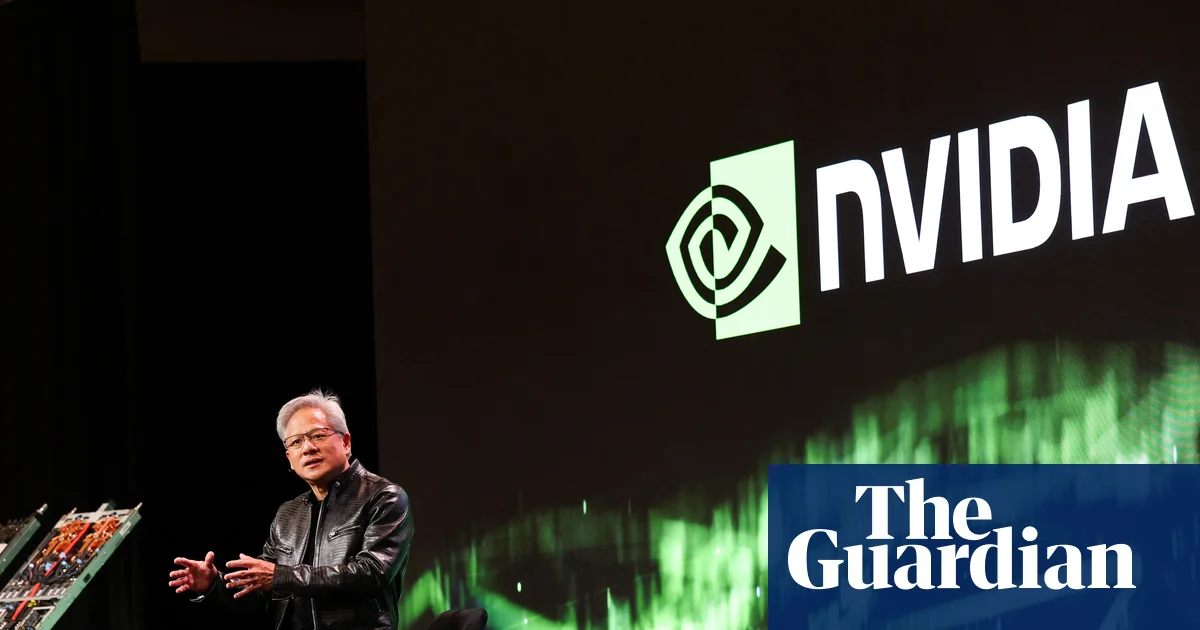
Nvidia released its quarterly earnings on Wednesday, in which the chip maker revealed better-than-expected revenue and extended its years-long streak of exceeding Wall Street’s sky-high expectations.
the company receives the bulk of its revenue From its data center business, which is fueled by the tech industry’s huge investment in AI infrastructure. On Wednesday, Nvidia reported 75% year-over-year growth in this vertical to $62.3 billion. Nvidia, the world’s most valuable publicly traded company, has dominated the chip market as its processing units become the backbone of a boom in artificial intelligence. The company also made a huge net profit for the fiscal year: $120 billion.
“Our customers are rushing to invest in AI compute – the AI industrial revolution and the factories powering their future growth,” CEO Jensen Huang said in a statement accompanying the earnings report.
Investors have become more skeptical in recent months about the heavy spending by big tech companies to advance their AI products, sending share prices of most of the so-called Magnificent Seven tech companies falling at the beginning of the year. Meanwhile, Nvidia’s growth has served as a reassurance to the market stock rally on wednesday Before the company’s earnings report. Throughout the 2024 and 2025 fiscal years, Nvidia beat Wall Street expectations every quarter.
The chip maker reported earnings of $1.62 per share, beating Wall Street analysts’ estimates of $1.53 per share. Its total revenue for the quarter was $68.13 billion, exceeding analysts’ forecast of $66.2 billion revenue.
The company’s shares rose nearly 3% in after-hours trading immediately after the earnings report, though that gain diminished to less than 1% as the day wore on.
Despite Nvidia’s huge profits, there has been increased scrutiny of the company’s various billion-dollar deals with AI firms like OpenAI. The circular nature of these deals, Where Nvidia invests in a company simply so that company can get off the ground and buy chips from Nvidia has led some analysts to worry that the AI industry is at a riskier level than its proponents would like.
One of Nvidia’s major deals, a proposed $100 billion investment in OpenAI, also fell through earlier this month. Instead, Nvidia will reportedly invest $30 billion in OpenAI as the ChatGPT maker looks to go public later this year at a valuation of about $730 billion.
“We continue to work with OpenAI toward a partnership agreement and believe we are close,” Huang said on Wednesday’s earnings call.
Huang has repeatedly downplayed concerns about how AI will disrupt or replace workers in many industries. Last month, Huang spoke against fear AI has taken over software technologies during the global race to sell software stocks. He also attended the World Economic Forum in Davos earlier this year AI designed as a job creator Which will unlock productivity gains and become a core part of international infrastructure.
“In this new world of AI, computation equals revenue,” Huang said on the call.
However, after several years of panic in the markets over advances in generic AI, some investors have become more concerned and wary of the destabilizing or potentially negative effects AI could have on the economy. This week, an excerpt from a research firm’s fictional story caused market meltdowns and panic on Wall Street as it outlined a hypothetical future where AI caused rising unemployment.
