
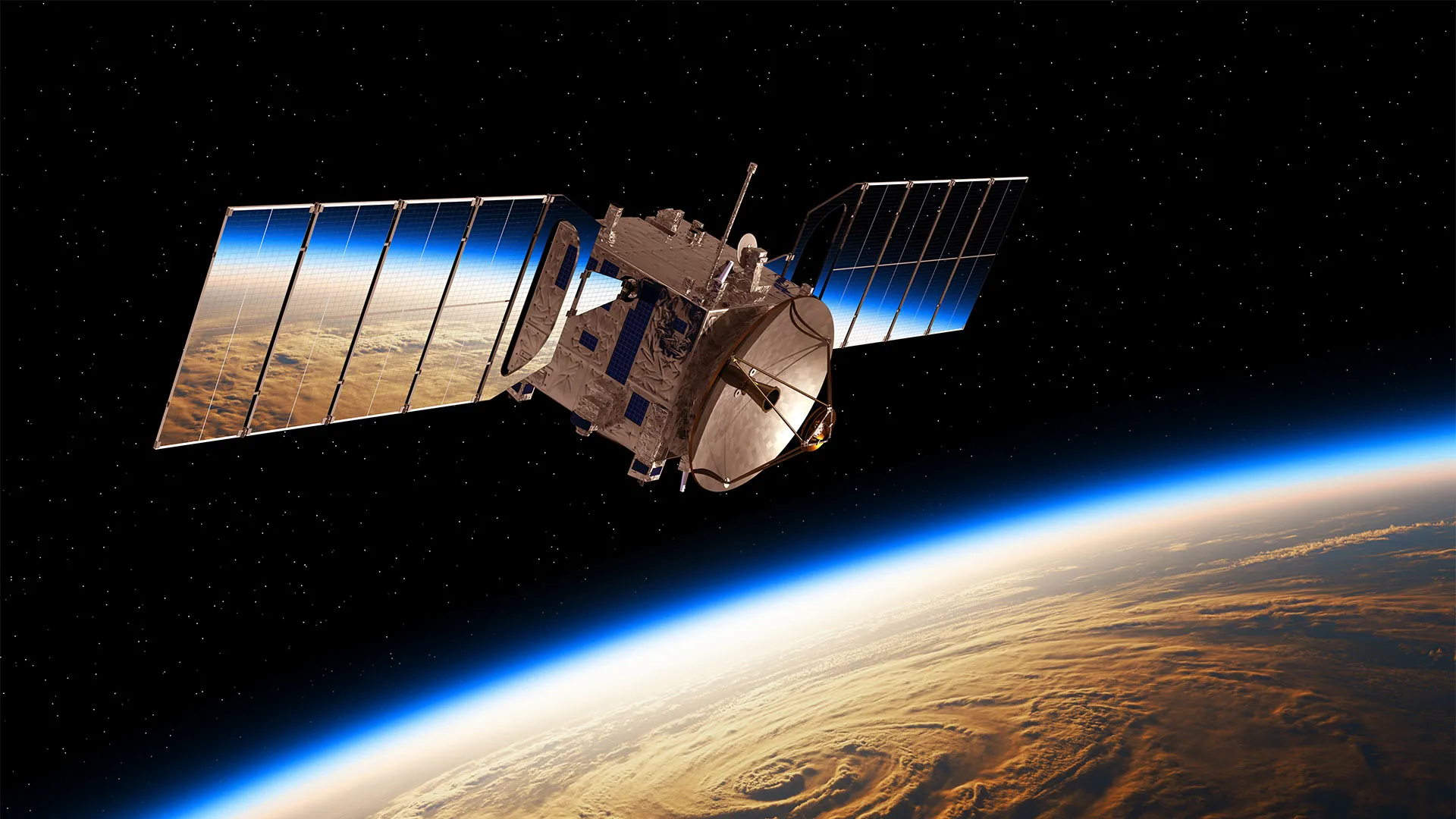
For decades, space has served as humanity’s most demanding testing laboratory, where only the most resilient technologies survive the vacuum, radiation, and temperature extremes beyond Earth’s protective embrace. Today, we stand at an inflection point where artificial intelligence is poised to fundamentally change the way we explore, understand, and operate in space. But making AI-powered space exploration a reality will depend on a cooperative ecosystem of hardware providers and space exploration agencies that will work together to develop, evaluate, and mitigate risk with space-rated solutions.
The opportunity is huge. From Earth observation satellites that must process terabytes of sensor data in real time, to Mars rovers making split-second navigation decisions millions of miles away from human observation, AI promises to unlock unprecedented autonomous capabilities in the space sector. Realizing this vision requires more than sophisticated algorithms. It requires hardware engineers to withstand the most hostile environments in the universe, where the failure of a single component can jeopardize a billion-euro mission.
Each phase of space exploration, from launch to deep space operations, presents different challenges that AI can uniquely address, including:
- Fast interpretation of image and sensor data: For planetary exploration and Earth observation – including weather and climate monitoring as well as disaster response – edge-optimized AI could enable orbiting satellites to process, analyze and interpret high-resolution images and other data locally. They can then determine which data is the highest priority for transmission back to Earth. This would reduce the need to transmit large amounts of raw data and optimize the use of limited communications bandwidth, while potentially improving response times on Earth to weather emergencies or other disasters.
- Real-time autonomy and navigation: Limited bandwidth and delay in round-trip communication over vast distances of space pose major challenges to vehicle control and guidance, especially when unexpected events occur. Real-time AI estimation could significantly improve the abilities of space vehicles to maneuver independently, allowing them to avoid collisions or conduct autonomous docking operations (a critical need as orbital space becomes more congested with vehicles and debris). On-vehicle AI inference could also give planetary rovers the ability to detect and avoid objects in their path without ground control intervention.
- Vehicle Health Monitoring: AI can also be used to monitor onboard systems and predict potential failures before they occur to the limit. This can improve the overall reliability, lifespan and performance of the vehicle.
Yet, a significant engineering challenge stands between these promising applications and their widespread deployment. The same environment that makes space the ultimate proving ground for the technology also creates formidable obstacles for AI hardware vendors and space agencies tasked with getting these systems ready for space.
Unlike terrestrial data centers where processors operate in climate-controlled environments with extreme power supplies and human oversight, space-based AI hardware must function autonomously for years or decades without maintenance or repair. Failure of a single stack of components during a mission cannot be resolved with a simple replacement. Even though spacecraft are designed for reliability – with double or even triple redundancy for critical systems – non-critical systems are not always as robust. A space science mission that relies on AI hardware could compromise billions of euros of investment and years of scientific research if it fails.
This reality forces hardware designers to rethink fundamental assumptions about processor architecture, manufacturing processes, and system design. Traditional commercial AI chips optimized for maximum performance-per-watt must be re-engineered for environments where longevity, fault tolerance, and radiation hardening are prioritized over raw computational speed. The challenges are as diverse as they are demanding:
- Calculate Throughput: While some applications can be run effectively on lower-end hardware, demanding AI applications – such as real-time image processing – require higher performance and compute throughput. AI chips will need to be more than just small and energy-efficient; They will require sufficient processing power to run multi-model models effectively. Furthermore, applications that rely on large models (such as Earth observations), even with quantization to reduce their size, may require a large number of parallel operations. More compute throughput means the hardware can handle more data or run inferences faster, but engineers also have to take into account memory bandwidth, latency, and power efficiency, all of which impact performance.
- Strength and size constraints: Power efficiency is a key requirement for onboard systems. AI accelerators for space missions must therefore combine high performance with low power consumption. They may also employ additional power-efficiency methods, including duty cycling (turning off or deactivating the entire chip when not in use) and power gating (cutting off power to parts of the chip that are not being used). Interestingly, these strategies may also reduce the likelihood of radiation-induced errors.
- Environmental Conditions: The space environment can be both extremely cold and extremely hot. It also involves exposure to high levels of cosmic radiation, which can potentially induce errors in semiconductors, such as single-event upsets (memory bit flips) or, worse, single-event latchups (which are catastrophic). Furthermore, the failure modes of these advanced AI chips are significantly more complex than those of classic processors. Because they rely on massively parallel architectures, radiation-induced error cannot cause a simple system crash; Instead, it may result in silent data corruption, poor inference, or subtle but significant misclassification. Understanding and mitigating these complex failure mechanisms requires more thorough investigation and specialized testing protocols than standard validation. AI tools must deploy mitigation techniques to reduce the risk of service outages, especially when targeting safety-critical applications such as autonomous landing or docking.
- Supply Flexibility and Long Term Availability: For space missions, the reliability of the hardware supply chain is as important as the performance of the technology. Components must remain available and supported over extended lifecycles, often far beyond normal business timelines. Importantly, this required longevity extends beyond just the physical hardware; This mandates ongoing software support. The complex software stacks, drivers, and development tools required to run AI models on specialized silicon must be maintained and updated over missions lasting years or even decades. AI hardware selected for space applications should therefore come from suppliers with clear product roadmaps, strong sourcing strategies, and measures to minimize obsolescence. Ensuring flexibility and continuity in the supply chain reduces mission risk and guarantees that advanced computing solutions can be maintained and scaled throughout the life of space programs.
None of these challenges are insurmountable. But to truly unlock the transformative potential of AI in space, we need to move beyond innovation in isolation. The time has come for AI hardware developers and space agencies to form deeper partnerships – co-designing, testing, validating, and derisking silicon solutions that can thrive in the harshest environments known to science.
The rapid pace of AI innovation is largely being driven by companies, often startups, that are developing solutions for commercial applications not optimized for deployment in space environments. However, agencies such as the European Space Agency have extensive experience in radiation characterization and mitigation techniques that can be profitably made available to support these startups.
AI is increasingly seen as a strategic asset for nations, with investment in European domestic AI technologies for space applications offering a strong medium to long-term return on investment. Public-private partnerships are key to fueling the development of future AI-powered missions.
Laurent Hill is a microelectronics and data handling engineer at the European Space Agency.
Gianluca Furano is a data systems engineer at the European Space Agency.
Livia Manovi is a Research Fellow at the European Space Agency.
Jean Weville is Director of Channel and OEM Sales in EMEA for Accelera AI.
SpaceNews is committed to publishing the diverse perspectives of our community. Whether you are an academic, executive, engineer or even a concerned citizen of the universe, send your arguments and viewpoints to spacenews.com to be considered for publication online or in our next magazine. If you have something to submit, read some of our recent opinion articles and our submission guidelines to understand what we’re looking for. The viewpoints shared in these opinion articles are solely those of the authors and do not necessarily represent their employers or professional affiliations.
