
Introduction
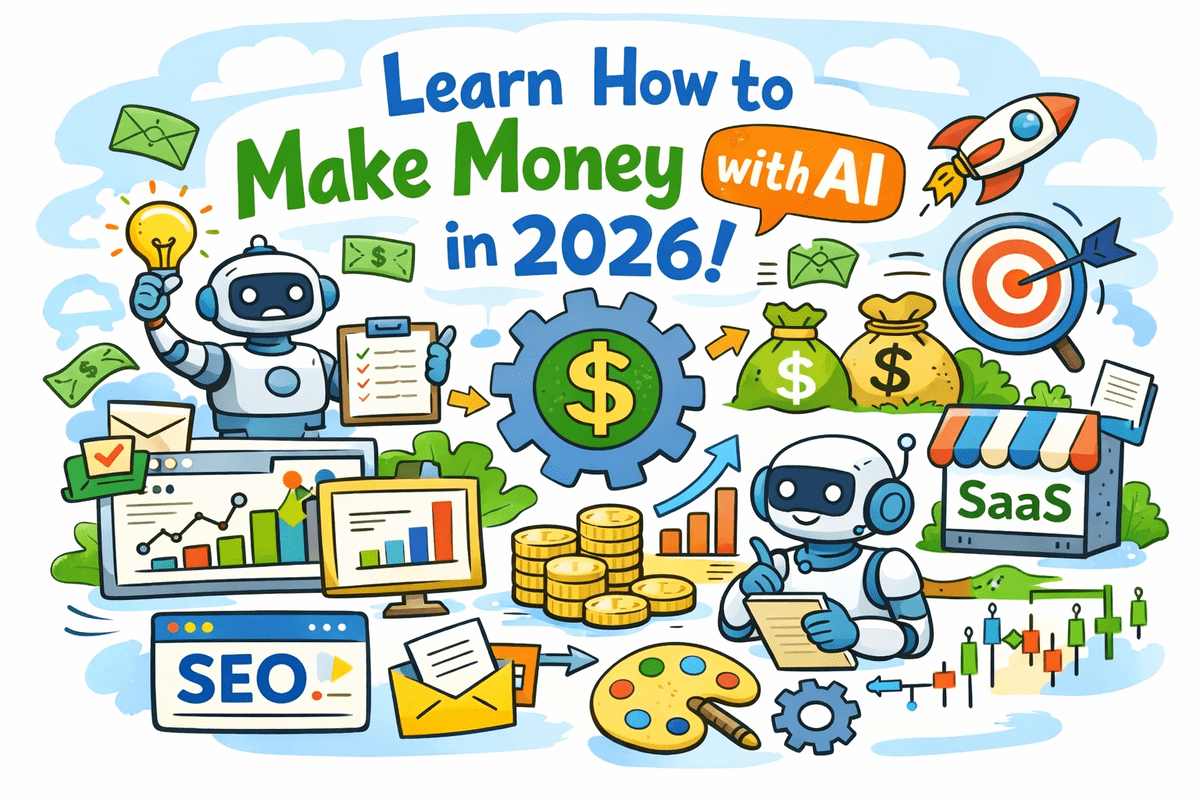
Across LinkedIn, X, and Reddit, a growing number of people are using AI to make money in 2026, not just to automate parts of their work but to build genuine income streams around agentic tools. The shift is notable: AI has moved beyond a chatbot that answers questions toward agentic systems, automation platforms, and coding copilots that let individuals build small systems to handle research, outreach, content, and product development without a large team or outside funding.
On communities such as r/LocalLLaMA and r/Entrepreneur, practitioners regularly describe launching small services and tools built on these capabilities. The seven approaches below summarize the most commonly reported ways people are turning AI skills into revenue. They are descriptive, not a promise of earnings, and outcomes vary widely with skill, niche, and effort.
1. Workflow automation services (n8n and similar tools)
One common path is building automation pipelines with tools like n8n, Make, or Zapier to handle web scraping, analytics, notifications, lead routing, reporting, and internal workflows. Many businesses prefer to pay someone who already knows how to connect these systems rather than learn the tools themselves. Providers often structure this as a setup fee for building the workflow plus a recurring monthly fee for monitoring, updates, and fixes when an API changes. Because even simple automation can save meaningful time, this is frequently cited as one of the more accessible ways to start earning with AI tools.
2. Vibe coding micro-tools and small SaaS products
AI coding assistants have lowered the barrier to shipping small software products that solve a narrow, specific problem. The typical model combines a low-cost subscription, a paid tier with more features, and upsells such as API access or team plans. The common advice is to build small, ship quickly, find a niche, and scale only once there is demand.
3. AI-assisted copywriting (sold as results, not words)
Rather than generating random content, many writers use AI to improve work they have already drafted: checking facts, improving flow, tightening SEO structure, and producing clean summaries. The same approach extends to grammar, outreach emails, newsletters, video scripts, and website copy. Production speeds up, but the thinking and positioning still come from the person. Income typically comes from project-based deliverables such as a blog, landing page, email sequence, or script, and from ongoing retainers.
4. Digital production (design assets, content packs, creative services)
Another approach packages AI-generated visuals and content into sellable assets. Creators use tools like Midjourney or Adobe Firefly for imagery, then assemble and polish everything in Canva or Figma. Revenue comes from digital downloads and licensing, where the same pack sells repeatedly, and from recurring client work delivering a set number of assets per month, such as thumbnails, ad creatives, or a weekly content kit.
5. AI agents for marketing (research, content support, campaign operations)
Marketing teams increasingly use AI agents as a support layer for time-consuming tasks like research, content planning, repurposing, and campaign operations. The framing is augmentation rather than replacement: an always-on assistant that captures insights, drafts first versions, formats assets, and keeps campaigns moving. This is usually sold as a managed service.
6. AI-powered trading tools (focus on the system, not promises)
Some builders package automation around trading workflows, such as alert bots, signal scanners, or lightweight monitoring agents, into products. Reported revenue models include tool subscriptions, paid setup and customization for an individual trader or small fund, and consulting on data pipelines, integration, and monitoring. The emphasis among credible builders is on systems that improve discipline and visibility rather than promises of returns. This area carries real financial risk, and any tool that guarantees profits should be treated with skepticism; nothing here is investment advice.
7. Consult-first: present the outcome, then build it
One of the more reliable approaches in 2026 is selling the result before building the tool. Instead of creating a product and then searching for customers, providers present a concrete business outcome, such as reducing support workload, improving lead qualification, speeding up reporting, or building a dependable content pipeline, and then design an AI workflow to deliver it. A common objection is that a client could already do the task with ChatGPT; the difference is time and consistency. Doing work one prompt at a time is slow, so clients pay for a proper custom framework and structured workflow. This model often runs in three stages: a paid diagnostic that maps the current manual process and identifies automation points, an implementation phase that builds and tests the workflows, and an ongoing retainer for monitoring and iteration. It works because businesses are not buying AI itself; they are buying clarity, speed, and results.
Summary
The table below summarizes the main AI revenue models covered above and how each one generates income.
| Method | what do you really do | how money is made | why it works |
|---|---|---|---|
| Workflow Automation Services | Create n8n or similar workflows for scraping, reporting, lead routing, analytics, and internal automation | Setup fee + monthly retainer for monitoring and updates | Businesses want results, not tools. Automation saves time and reduces manual work |
| Vibe Coding Micro-SaaS | Quickly create small niche tools that solve a clear problem | Monthly Subscriptions, Lifetime Deals, Feature Upsells | Small focused devices can work on a large scale once traction is built |
| AI-assisted copywriting | Use AI to improve SEO, flow, structure, emails, blogs, scripts, and content systems | Project Fee, Monthly Retainer, Performance-Based Contract | Companies pay not just for words, but for traffic, conversions and authority |
| digital production | Create template packs, brand kits, thumbnails, content systems using ChatGPIT, MidJourney, Firefly, Canva, Figma | Digital Downloads + Recurring Asset Delivery | Production speed increases while products remain reusable |
| AI agents for marketing | Run research, content operations, reporting, and campaign support using AI agents | monthly marketing retainer | Businesses require consistent output and fast execution |
| AI-Powered Trading Tools | Create dashboards, alerts, journaling, tagging, backtesting systems | Subscription, Paid Setup, Consulting | Traders want better system and discipline, not publicity |
| consultation-first model | Sell business results first, then build custom AI workflows | Paid Search + Implementation + Ongoing Retainer | Companies buy clarity and results, not AI words |
Limitations and what to watch
These models reflect patterns shared in public communities and individual reports rather than verified earnings data. Income depends heavily on existing skills, chosen niche, marketing, and market demand, and many people who try these approaches earn little or nothing. The trading-tools category in particular involves financial risk and should not be read as financial advice. Anyone pursuing these paths should validate demand early, be wary of tools promising guaranteed results, and treat the figures circulating online as anecdotes rather than benchmarks.
