
On June 30, 2026, an AI lab crossed a line no frontier model company had crossed before: Anthropic announced it would hunt for its own drug candidates. Alongside that pledge, the company launched Claude Science, a research workbench that packages its Claude models with more than 60 curated tools for working scientists. Together, the two announcements say a great deal about where AI is heading — and not just for pharmaceutical giants.
What Claude Science actually is
Rather than a new model, Claude Science is a domain workbench built on the existing Claude family. It ships with over 60 skills and connectors spanning genomics, proteomics, structural biology and cheminformatics, and it renders scientific artifacts — 3D protein structures, genome browser tracks, chemical structures — natively in the workspace.
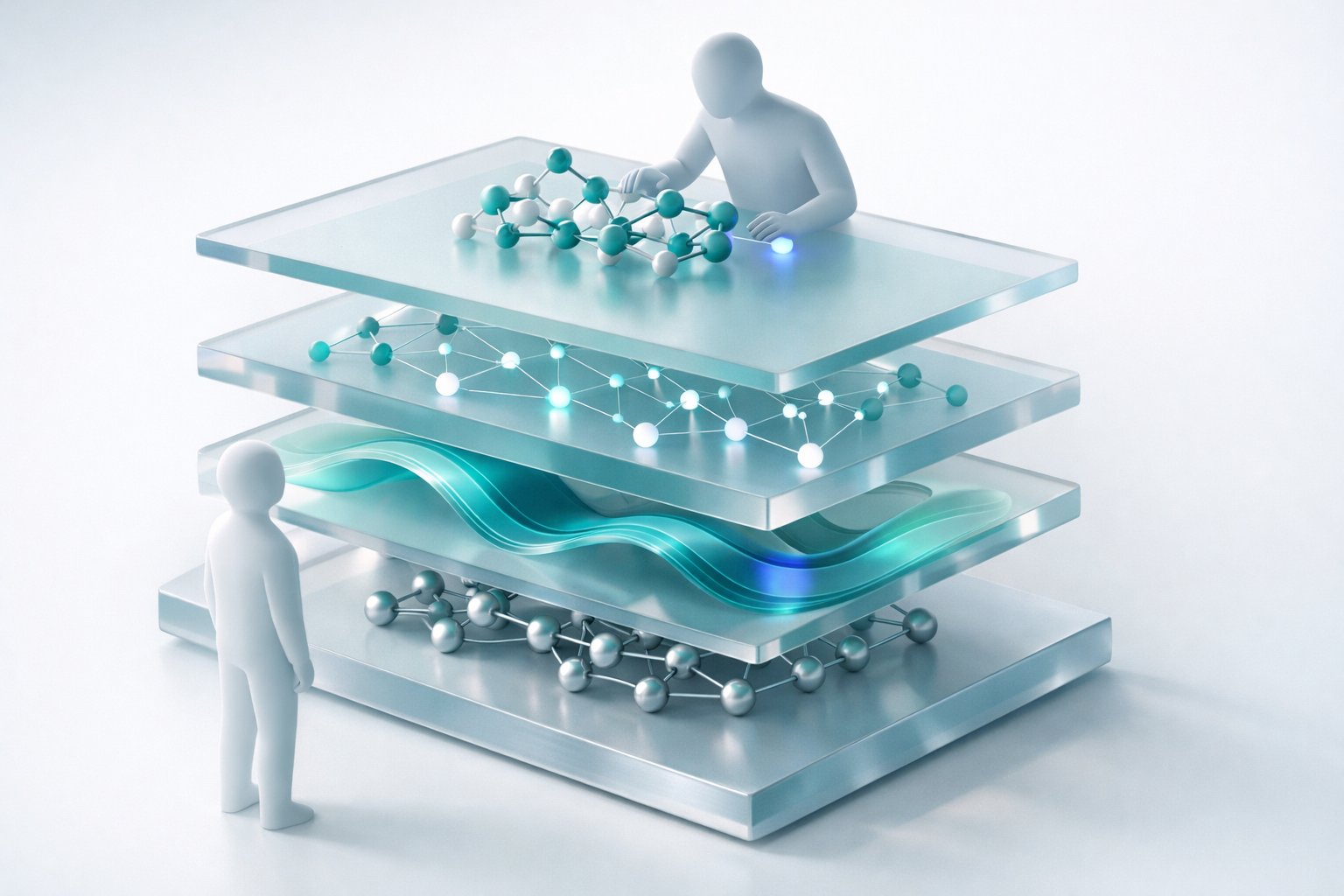
Three design choices distinguish it from a general-purpose chatbot. Reviewer agents inspect outputs as a pipeline runs, flagging incorrect citations, untraceable numbers and figures that do not match their underlying code. A central assistant can spawn specialised sub-agents for specific tasks. And every analysis keeps an auditable history of code and methodology, with “session forking” letting a scientist compare two analytical approaches without destroying the original workflow.
The product entered beta on June 30 as a macOS and Linux app for Pro, Max, Team and Enterprise subscribers. Novo Nordisk and the Allen Institute were named as early adopters — an Allen Institute neuroscientist built a roughly 20-skill pipeline that reads thousands of papers and drafts long-form scientific reviews section by section. Anthropic is also funding up to 50 external research projects with up to $30,000 in usage credits each, with applications open through July 15, 2026.
The drug discovery bet
The more surprising half of the announcement is Anthropic’s internal drug discovery program, focused on neglected diseases — conditions whose biology is often well understood but whose economics rarely attract commercial R&D budgets. According to CNBC’s reporting, the programs will concentrate on early, preclinical-stage research, and Anthropic’s structure as a public benefit corporation gives it latitude to pursue work without clear commercial returns.
It is the first time a leading foundation-model lab has moved from selling AI tools to biopharma into pursuing its own candidates. That dual role — toolmaker and user — mirrors a broader industry pattern of AI companies proving their products on their own hardest problems, a theme that also ran through the AI for Good Global Commission’s first meeting: the frontier labs increasingly want to demonstrate public-interest results, not just benchmarks.
Why Claude Science matters beyond the lab
For a consultancy or a ten-person firm, drug discovery is not the point. The shape of Claude Science is, because vertical workbenches rarely stay in one vertical. Three lessons stand out.
First, curated tools beat raw chat: the value comes from dozens of pre-wired connectors, not from a smarter text box. Second, verification is built in: reviewer agents check the work before a human relies on it — the discipline that separates successful automation from the failures described in this site’s analysis of why most AI agent projects stall. Third, everything is auditable and reproducible, which is what turns an impressive demo into a process a regulated business can adopt.
The same pattern — curated tools, reviewer agents, audit trails — is likely to reach accounting, law, logistics and marketing workbenches over the coming year, at price points small firms can afford. The underlying models are already cheap enough, as Claude Sonnet 5’s pricing shift showed; what has been missing is the packaging.
Limitations and what to watch
Claude Science is a beta product, currently limited to macOS and Linux and to paid Claude plans, and early coverage notes that its reviewer agents reduce rather than eliminate the need for expert human checking. The drug discovery programs are at the preclinical stage, meaning any actual therapy would still face years of trials and regulatory review — Anthropic has announced intent and infrastructure, not results. Worth watching over the next year: whether the funded external projects produce peer-reviewed work, whether competing labs answer with their own science workbenches, and how quickly the workbench pattern spreads to non-scientific professions.
The takeaway
Claude Science is a signal as much as a product: the AI industry is moving from general-purpose assistants to verified, domain-specific workbenches — and betting its own money on the results. For business owners, the practical move is to watch which everyday tools gain these verified-workbench features first, and to hold any adopted AI to the same standard: wired into real data, checked before it is trusted, and auditable after the fact.
