
Traditional data warehouses are often slow, expensive, and locked into proprietary systems — demanding constant tuning and creating friction for finance, operations, and product teams that need fast answers. Databricks SQL (DBSQL) is Databricks’ answer to that problem: a serverless warehouse built on open standards that the company says is used by more than 60 per cent of the Fortune 500 for analytics and BI on its Data Intelligence Platform. This roundup reviews the DBSQL updates from 2025 that mattered most for data teams, across performance, AI, cost management, and open SQL.
Performance that improves automatically
Since 2022, DBSQL Serverless has delivered what Databricks reports as a roughly 5x average performance improvement — dashboards that once took 10 seconds now loading in about 2 — without index management or manual tuning, and 2025 brought further gains. Notably, these platform optimizations are available to every customer by default rather than gated behind premium tiers.
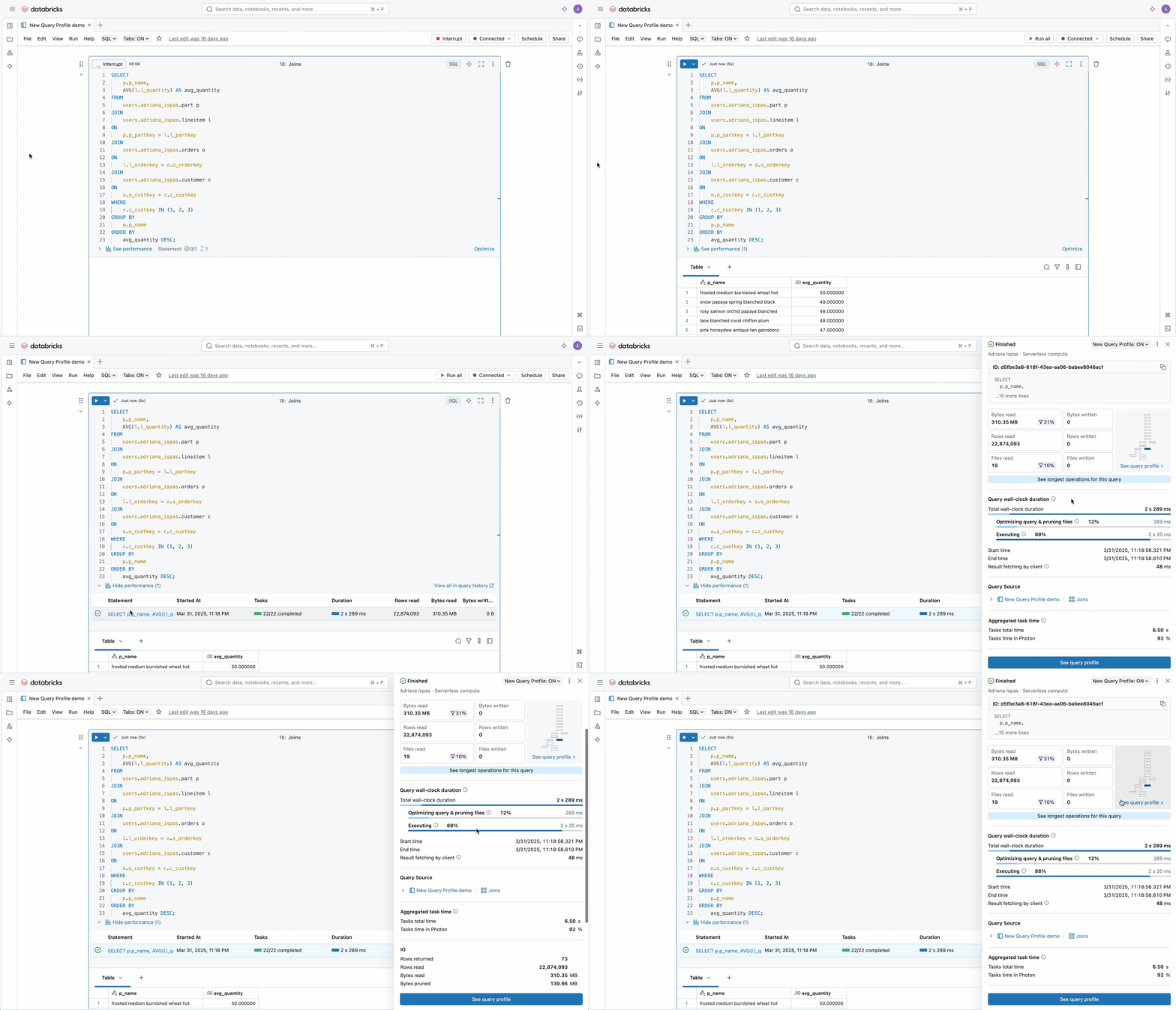
Visibility improved too. The updated query profile view now includes a visual summary of read and write metrics, a “Top Operators” panel that identifies the most expensive parts of a query, clearer navigation through performance graphs, and metric filters — helping teams diagnose slow dashboards and complex models without guesswork.
AI built directly into SQL workflows
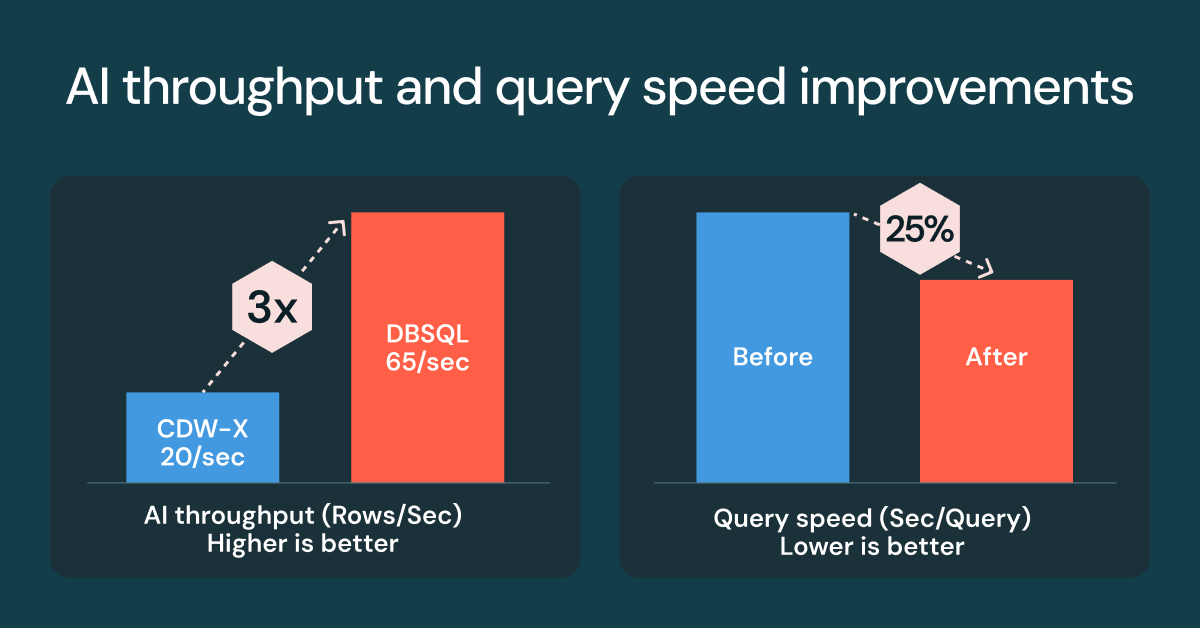
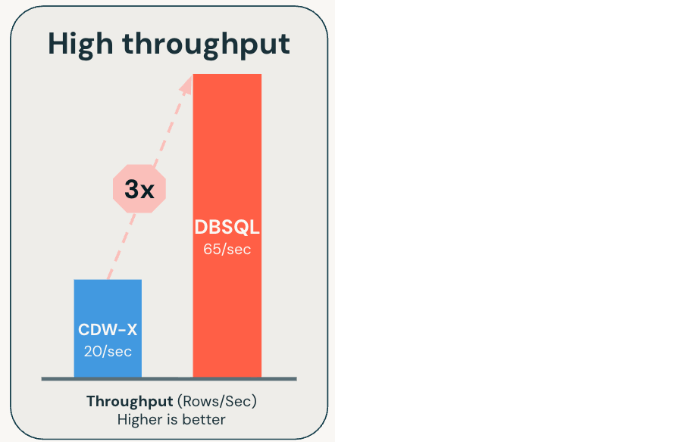
In 2025, DBSQL introduced native AI functions that give analysts access to large language models directly from SQL — ai_query for summarization, classification, extraction, and sentiment analysis, plus document-parsing capabilities that convert PDFs and other unstructured documents into tables. The functions run on Databricks-hosted models such as Meta Llama and open-weight GPT variants, or on custom models, and Databricks reports they are optimized for scale — up to 3x faster than alternative approaches. Practically, that means summarizing support tickets, extracting fields from contracts, or analyzing customer feedback inside reporting queries, with no tool-switching or Python required.
Predictive optimization goes GA
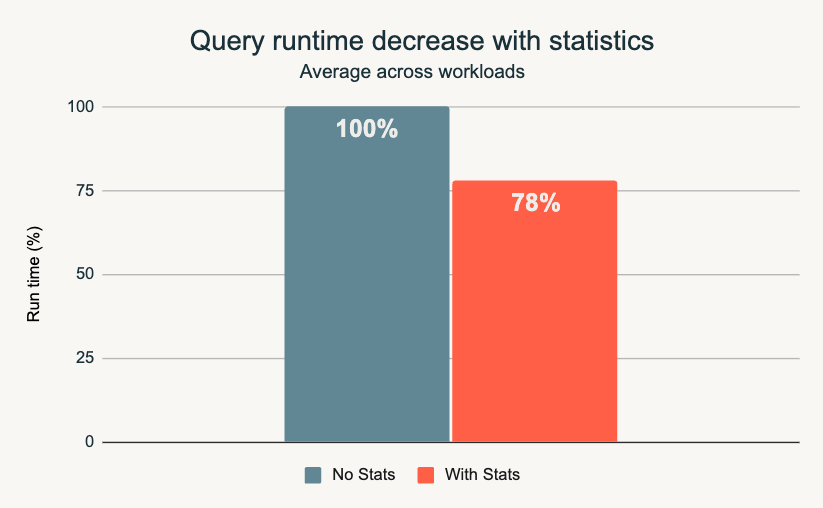
As data grows and workloads shift, warehouse performance tends to degrade. Predictive optimization addresses this drift, and in 2025 automated statistics management became generally available — removing the need to run ANALYZE or manage optimization tasks manually. The system now automatically collects statistics after data loads, selects data-skipping indexes, and continuously improves execution plans.
Open SQL features that simplify migration
For many organizations, stored procedures, transactions, and proprietary SQL constructs are the hardest part of leaving legacy warehouses such as Oracle, Teradata, and SQL Server. DBSQL’s 2025 additions target exactly that: stored procedures with Unity Catalog governance (public preview), SQL scripting with loops and conditionals (GA), recursive common table expressions for hierarchical queries (GA), collation support for language-aware sorting and comparison (public preview), and temporary tables that remove the burden of managing intermediate data (public preview). These follow open SQL standards and are available in Apache Spark, reducing dependence on proprietary constructs. DBSQL also added Spatial SQL, with native geometry and geography types and more than 80 functions such as ST_Distance and ST_Contains for large-scale geospatial analysis.
Cost management at scale
As SQL adoption grows, so does the difficulty of explaining warehouse spend. New tooling includes dashboards for identifying rising costs, tags and budgets for tracking expenses by team, system tables for query-level analysis, and granular cost-monitoring with alerting (in preview). Together they make it easier to see which queries, dashboards, or tools drive consumption.
Warehouse monitoring and access control
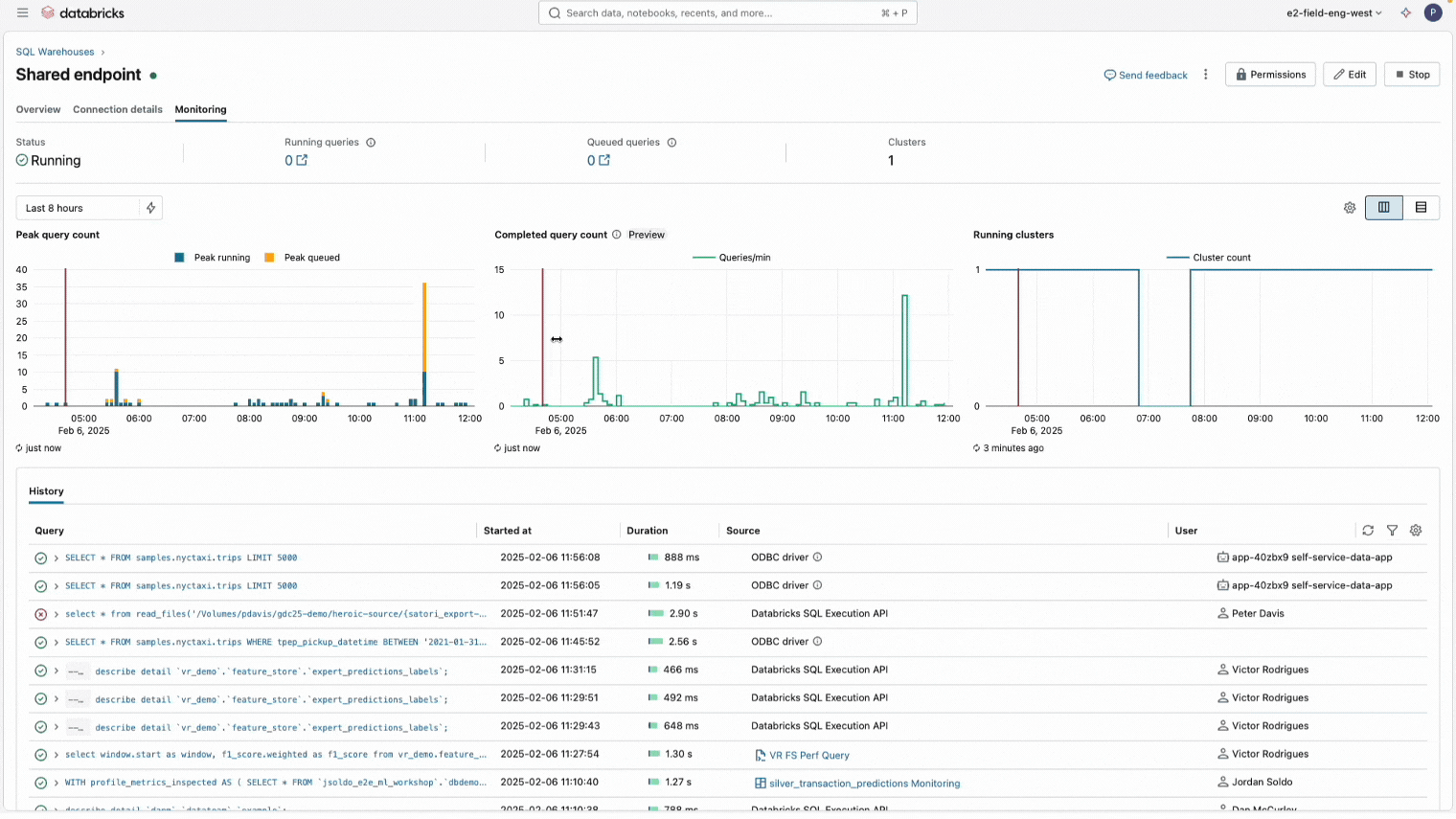
Administrators gained better ways to monitor concurrency and warehouse health without over-granting privileges: completed-query counts over time windows (GA) to reveal concurrency patterns, and monitoring-only permission levels so read-only observability can be granted without execution rights.
The bottom line, limitations, and what to watch
DBSQL’s 2025 arc is consistent: faster serverless performance, AI embedded in SQL, open standards easing migration, and clearer visibility into cost. Because it runs on the lakehouse architecture, analytics, data engineering, and AI share one governed foundation.
Readers should note that the headline claims — the 5x average speedup, 3x faster AI functions, and Fortune 500 adoption — are vendor-reported figures from Databricks’ own review, and real-world results vary by workload; independent benchmarks such as the Apache Sedona project’s benchmarking commentary are useful counterweights. Several features mentioned remain in preview and may change before general availability. Related reading on this site: Databricks spatial join performance and Databricks Clean Rooms explained.
