
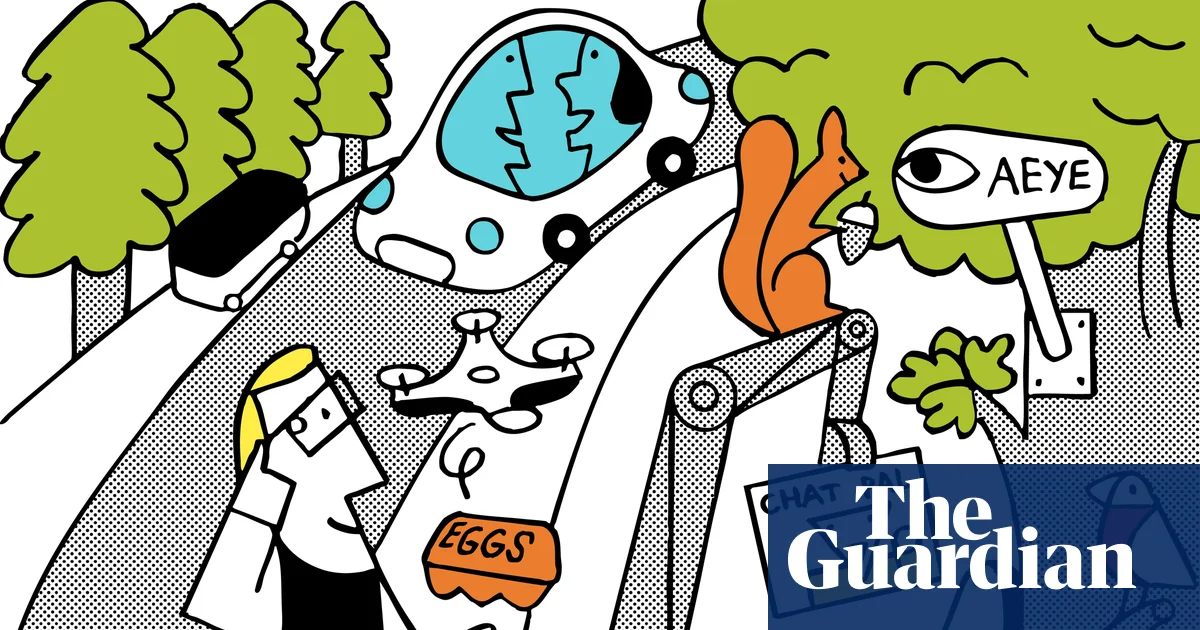
What might daily life look like in 2035 if artificial intelligence continues on its current trajectory? The scenario below — part informed speculation, part thought experiment — walks through a day in that world: medicine, law, the morning routine, farming, and work. None of it is prediction in the strict sense; it is an exploration of where current trends could plausibly lead, and where the friction points would be.
The AI doctor will see you now
“Does it hurt when I do this?”
“Looks like a concussion…” — “Nope! Strained brachial plexus from lifting a 10kg carton on Wednesday at 2:58pm.”
In this 2035 scenario, AI is more than a co-pilot in medicine — it has become the front line of primary care. The early-morning scramble to reach a GP receptionist is gone. Patients contact their doctor’s AI, which reviews symptoms against their full medical history and produces a pre-diagnosis, leaving the human GP to decide what happens next. In face-to-face consultations, an AI listens in the background, weighing the case against thousands of medical studies and proposing treatment options drawn from research no human doctor could fully digest — a second opinion the physician can assess before acting.
The public may be less resistant than expected. Polling by Ipsos in October 2025 found 38 per cent of people in favour of using AI to speed up triage in the NHS, although 52 per cent preferred humans, citing trust and the desire for personal interaction.
Screening in this world is sophisticated and, arguably, invasive: wearables stream diet and vital signs to the surgery, smart toilets analyse waste, and medication is tailored precisely to an individual body. If it works, disease is caught earlier and prescriptions are more accurate. But combining AI and human medicine creates a new tension — the best doctors become those most adept at interpreting AI output, medical schools reorient their teaching toward managing AI medics, and politicians struggle to keep regulation and ethics up to date.
future of ai
Rivals are racing to create super-intelligence. It was put together in collaboration with the editorial design team. Read more from the series.
Design and Development
Harry Fisher and Pip Lew
AI versus AI: could lawyers become a thing of the past?
Justice, in this scenario, is increasingly AI-enabled. Solicitors preparing for trial delegate case-law research and argument planning to AI systems that propose how a barrister should approach the court. Today’s embarrassments — AI tools inventing case law, with trackers documenting dozens of such instances in court filings over a matter of months — have been engineered away. More robust artificial general intelligence (AGI) systems compress working days into hours, leaving human lawyers to scrutinise the AI’s briefs.
Then, amid court backlogs, pressure grows to go further: an experiment allows adversarial AIs to argue cases before a human judge and jury. The results are compelling — cases resolved faster and at a fraction of the cost to taxpayers. But miscarriages of justice begin to surface, and campaigners for the wrongfully imprisoned demand transparency about the inner workings and biases of AI advocates. Once AGI-level systems are deployed, governments and companies must constantly supervise them: humans stationed at the side of the screen, empowered to shut down dangerous behaviour, and “good” AI dispatched to detect bad AI.
The morning routine
“Wake me at 7am.” — “Wait… were there eggs in the fridge?!”
“He’s sleeping right now, I can’t ask him.”
“When he skipped eggs at breakfast, he got clumsy.”
Wearable AI devices — glasses, watches, rings — are ubiquitous in this future, acting as extra senses: noticing the empty egg shelf, recording conversations to surface forgotten details later. David Shrier, professor of practice in AI and innovation at Imperial College Business School, describes the underlying architecture as a set of personal AI agents, each with a different area of expertise, customised to an individual’s needs — agents that learn what their user wants and go and do it. One might read out a personalised summary and interpretation of the news during the morning toothbrush; another notices, through augmented-reality glasses, that the eggs are gone, and by 7am a delivery drone has replaced them. All of this, Shrier stresses, depends on consent: knowing what the AI is allowed to learn, and being able to opt out of data sharing easily.
AI on the farm
Old MacDonald…
…had a farm…
…AI-AI-O.
For farmers, the dawn-to-dusk rounds checking livestock, crops, feed, and machinery become far less arduous. Cameras and sensors on trees, barns, and fence posts monitor the holding continuously, while AGI systems advise not just on what to plant and when, but on building stronger ecosystems and improving soil health. Weeding robots reduce the need for herbicides.
Less work, more play
…and it was called “the office”…
Filled with people, chairs, phones, desks, carpet, water coolers and papers.
As AGI transforms work, sports clubs, live venues, and travel agents flourish — millions of white-collar workers find their tasks automated, freeing time for leisure. At least, that is the theory. In the early years, few people are made fully redundant; most keep working, and for a while the 40-hour week simply becomes more productive. In meetings, AI acts as a coach — advising a gentler tone with colleagues, then generating the action list and folding it into the project plan before anyone reaches their desk.
AI-enhanced economies could grow faster, and eventually people realise they can work less. The 15-hour week that economist John Maynard Keynes predicted in 1930 would arrive within a century finally materialises. Academics suggest leisure shifts away from passive relaxation toward creative pursuits, socialising, and caring for children and elderly relatives. Entertainment executive Ari Emanuel has argued that humans, as social creatures, will fill their free time with music, sport, and live events — a thesis he has backed with investments in live entertainment.
But abundant free time creates a new problem: mass boredom. A generation adapted to nine-to-five work, which drew satisfaction from now-automated tasks, struggles to adjust. Some embrace the new leisure like contented retirees and report better health; others wrestle with mental-health difficulties.
Limitations and what to watch
This is a scenario, not a forecast. Every element extrapolates from technologies that exist today in early form — AI triage pilots, legal research tools, wearables, agricultural sensors — but the leap to reliable AGI-level systems remains unproven, and expert opinion differs sharply on whether it will happen by 2035, later, or at all. The social outcomes described here (shorter weeks, leisure economies, mass boredom) depend as much on policy, labour markets, and culture as on technology. Readers can track the real-world signals: adoption of AI triage in health systems, courts’ handling of AI-generated filings, and whether productivity gains from AI translate into shorter working hours or simply more output. Related reading on this site: the Remote Labor Index on AI and freelance work and AI’s impact on jobs and opportunities in data.
