

Databricks has announced a restructuring of how it works with independent software vendors (ISVs) and data providers: a new Partner Tiering Program that rewards partners for customer impact across multiple integration architectures, and a Partner Well-Architected Framework (PWAF) offering standardized, AI-ready technical guidance for building integrations. The changes were unveiled at the company’s Partner Kickoff event and complement the Brickbuilder Partner Network announced for consulting and systems-integration partners around the same time.
The scale involved is significant. Databricks says more than 20,000 customers — including over 60% of the Fortune 500 — run on its platform for work ranging from fraud detection to drug discovery, and the company acknowledges that no single vendor can cover every customer need. The partner program is its mechanism for filling the gaps with third-party tools, models, datasets, and agents.
Three Partner Architectures for ISVs and Data Providers
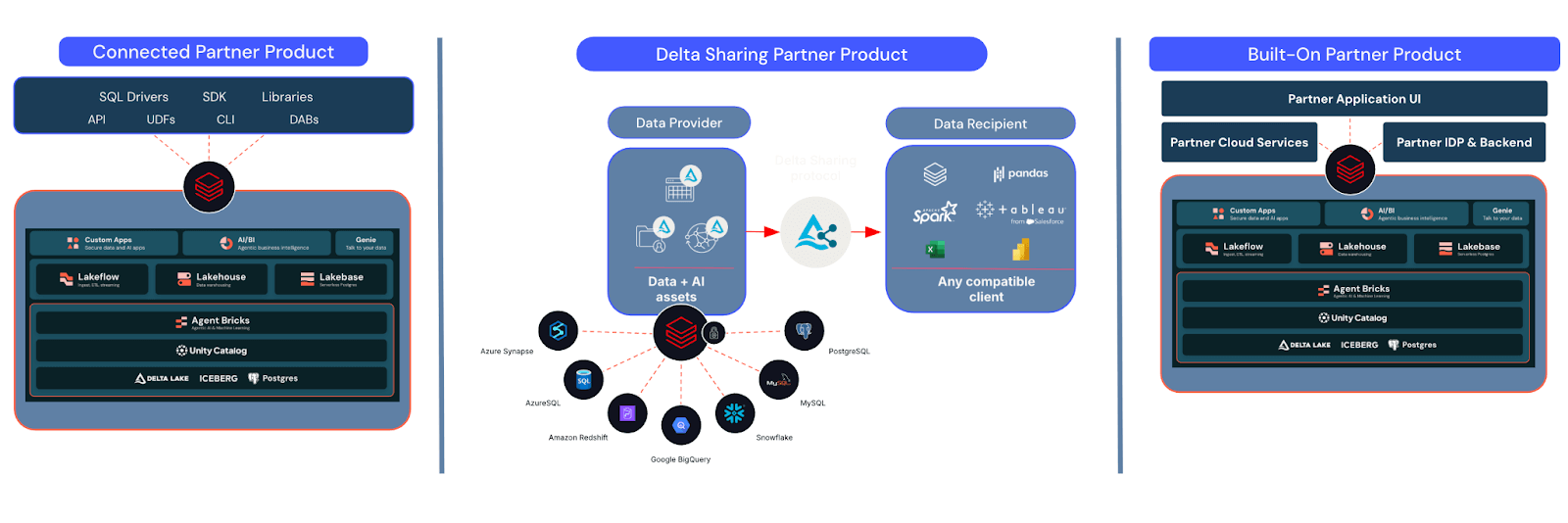
The program is organized around the three ways partners build with Databricks:
- Connected products — partner-built products that integrate with a customer’s Databricks platform to analyze, process, and transform data. These integrations use drivers (JDBC, ODBC, Python) and APIs, and now also include MCP servers that can be published to the Databricks MCP marketplace — a sign of how quickly the Model Context Protocol has become a standard interface for AI tooling.
- Delta Sharing — the open protocol data providers use to share data with customers on any platform. Databricks positions it as a “share to anywhere” approach: zero-replication, with cross-cloud networking and security handled by the platform. Shared data lands in the recipient’s Unity Catalog and also works in Excel, major BI tools, and even competing platforms such as Snowflake. The company reports Delta Sharing usage has surged more than 140% in a year across its ecosystem.
- Built-on solutions — products built on top of Databricks itself, with the platform embedded as the underlying engine.
According to the company, partner feedback drove the redesign: many partners work across more than one of these architectures and wanted to be rewarded for their combined footprint rather than judged on a single integration type.
One Program, Unified Tiers
The new Partner Tiering Program uses the same tier structure as Databricks’ consulting and systems-integrator programs, measuring the combined impact of all three architectures. Tier placement weighs the number of joint customers, consumption impact (measured in DBUs, the platform’s usage unit), commitment to the platform, adoption of strategic services, and go-to-market readiness — a holistic, merit-based system rather than separate scorecards per product.
Partners earn credit for everything they build across connected products, Delta Sharing, and built-on solutions, with additional credit for building on newer strategic services such as Lakebase, Genie, and Agent Bricks — a clear signal of where Databricks wants ecosystem investment directed. Specific tier details and benefits were slated for release through the first quarter of the company’s fiscal year, with full rollout targeted for the second.
The Partner Well-Architected Framework
The second announcement addresses a quieter problem: inconsistent technical quality across thousands of partner integrations. The Partner Well-Architected Framework (PWAF) gives partners prescriptive guidance for building integrations that are secure, reliable, and measurable — including instrumentation requirements that let Databricks track customer adoption and consumption impact, the same metrics that determine tier placement.
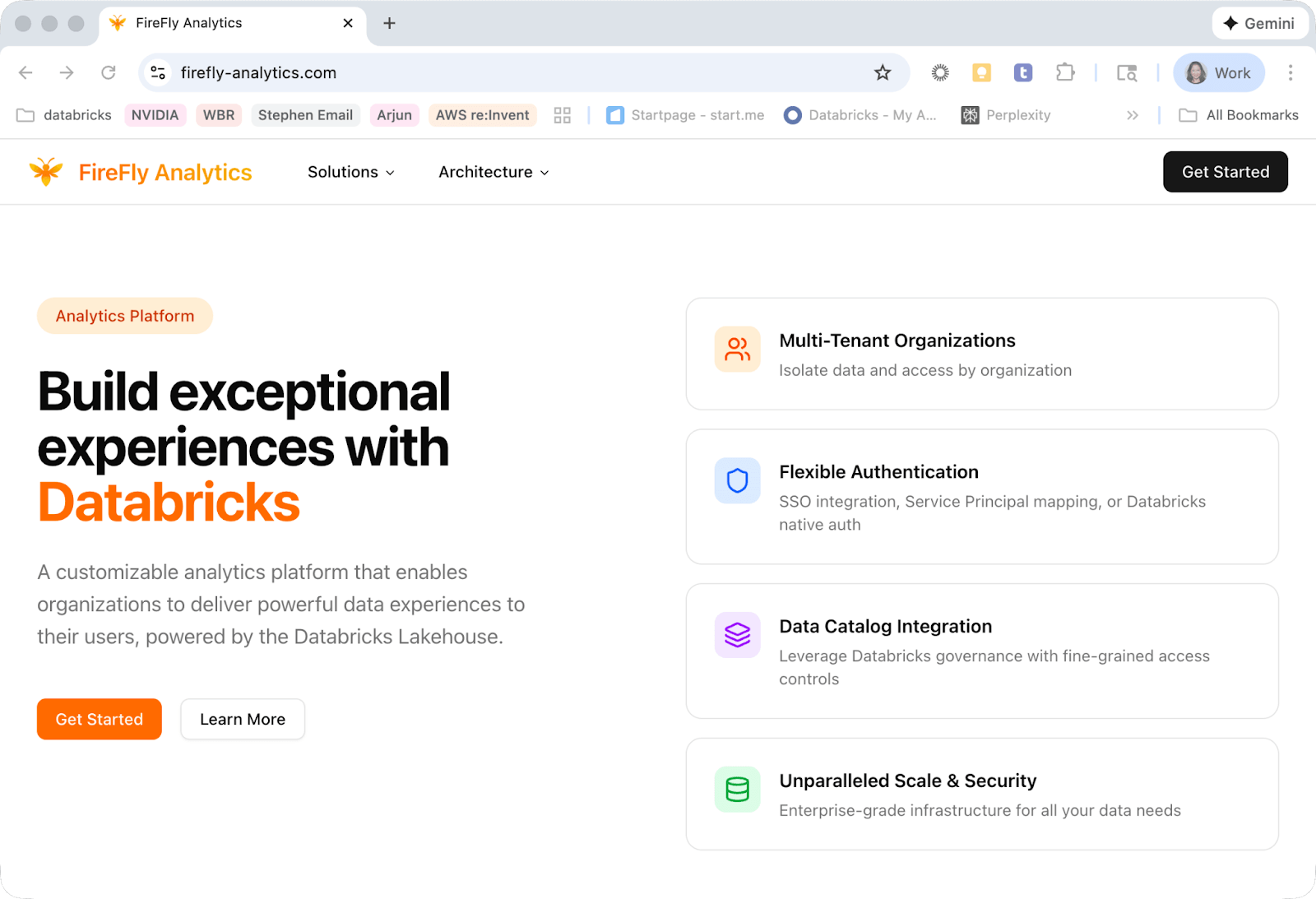
Notably, PWAF is designed to be consumed by AI coding tools, not just read by humans. Databricks says partners can load the guidance into Cursor, Claude Code, Replit, or another AI-assisted development tool and use it to scaffold a compliant integration. To demonstrate the practice, the company created a fictitious reference company — “Firefly Analytics” — built to follow PWAF best practices, with the code intended for open-source release.
What It Means for the Ecosystem
Two threads run through the announcement. The first is consolidation: like the Brickbuilder Partner Network for integrators, covered in this related piece on the Databricks Brickbuilder Partner Network, the ISV program replaces fragmented arrangements with one merit-based structure tied to measurable customer consumption. The second is AI-readiness as a program requirement rather than a marketing phrase — from MCP servers as a first-class integration type to machine-readable architecture guidance.
For software vendors weighing the investment, the practical takeaway is that tier placement will increasingly reflect measured usage rather than partnership announcements — which rewards products customers actually adopt, and disadvantages integrations that exist mostly on paper.
How Smaller ISVs Should Read the Changes
For early-stage vendors, unified tiering cuts both ways. A holistic score lets a small company with one excellent, heavily used integration compete for tier placement against larger partners with broad but shallow catalogs — consumption impact is measurable regardless of company size. At the same time, the emphasis on strategic-service adoption effectively asks partners to align roadmaps with Databricks’ product priorities, which is a real commitment for a team with limited engineering capacity. The sensible sequence mirrors the program’s own logic: instrument an existing integration to PWAF standards first — making its usage visible — before investing in new strategic-service integrations whose credit multipliers may change as the program matures.
Limitations and What to Watch
As with any vendor program announcement, the details that matter most — specific tier thresholds, benefits, and how “extra credit” for strategic services is weighted — were not published at announcement time, and the rollout timeline gives Databricks room to adjust based on partner feedback. Metrics like the 140% Delta Sharing growth figure are the company’s own and lack independent verification. Partners should also note the strategic asymmetry in consumption-linked programs: what maximizes a partner’s tier placement (more platform usage) is not always what minimizes a customer’s bill. The framework’s promised open-source reference implementation is worth watching — its quality will say more about PWAF’s practical value than the announcement does.
Keep building,
