
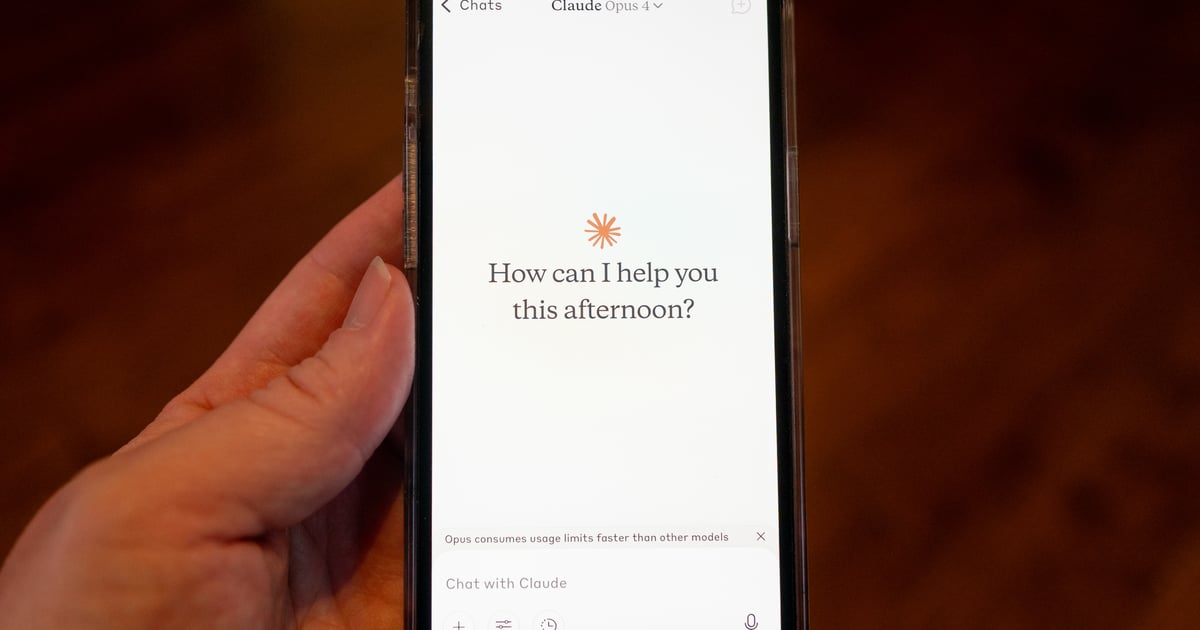
Anthropic has extended its Claude assistant with the ability to take actions directly on a user’s computer, moving the model from answering questions toward carrying out multi-step tasks on request. The capability places Claude among a growing group of “computer-use” agents — alongside efforts such as OpenAI’s Operator — that aim to operate software on a person’s behalf rather than simply describe how to do so.
How it works
When given a task, Claude first looks for relevant connected applications and integrations, such as Slack or a calendar, and uses those connectors where they exist. Where no suitable connector is available, it can work directly on the device, interpreting what is on screen and pointing, clicking and navigating to complete the request. Anthropic states that the agent asks for permission before acting and reports back to the user on what it has done. The company has also described the system retaining context across sessions, which allows it to handle recurring, repetitive tasks rather than treating each request in isolation.
Why it matters
The shift is significant because it changes the unit of work an assistant can take on. Instead of orchestrating a model through many narrow steps, a user can hand over a broader objective — preparing a document, organising files, or moving information between applications — and let the agent execute it end to end. For small businesses in particular, that points toward automating routine computer work without custom software, provided the results are checked. It is also a clear signal of direction for the wider industry, with major AI companies converging on agents that act, not just advise.
Limitations and what to watch
Anthropic has been candid that the technology is still early and will not always work perfectly; complex tasks can require several attempts, and an agent that operates a real machine carries more risk than one that only generates text. The most important safeguards are practical: keeping a human in the loop for anything involving money, sensitive data or irreversible actions; granting the narrowest set of permissions and connectors needed for a task; and reviewing the agent’s output before relying on it. Because the specifics of these capabilities are evolving quickly, the most reliable source of current detail is Anthropic’s own announcements, and claims about exact features or availability are best verified there before acting on them.
