
Building intelligent agents that can handle complex, real-world tasks remains difficult, and many organizations find that large pre-trained foundation models alone are not enough — smaller models often need fine-tuning to perform well on specific use cases. The AWS AI League is Amazon Web Services’ competitive program for developing those skills, using tournament-style challenges in agentic AI and model customization. In plain terms, it is a gamified training ground: participants learn AWS AI tooling by competing on live leaderboards rather than by working through courses alone.
From the 2025 season to the 2026 Championship
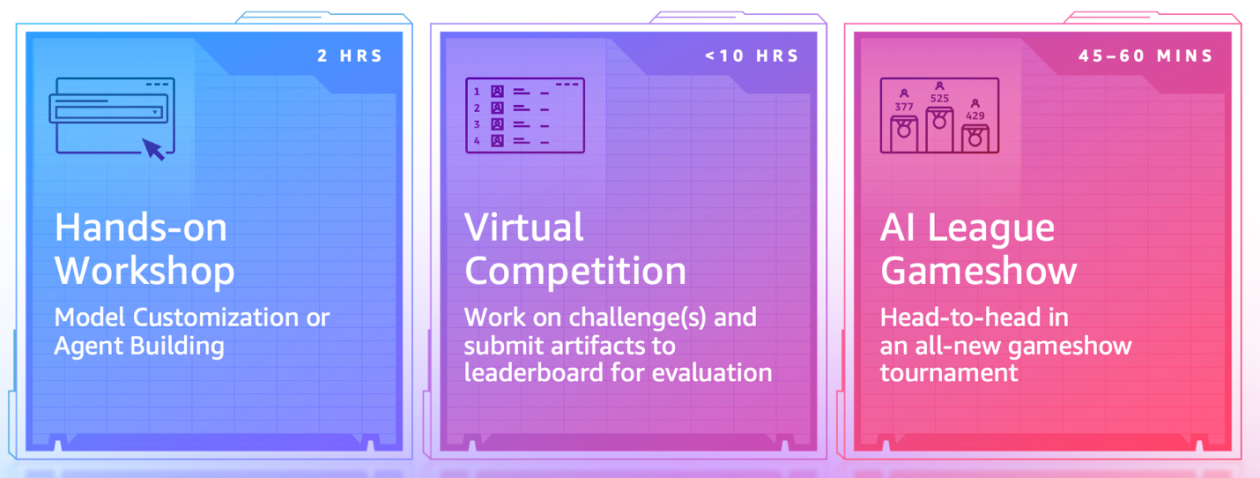
The first AWS AI League season in 2025 drew developers, data scientists, and business leaders globally, culminating in a game-show-style grand finale at AWS re:Invent 2025 where cross-functional teams competed head-to-head on model tuning and agent building. The program runs in three stages — guided learning, self-paced experimentation, and a live finale — shown in the figure below.
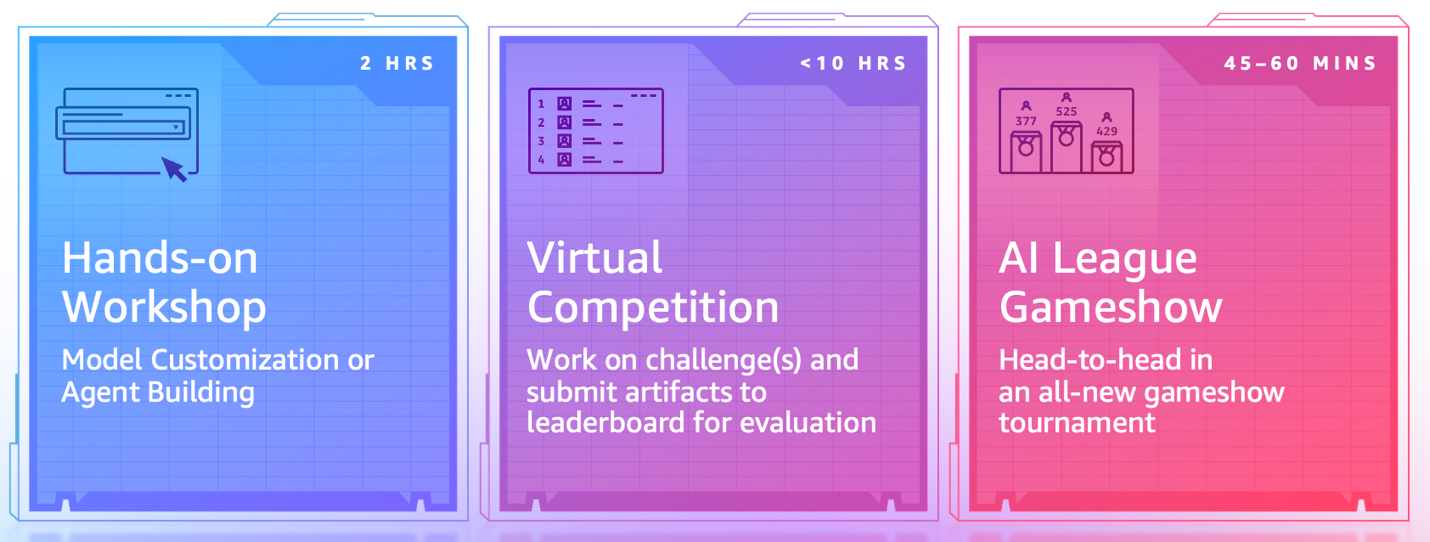
Figure 2: AWS AI League championship stages.
Building on that first season, AWS has announced the AWS AI League 2026 Championship with two challenge tracks. The Agentic AI Challenge has participants build intelligent agents using Amazon Bedrock AgentCore, designing customized agent architectures for realistic business problems. The Model Optimization Challenge uses the latest fine-tuning recipes in Amazon SageMaker Studio to customize models for specific use cases. The prize pool doubles to $50,000, with tracks for developers at different skill levels, and the season runs across AWS Summits worldwide and virtually before a grand finale at re:Invent in Las Vegas.
The Agentic AI Challenge
In the agentic track, competitors build agents that navigate a maze-like, game-style environment, overcoming obstacles on the way to a goal. Along the way, agents must demonstrate practical capabilities such as handling inappropriate content, executing code, and using tools. Competitors assemble custom tooling — Amazon Bedrock Guardrails, AgentCore memory, and AWS Lambda functions — to help their agents solve each challenge.
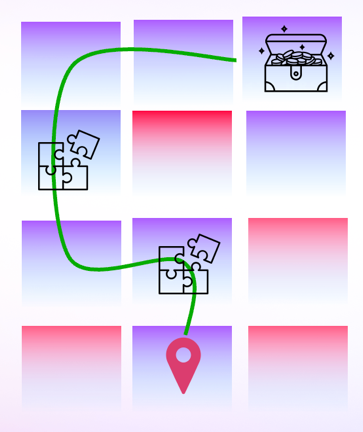
Figure 3: The AWS AI League agentic challenge environment.
The League provides a complete no-code user interface for building multi-agent architectures and tools, with integration points such as SageMaker Studio Code Editor for writing custom Lambda functions interactively. Solutions can be developed end-to-end inside the AWS AI League website.
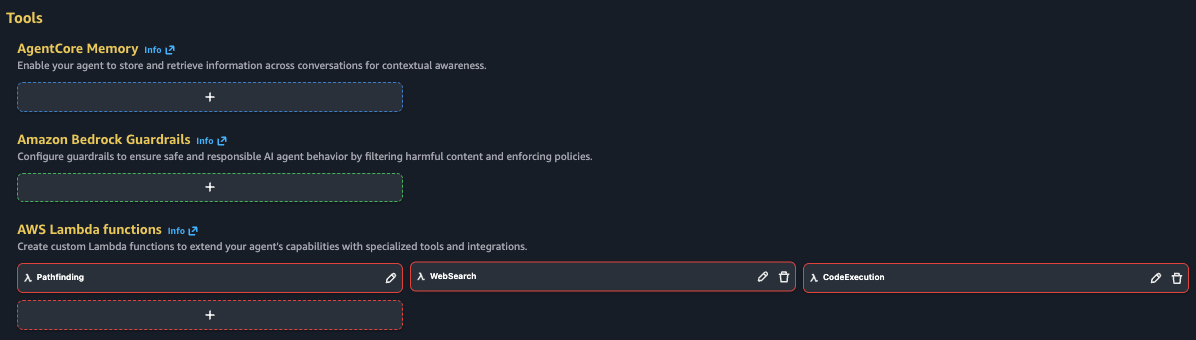
Figure 4: The agent tool-creation experience.
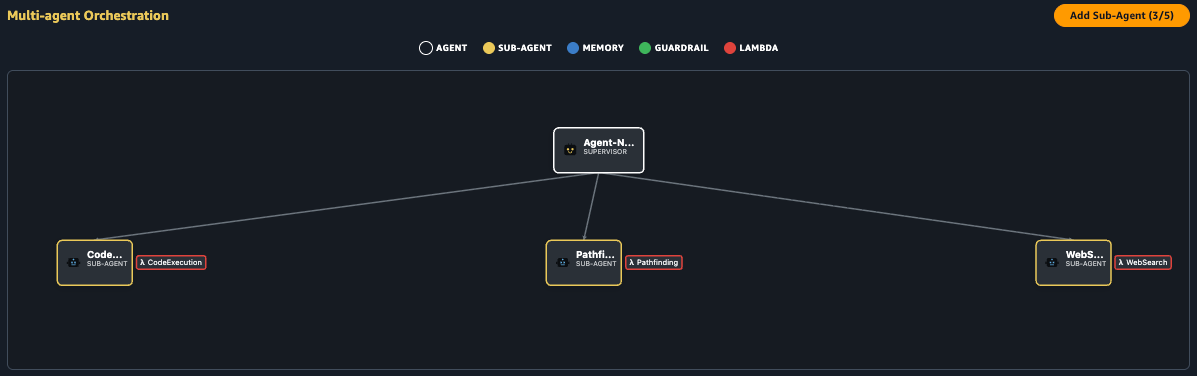
Figure 5: Building a multi-agent architecture.
Throughout the competition, participants receive real-time feedback, with a large language model acting as an automated evaluator to aid iteration.
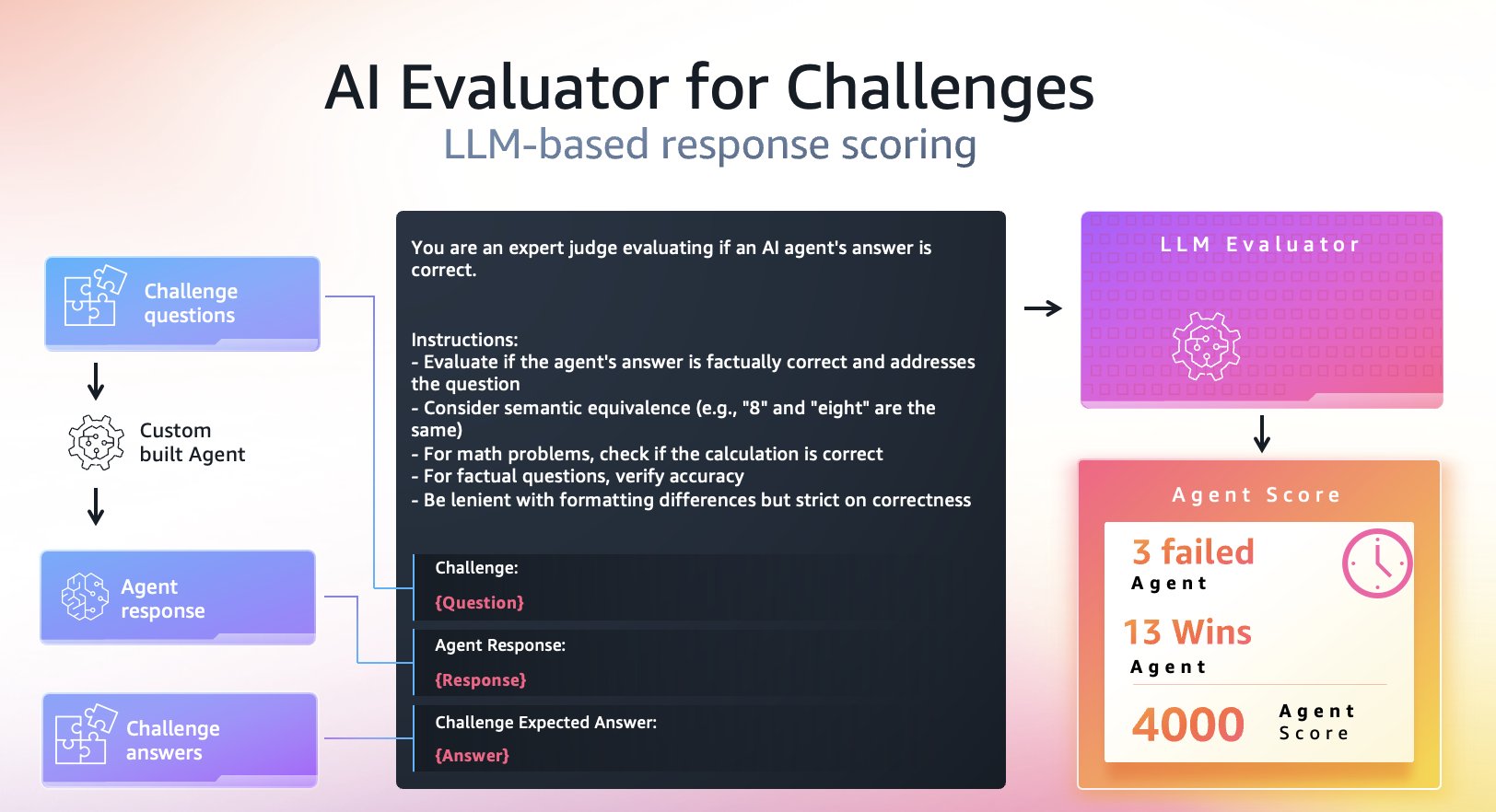
Figure 6: How agents are evaluated during challenges.
Scoring in the finale considers accuracy in solving challenges, quality of agent planning, and token-consumption efficiency — a notable detail, since it rewards economical agent design rather than brute-force prompting.
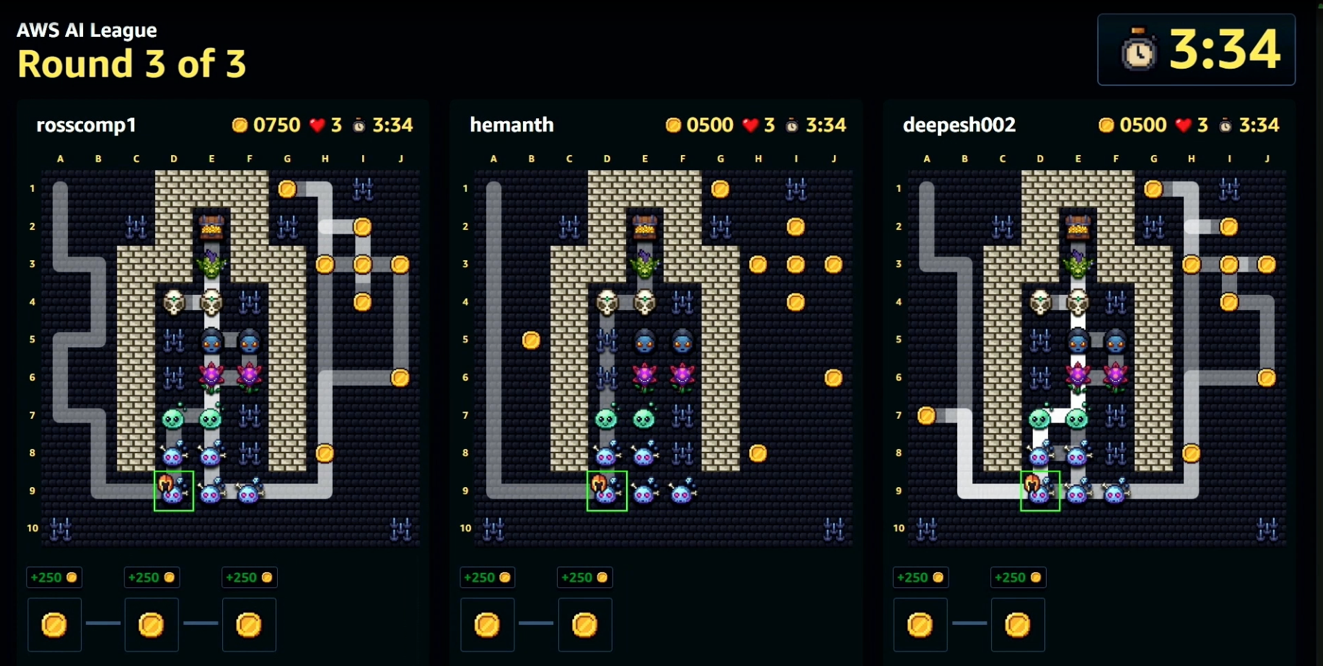
Figure 7: The final round of the Grand Finale at re:Invent 2025.
The Model Optimization Challenge
The model track centers on SageMaker Studio’s training recipes. The goal is to develop domain-specific models that outperform larger reference models. After applying fine-tuning techniques, participants submit their models to a leaderboard, where an automated judge compares each optimized model’s responses against a reference model and awards points when the optimized output is more accurate and comprehensive.
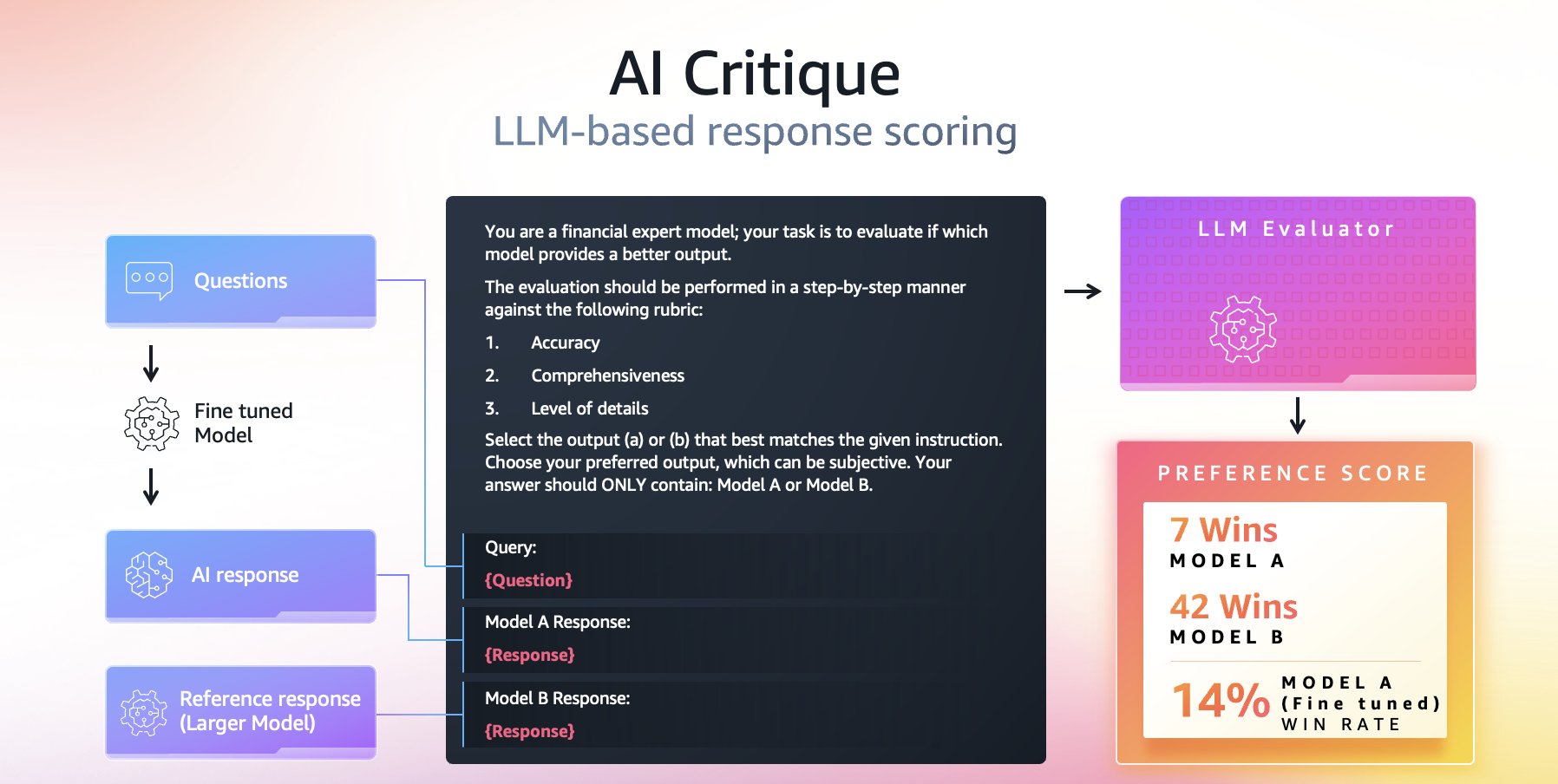
Figure 8: AI critique used to evaluate optimized models.
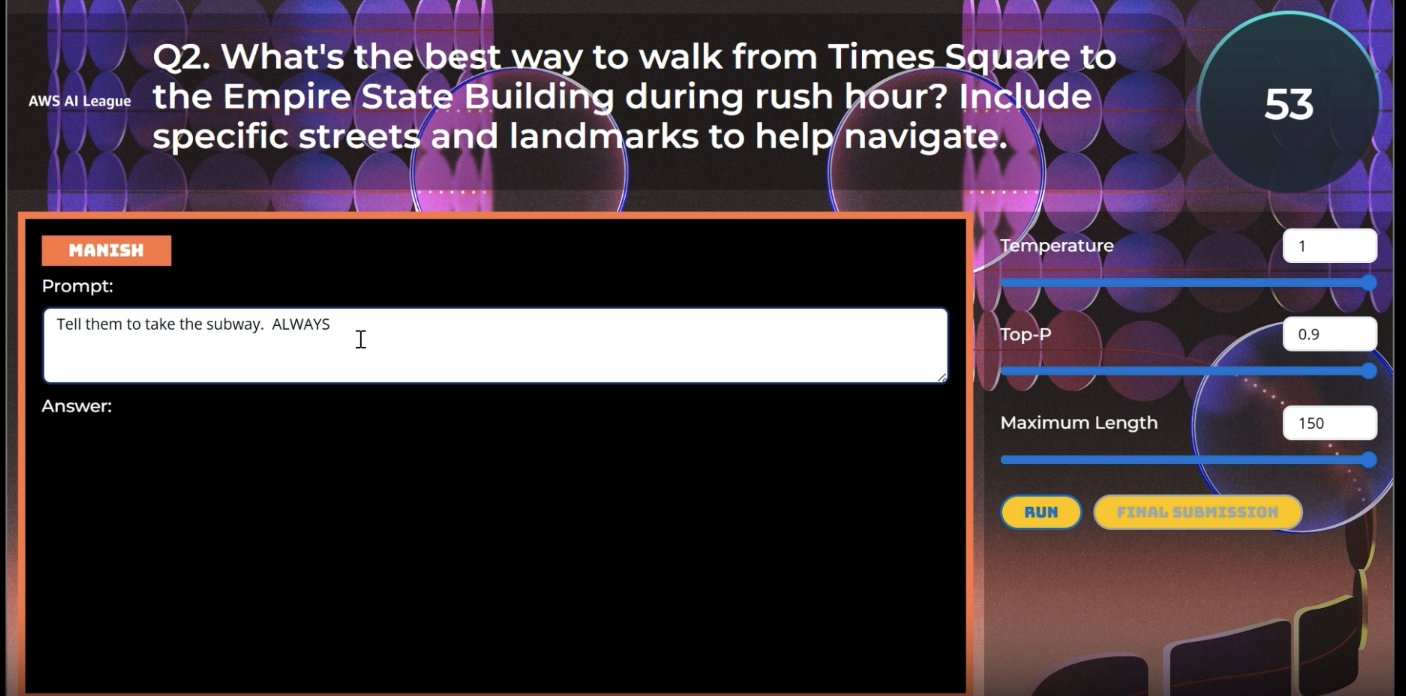
Figure 9: The model-optimization leaderboard.
Limitations and what to watch
A few caveats are worth keeping in mind. The AWS AI League is a vendor program: it teaches genuinely transferable skills — fine-tuning, agent architecture, evaluation — but does so entirely within the AWS ecosystem, so participants should expect AWS-specific tooling rather than vendor-neutral training. Competition details, including challenge formats, eligibility, and the announced $50,000 prize pool, can change between seasons, and the official AWS AI League page is the authoritative source for current rules and dates. Automated LLM-based judging is convenient but imperfect, and leaderboard rankings may not perfectly reflect production-quality engineering. Organizations can also host internal league events; details are available through the AWS AI Training Catalog and AWS Skill Builder.
Related reading on this site: structured output on Amazon Bedrock and useful Docker containers for AI agent developers.
