
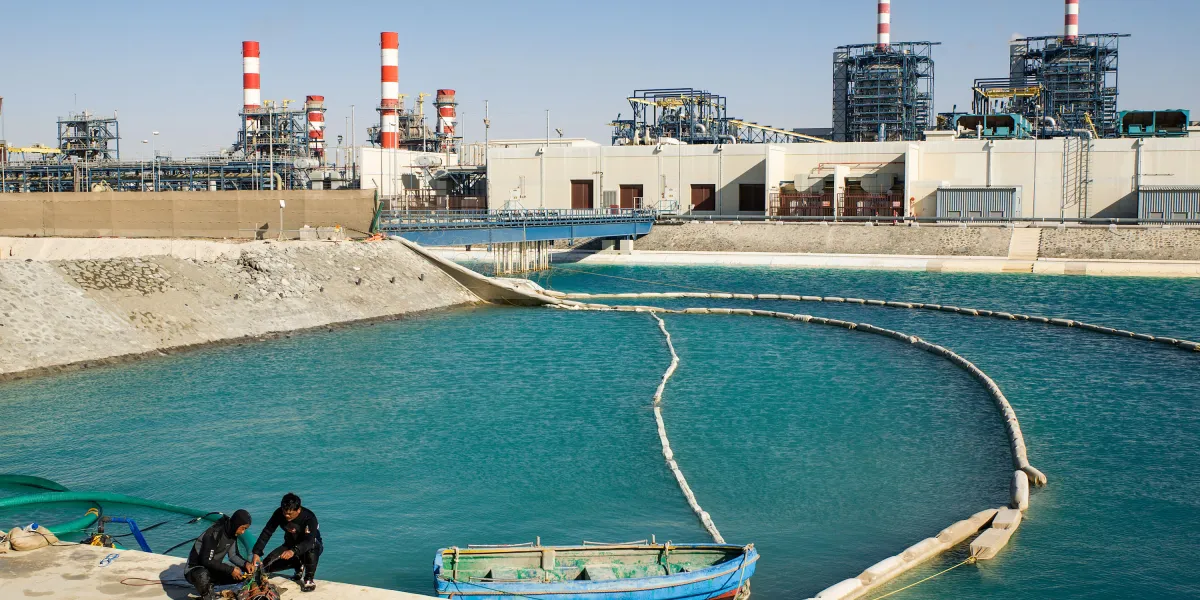
Membrane technologies have created essentially all new desalination capacity in recent years; Last major thermal plant built in Gulf comes online in 2018. Many reverse osmosis plants still rely on fossil fuels, but they are more efficient. Since then, membrane technologies have added more than 15 million cubic meters of daily capacity – enough to supply water to millions of people.
Capacity has expanded rapidly in recent years; Between 2006 and 2024, Middle East countries will collectively spend more $50 billion Building and upgrading desalination facilities, and almost as many operating them.
Today, there are approximately 5,000 desalination plants operating throughout the Middle East.
And looking ahead, growth continues. Between 2024 and 2028, daily capacity is expected to increase from approximately 29 million cubic meters to 41 million cubic meters.
unequal vulnerabilities
Some countries rely on technology more than others. For example, Iran uses desalination for about 3% of its municipal fresh water. The country has access to some surface water, including groundwater and rivers, although these resources are being depleted due to agriculture and extreme drought.
Other countries in the region, particularly the Gulf countries (Bahrain, Qatar, Kuwait, United Arab Emirates, Saudi Arabia and Oman) have much more limited water resources and rely heavily on desalination. Of these six countries, all except the UAE get more than half their drinking water from desalination, and for Bahrain, Qatar and Kuwait Shape Is more than 90%.
“The Gulf countries are far more vulnerable to attacks on their desalination plants than Iran is,” says David Mitchell, a senior associate in the Global Food and Water Security Program at the Center for Strategic and International Studies.
Mitchell says there are thousands of desalination facilities across the region, so if a small number were taken offline the system would not collapse. However, in recent years there has been a trend towards larger, more centralized plants.
