
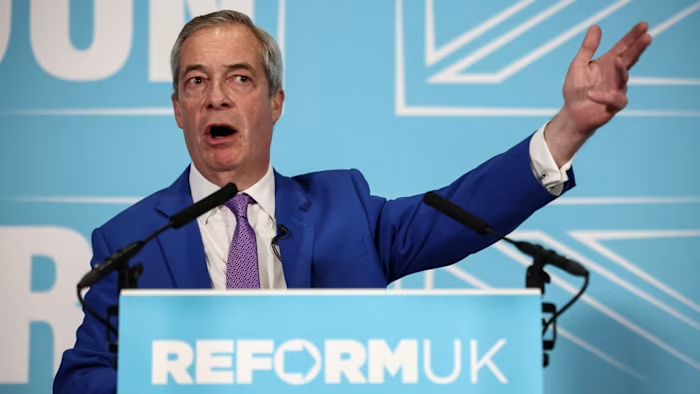
The European Union is reportedly seeking a termination clause in its post-Brexit “reset” talks with the UK that would require substantial financial compensation if a future British government walked away from a proposed food-trade deal. EU diplomats have nicknamed it the “Farage clause.”
What the draft proposes
According to a draft negotiating text reported by the Financial Times, Brussels has included a termination provision within a proposed EU–UK “veterinary” or sanitary and phytosanitary (SPS) agreement intended to reduce Brexit-related red tape for British food and drink exporters. Under the clause, a party that withdrew would have to cover the costs of setting up the necessary border controls — infrastructure, equipment, and the initial recruitment and training required. EU diplomats have described it as a stability-and-deterrence measure.
The draft also specifies that the UK would pay to join the veterinary agreement — a proportionate share of the relevant EU agencies’ costs for managing border checks on plant and animal imports, plus an additional participation fee of around 4% — and would “dynamically align” with, and implement, relevant EU rules on animal and plant products, subject to European Court of Justice rulings.
Why it is called the “Farage clause”
Diplomats have linked the provision to the political risk that Reform UK leader Nigel Farage could enter government and reverse Prime Minister Sir Keir Starmer’s efforts to move closer to the EU. With Reform polling strongly against both Labour and the Conservatives, EU officials said Brussels was being more proactive about protecting any deal it strikes with the current government.
The political reaction
Reform UK has said it would overturn such a deal, with Farage arguing that no parliament can bind its successor and characterising the clause as a democratic outrage. UK government officials countered that termination and opt-out provisions are standard features of international trade agreements, that they apply to both sides, and that detailed negotiations over the exact terms had not yet begun. Labour figures also noted what they saw as an irony in free-market-oriented parties — Reform and the Conservatives — pledging to reinstate trade barriers. Both opposition parties have said they would scrap the deal if they win power.
What is at stake
The underlying prize is smoother agri-food trade: a 2024 estimate cited in the reporting suggested a veterinary deal could raise UK food and drink exports by around 22%. The European Commission said it remained fully committed to implementing the actions agreed with the UK at the May 2025 summit, and Starmer’s EU-relations minister, Nick Thomas-Symonds, has indicated that legislation enabling dynamic alignment should be in place within the government’s planned timetable.
Limitations and what to watch
This account rests on a leaked draft that is explicitly subject to negotiation, so the final terms — including the size of any compensation, the participation fee and the scope of dynamic alignment — could change substantially or fall away entirely. Characterisations such as the “Farage clause” label and the framing of the provision as either routine legal boilerplate or a democratic affront reflect the competing perspectives of the parties involved rather than a neutral description. Formal talks had not begun at the time of reporting, and figures such as the projected 22% export boost are estimates dependent on assumptions. Readers should follow the official negotiating outcomes rather than draft leaks for the settled position.
