
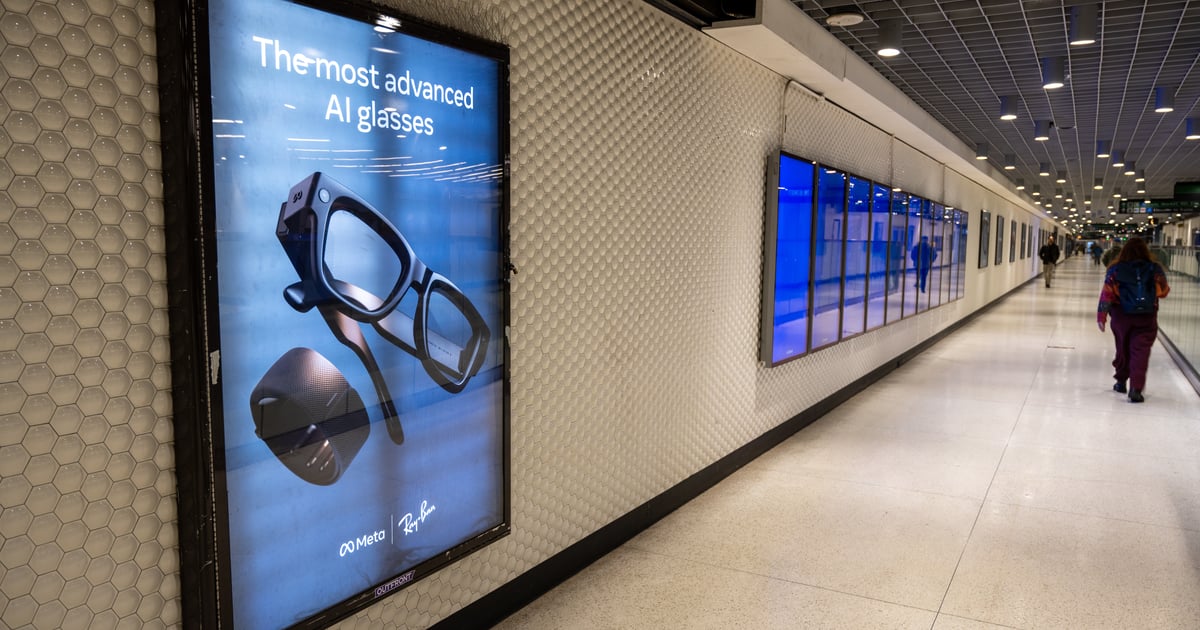
Meta has drawn renewed scrutiny from authorities in Europe over privacy concerns about its AI smart glasses. Lawmakers in the European Parliament and the United Kingdom’s data regulator, the Information Commissioner’s Office (ICO), raised concerns after Swedish media reported that subcontracted workers had viewed sensitive material recorded by users of Meta’s Ray-Ban smart glasses.
What the reports alleged
The allegations first surfaced in the Swedish outlets Svenska Dagbladet and Göteborgs-Posten, which focused on work carried out by Sama, a data-annotation company based in Nairobi, Kenya. Sama had previously faced criticism over its labor practices in Africa, including claims that content-moderation staff were exposed to disturbing material and paid low wages.
The Swedish journalists said they spoke with more than 30 Sama employees who reviewed and annotated content captured by users’ smart glasses to help train Meta’s AI and refine the product. The workers reported that much of the footage was deeply private. According to Svenska Dagbladet, many clips depicted bathroom visits, sexual activity, and other intimate moments. “We see everything — from living rooms to naked bodies,” one worker said, adding that people could record themselves without realizing exactly what they were capturing.
Meta’s response and the regulatory reaction
In response, Meta told the BBC that, like other companies, it sometimes uses contractors to review data that people share with Meta AI in order to improve the experience with its glasses, as set out in its privacy policy, and that the data is “first filtered to protect people’s privacy.” Swedish reporting suggested, however, that this filtering — which can include blurring faces — does not always work. Meta’s UK AI terms state that it may review interactions with its AI, through automated or human means, but do not specify exactly what humans review.
The UK ICO said it would intervene, calling the claims “concerning” and stating: “Service providers must clearly explain what data is collected and how it is used… We will be writing to Meta asking for information on how it is meeting its obligations under UK data protection law.” In the EU, the outlet Euractiv reported that members of the European Parliament — by its account from numerous countries — wrote to the European Commission seeking to know what action Meta would take to comply with EU data-protection rules. Reporting indicates the matter has also been raised with Ireland’s Data Protection Commission, Meta’s lead EU regulator.
Fallout: contract ended and a US lawsuit
The story escalated after the post’s original publication. Meta subsequently ended its contract with Sama; multiple outlets reported that roughly 1,100 affected workers were given only a few days’ notice. Separately, the controversy contributed to legal action in the United States, where plaintiffs represented by a public-interest law firm filed suit alleging that Meta misled users and disregarded privacy obligations. The UK ICO’s inquiry remained ongoing.
Context and what to watch
Meta’s smart glasses have been a commercial success, with global sales reaching roughly seven million units and rivals racing to catch up. The company has also had other recent run-ins with European authorities, including scrutiny over WhatsApp’s handling of third-party AI chatbots and past fines related to data practices. The broader issue the episode highlights is structural: always-available cameras worn in everyday settings can capture bystanders and intimate moments that subjects never intended to share, and human review of that footage raises questions that privacy policies alone may not resolve.
Several caveats apply. Many specifics rest on media reporting and worker accounts rather than completed regulatory findings, and investigations by the ICO and EU bodies were still underway, meaning no formal legal violation had been established at the time of writing. Figures such as the number of workers affected and the scope of MEP involvement have varied across reports. Readers should treat the situation as a developing story whose legal and regulatory outcomes remain open.
Further detail is available from The Register and The Next Web.
