
Restoring a brain after deep freezing remains the stuff of science fiction, but a 2026 study moved the underlying science a step closer. A research team at the University of Erlangen-Nuremberg in Germany reported restoring electrical and functional activity in frozen mouse brain tissue after thawing — the first demonstration of its kind for this type of preserved tissue. The work was published on 3 March in the Proceedings of the National Academy of Sciences.
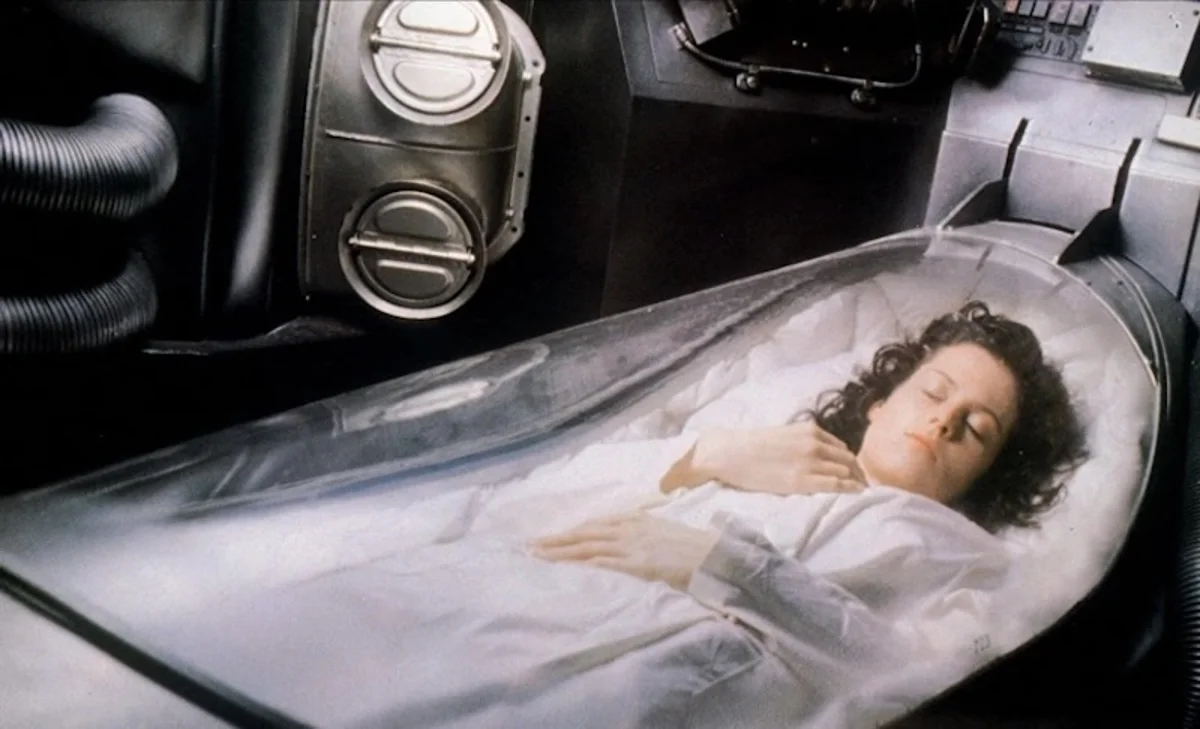
A ‘cryosleep pod’ in the 1979 science-fiction film Foreigner.
AJ Pix/20th Century Fox via Alamy
What the researchers did
Earlier work had shown that neuronal tissue can survive freezing at the cellular level and recover some function after thawing, but the processes essential to proper brain activity — neuronal firing, cell metabolism and synaptic plasticity — had not been fully restored. The new study used a technique called vitrification, which turns tissue into a stable, glass-like state rather than allowing damaging ice crystals to form, paired with a controlled thawing process designed to keep the tissue viable. Applied to slices of the mouse hippocampus — a region central to learning and memory — the method preserved structural integrity, metabolic responsiveness, neuronal excitability and synaptic transmission. Notably, long-term potentiation, a cellular signature of memory formation, remained functional after rewarming.
Why it matters
Demonstrating that a complex, active brain region can be vitrified and then resume meaningful function extends the known tolerance limits of brain tissue from merely cold temperatures into the truly cryogenic range. The researchers suggest possible long-term applications such as protecting the brain during illness or severe injury and establishing tissue banks for research, where reliably storing viable neural tissue would be valuable.
Limitations and what to watch
The results warrant caution as much as enthusiasm. The work involved thin slices of brain tissue, not whole brains or living animals, and restoring isolated tissue activity is a very different problem from reviving an intact, functioning brain. Claims about human “cryosleep” or whole-body cryopreservation remain far beyond what this study supports, and outside experts have stressed that practical cryonics is still distant. As a single study, the findings also await independent replication and extension to larger, more complex tissue. The peer-reviewed paper is available in PNAS, and a general-audience account appears in Scientific American.
