
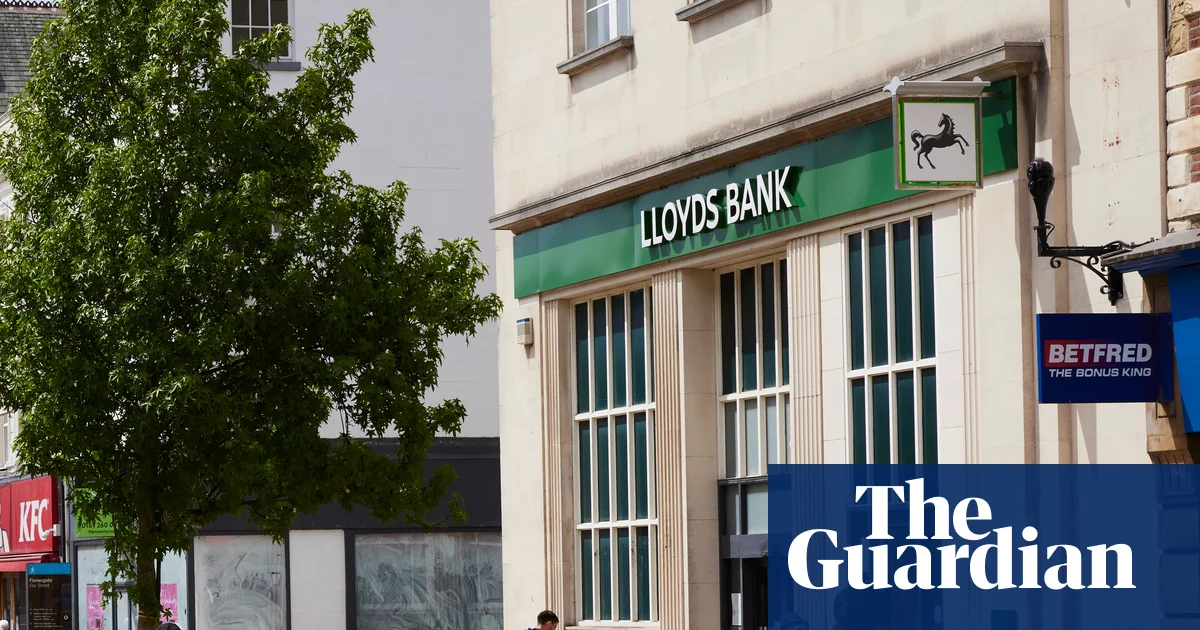
The boss of Lloyds Banking Group has warned that bankers will need to “re-skill themselves” to survive the upcoming AI boom that will transform the financial services sector.
Charlie Nunn told reporters on Thursday that while he can’t predict the full impact of AI over the next decade, it’s clear that banks will be hiring employees with very different skills going forward. “This is going to fundamentally change the way customers experience financial services,” he said, meaning banks like Lloyds will have to “support colleagues to re-skill themselves”.
He acknowledged the bank would have to “cut some jobs in some areas”, but rejected forecasts from Morgan Stanley, which last month said more than 200,000 European bank jobs could be lost by 2030 due to AI adoption and branch closures.
“The reality is we don’t know how the medium term is going to play out, and I think that’s where you can see the big numbers forecast,” Nunn said. “It’s not that we’re trying to hide anything. But at this stage it’s not what we’re seeing specifically around generative AI – although I think it will be transformative.”
Lloyds has provided a rare insight into the financial impact of its AI use, saying that generative AI – which creates new content based on patterns in huge, existing datasets – delivered a £50m boost to its balance sheet last year.
This included using AI to process complaints, which were now classified in one second instead of five minutes, and halving the time spent on coding. “AI is a once-in-a-generation opportunity and the Group is capitalizing on it for our clients,” Nunn said.
The bank expects financial profits to double to more than £100 million in 2026, as Lloyds adopts agentic AI: a more autonomous model that can proactively plan and execute tasks with minimal human oversight.
As far as potential job losses are concerned, Nunn said: “We always take it very seriously and support those colleagues. But I see a lot of the new roles and skills we need, and we’re investing in them.”
It comes as Jason Stockwood, the investment minister, said the UK could introduce a universal basic income to protect workers who could be disrupted by AI. While Stockwood is not part of official government policy told the Financial Times: “People are definitely talking about it.”
But Nunn suggested that technology-related change was inevitable, recalling how his first job involved building electronic trading floors that ultimately helped automate wholesale banking in the 1990s. “I have seen radical improvements in efficiency and redistribution of talent and skills through financial services throughout the 34 years I have been doing this job,” he said.
Lloyds on Thursday reported a 12% rise in pre-tax profit for 2025 to £6.7 billion, as growth in lending and income from fee-generating parts of its operations, including insurance, helped offset the impact of falling interest rates last year. The better-than-expected rise in profits allowed Lloyds to pay shareholders another dividend of 2.43pa a share and launch a new £1.75bn share buyback programme.
The increase in Lloyds’ profits was partly due to an increase in mortgage lending. Nunn told the BBC’s Radio 4 program that Lloyds – which owns the Halifax brand and is the largest mortgage lender in the UK – has seen “strong volumes” and “good demand” for home loans.
“We have seen a slight decline in interest rates and we are expecting two or more interest rate cuts this year,” he said. “Clearly as an industry, and as Lloyds Bank, we are innovating about how we deliver affordability and access to mortgages, which has supported that growth.”
