
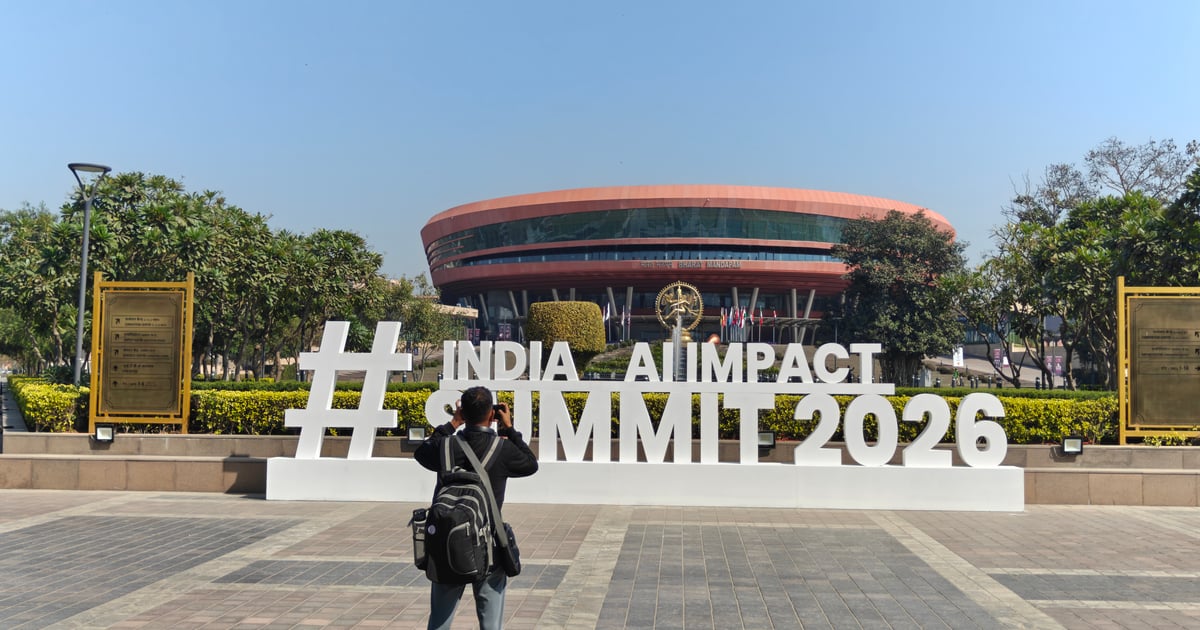
The India AI Impact Summit 2026 opened in New Delhi against a backdrop of major funding announcements, as governments and companies used the event to signal the scale of their ambitions for artificial intelligence infrastructure in the country. Hosted by Prime Minister Narendra Modi, the gathering was widely described as the first major international AI summit convened by a nation of the Global South.
A summit hosted by the Global South
The five-day event in New Delhi was the fourth in a series of high-profile international AI summits, following earlier meetings in the United Kingdom, South Korea and France. Organisers reported very high demand, with more than 250,000 registrations, and the opening days were marked by logistical strain, including crowding and access delays. Beyond the headline deals, the summit produced a joint statement, referred to as the New Delhi Declaration, and Indian officials indicated that more than 200 billion US dollars of AI and deep-technology investment is expected in the country over the following two years.
Adani Group’s data-centre pledge
Among the announcements that drew the most attention was a commitment from the Adani Group to invest roughly 100 billion US dollars to expand its data-centre platform. The company outlined a plan to grow capacity from about 2 gigawatts toward 5 gigawatts of AI-ready capacity. According to the group, the investment is expected to generate an additional 150 billion US dollars across server manufacturing, advanced electrical infrastructure and sovereign cloud platforms in India by 2035. Reliance made a comparably large commitment, and combined pledges from the two conglomerates were reported at around 210 billion US dollars, underscoring how domestic industrial groups are positioning themselves at the centre of India’s AI build-out.
A neocloud scaling GPUs in India
The summit also highlighted the role of specialised providers building GPU-based AI infrastructure with a focus on operations inside India. Neysa, a domestic neocloud led by co-founder and chief executive Sharad Sanghi, is among the companies expanding capacity to serve enterprises and institutions running AI workloads locally. The firm has described plans to scale to a large fleet of GPUs and reports customers across sectors including healthcare, financial services and public services. Its stated aim is to give enterprises, hyperscalers and AI labs a way to deploy and scale AI infrastructure on India-resident compute, with an emphasis on data residency and predictable performance. Neysa has attracted substantial external capital, including a large commitment led by Blackstone.
Infosys and Anthropic target regulated industries
A further partnership announced around the summit paired Bengaluru-based technology services company Infosys with AI developer Anthropic. Under the collaboration, Infosys plans to integrate Anthropic’s Claude models and coding tools into its Topaz AI platform to build so-called agentic systems intended to handle complex enterprise workflows. The companies indicated that the work would begin in telecommunications, supported by a dedicated centre of excellence, with potential extensions to other regulated sectors such as banking and manufacturing. Anthropic, which recently established its first office in India in Bengaluru, has said that India now accounts for a significant share of global Claude usage, much of it concentrated in software development. For a company navigating heightened investor scrutiny of AI valuations, the deal offers a route into India’s tightly regulated enterprise market. Anthropic’s rapid expansion has been closely watched since its most recent funding round lifted its valuation sharply.
What to watch
The figures announced at the summit are large but long-dated, and most describe intentions rather than committed, near-term spending. Multi-year data-centre targets depend on power availability, supply chains for accelerators, financing conditions and regulatory approvals, any of which can shift timelines. Several partnership announcements did not include disclosed financial terms or firm deployment schedules, so the practical impact will become clearer only as capacity comes online and enterprise deployments move from pilots to production. As with other high-profile AI infrastructure commitments, including moves by enterprise vendors to address enterprise concerns about deploying AI agents, the gap between announced ambition and delivered capacity is worth tracking over time. Independent reporting on the summit is available from Anthropic and Fortune.
