
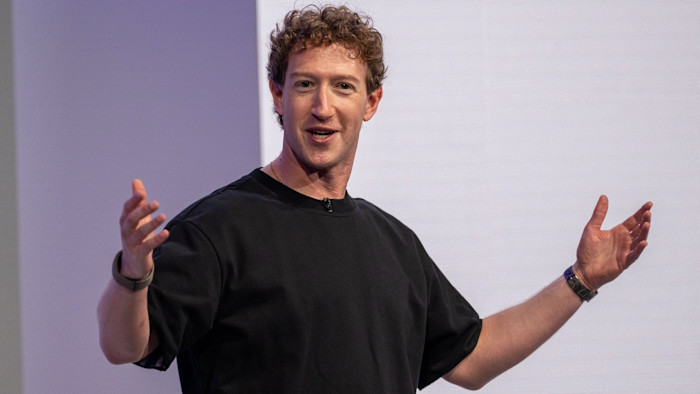
Meta chief executive Mark Zuckerberg testified before a jury on February 18, 2026, seeking to rebut a landmark claim that social media platforms are deliberately designed to be addictive for children. Testifying about child safety in front of a jury for the first time, Zuckerberg said the company does not aim to make Instagram addictive to younger users and disputed the way plaintiffs characterized the evidence. The case is being watched closely because its outcome could shape settlement talks across hundreds of similar suits.
What Zuckerberg Argued
Plaintiffs pointed to internal emails and documents from 2015 to 2022 in which Zuckerberg and other employees described increasing “time spent” as a goal or milestone, including among teenage users. On the stand, Zuckerberg said the company no longer sets internal goals for time spent and instead emphasizes long-term “usefulness” and “value,” arguing that products people do not find genuinely useful will not retain them over time. Asked whether Meta wants people to be addicted to its platforms, he said, “I’m focused on building a community that is sustainable.” He repeatedly maintained that plaintiffs’ lawyers were misrepresenting the documents.
The Underage-User Question
A significant portion of the questioning concerned use of Instagram by children under 13, who are not permitted on the platform under Meta’s own rules. Plaintiffs cited an internal 2018 document in which employees estimated millions of under-13 users on Instagram several years earlier, and noted that the company began asking existing users for their birthdays in 2021. Zuckerberg said Meta is working to keep under-13s off its platforms but acknowledged that verifying age is difficult because many people misstate it, adding that he wished the company could move faster while asserting it is now in a better position and will add further tools.
The Broader Case
The Los Angeles trial is the first of a series of bellwether personal-injury cases, with additional federal cases — including claims brought on behalf of schools and teachers — scheduled later. The plaintiff’s lawyers argue the dispute is not about user content but about design: features such as “likes” that encourage social comparison, infinite scroll, autoplay and push notifications, which they compare to a “digital casino.” Internal documents introduced in the case indicate Meta was aware that beauty filters could contribute to body-image problems for some users.
Meta’s Defense
Meta has pointed to substantial spending on child-safety measures as evidence against negligence and has argued that other factors, unrelated to its products, can contribute to a young person’s mental-health struggles. The company is also invoking Section 230 of the Communications Decency Act, the federal provision that generally shields platforms from liability for user-generated content, while plaintiffs counter that their claims target product design rather than content. Separately, Meta faces a lawsuit from the state of New Mexico alleging it failed to remove child sexual-exploitation material; Meta has criticized aspects of how that investigation was conducted.
Limitations and What to Watch
Several caveats are important. This is ongoing litigation, and the allegations against Meta remain unproven; testimony and internal documents presented by one side are contested by the other, and no verdict establishes the claims as fact. Independent research on whether social media is addictive and whether it harms children’s mental health has produced mixed and debated results, so the science is not settled in either direction. Specific figures cited in court — such as estimates of underage users — come from internal documents introduced by plaintiffs and should be read as contested evidence rather than confirmed statistics. As a bellwether case, the verdict will influence but not automatically decide the many related lawsuits. Coverage from outlets such as CNN and NPR is tracking the proceedings.
This article discusses youth mental health, a sensitive topic. Anyone struggling can reach free, confidential support; in the U.S., the 988 Suicide & Crisis Lifeline is available by call or text.
