
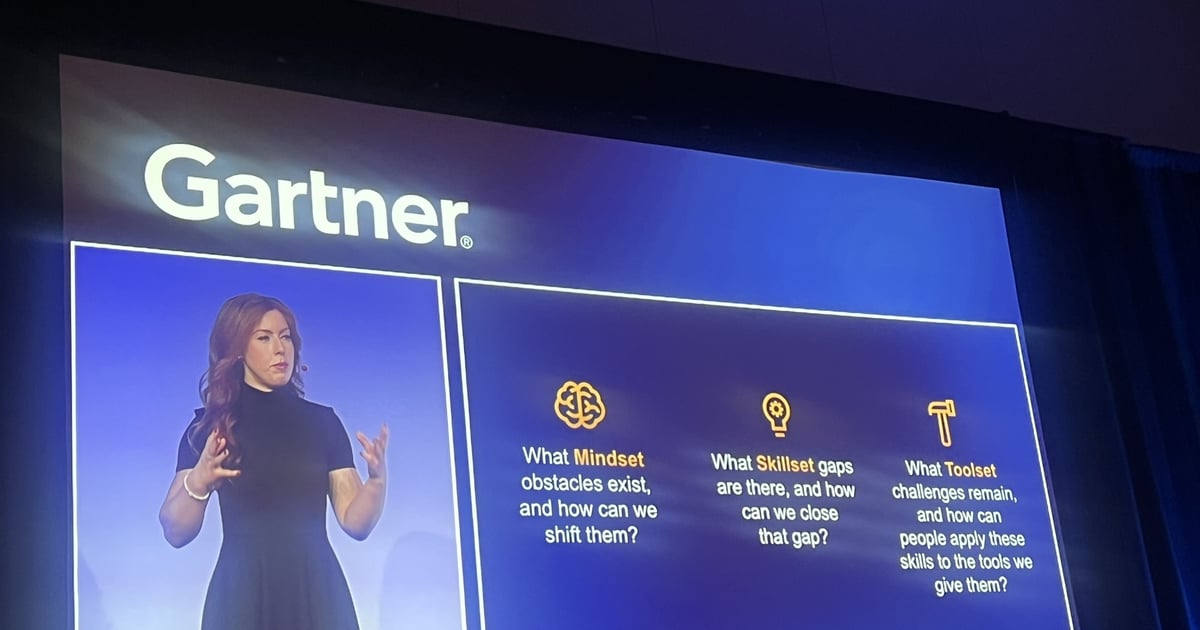
The impact of AI on jobs in data and analytics is shifting roles rather than simply eliminating them, according to discussions at the Gartner Data & Analytics Summit 2026 in Orlando. Vendors and enterprises described how artificial intelligence is changing what data engineers, analysts, and marketers actually do day to day, with skills and adaptability becoming more important than narrow job descriptions.
Data management vendor Atlan offered one example. The India-based company has adopted an AI-first strategy that reassigns work previously done directly by employees. Its engineering teams are being asked to direct AI agents to write code using tools such as cloud-based assistants rather than writing all of it themselves, while marketing staff are encouraged to build and train agents to produce campaigns instead of producing every campaign by hand.
“In general, as a company, we are all trying to embody this concept that everyone can be a creator,” said Austin Kronz, director of data strategy at Atlan and a former Gartner analyst, in an interview at the summit. The framing reflects a broader theme heard throughout the event: that AI is redistributing tasks across teams rather than wholesale replacing them.
A real but uneven concern
Demand for skilled data and analytics professionals remains high. The clearest near-term effect of AI is a change in how roles are valued. Employers increasingly assess practitioners by the skills they bring and how effectively they work alongside AI tools and agents, rather than by a fixed list of tasks tied to a title.
Humans and AI working together
Several speakers framed the change as augmentation rather than removal. “Your role may shift from being a developer to acting as a validator, where you review and adjust the work of others, humans and agents,” said Gartner analyst Georgia O’Callaghan during a keynote. She added that human expertise will remain central to delivery, but teams will increasingly combine people with AI agents into what she described as more productive, AI-powered “fusion teams.”
A recurring caution was that change imposed without involvement tends to meet resistance. When employees help design how AI is introduced into their workflows, they are generally more engaged and more willing to accept significant shifts in their day-to-day responsibilities.
Experience versus skill in hiring
The summit also surfaced a shift in recruitment. For a number of organizations, the priority is moving away from years of experience toward demonstrable, current skills. Raj Tiwari, vice president of technology, development, and analytics at Stanley Martin Homes, said his team has refocused on hiring people who understand the nuances of how AI models behave and who are willing to test, learn, and fail. “Curiosity goes a long way,” he said, describing it as more a matter of personal disposition than tenure.
Tiwari also pointed to processes being automated end to end, such as generating closing documents for home loans, with the work folded back into the company’s ERP system. He characterized those as low-value tasks that automation can absorb so that staff can move toward higher-value work.
An immature technology, still in flux
Not every leader expressed certainty about where this lands. Amy Leander, chief data officer at Capital One, noted that hiring and ways of working will keep changing precisely because the technology is still maturing. “We’re all learning as we go through this,” she said, adding that the eventual talent mix for an AI-driven organization remains to be seen.
Limitations and what to watch
These observations come from vendor and practitioner commentary at a single industry event and reflect early-stage adoption rather than settled outcomes. Independent research on AI’s labor-market effects is still mixed: some analyses, including an Anthropic report arguing it is too early to measure AI’s impact on jobs, caution against drawing firm conclusions from current data. Reported productivity gains often come from individual companies and may not generalize, and the “skills over experience” hiring shift is a stated intention at some firms rather than a measured industry-wide trend. Readers evaluating these claims should treat them as directional signals about how data work is evolving, not as definitive forecasts.
For additional context, the original reporting from this event is available via AI Business, and details on the conference are published by Gartner.
