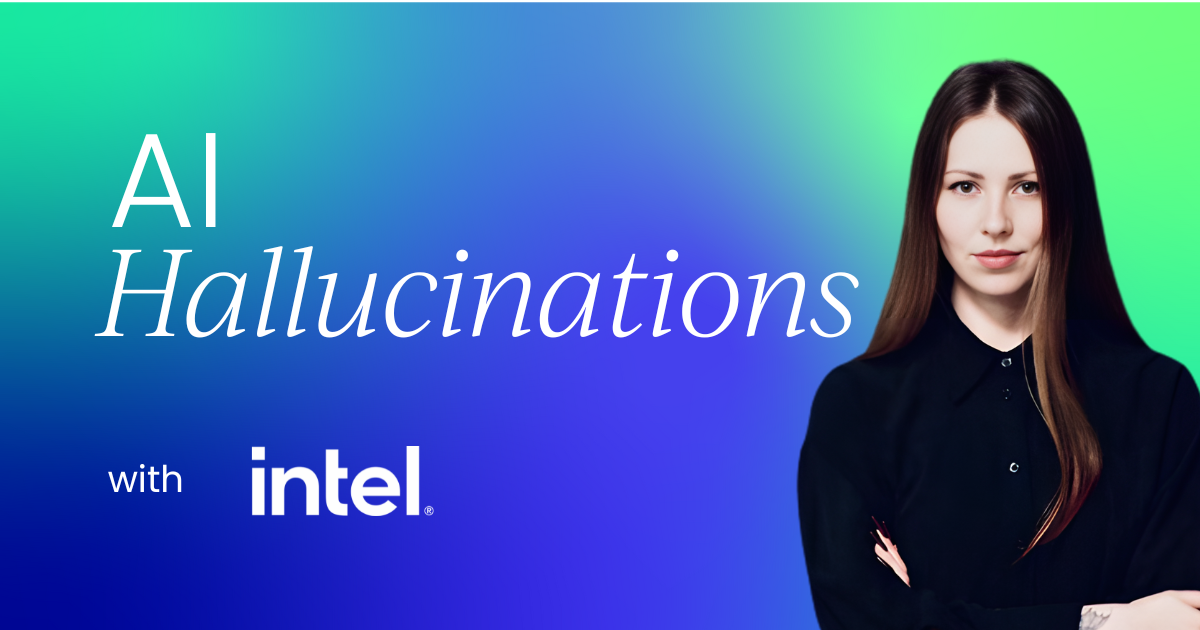
If you’ve ever tried to understand how the mind works, you know that it rarely behaves as neatly as we imagine. Thoughts do not come in well-organized lines. Memories can flow, bend or silently change shape. A scent can bring to mind a forgotten moment from childhood. A sentence which we have heard half-finished, changes when we repeat it.
This complex, multifaceted, deeply personal process is not a fault. This is how the human brain survives. This closes the gap. It creates meaning. It makes informed guesses.
It’s worth remembering this when we talk about AI “hallucinations” because, as strange as it may sound, humans have been hallucinating long before machines existed.
Why is Boston becoming a leader in behavioral health care AI?
Boston’s health care AI ecosystem has moved from cautious pilots to real-world impact. Here’s what’s changed and what’s next.
human mind
According to cognitive neuroscience, human memory – especially episodic memory – It is not a static store in which experiences are retained and retrieved later.
Episodic memory refers to our ability to remember specific personal events: What happened, where it happened, when it happened and how it felt. Rather than replaying these events like a recording, episodic memory is basically creative.
Every time we remember an event, the brain actively reconstructs it by flexibly recombining fragments of past experience – sensory details, emotions, contextual cues, and prior knowledge.
This reconstruction process creates a compelling sense of certainty and vividness, even when the memory is incomplete, altered, or partially inaccurate.
Importantly, these distortions are not simply failures of memory.
💡
Research shows that they reflect adaptive processes Which allows the brain to simulate possible future scenarios.
Because the future is not an exact repeat of the past, imagining what might happen next requires a system that is able to extract and recombine elements of past experiences.
Because memories are recreated rather than repeated, they can change over time. This is why eyewitness accounts of the same event are often contradictory, why siblings remember a shared childhood moment differently, and why you may feel absolutely certain that you once encountered a fact that never actually existed.
A famous example is mandela effect: Large groups of people independently remembering the same incorrect details. Many people are convinced that the Monopoly mascot wears a monocle – yet he never does.
Commemoration feels Original because it fits a familiar pattern: a rich, old-fashioned gentleman with top hat and cane. Needed There is a monocle, so the brain fills in the blanks.
Similar false memories arise not because the brain is not functioning properly, but because it is doing what it has evolved to do, reconciling incomplete information.
In this sense, the brain treats “hallucinations” not as a bug, but as a feature. It prioritizes meaning and consistency over perfect accuracy, producing a solid narrative even when the underlying data is fragmented or ambiguous.
Most of the time, this works surprisingly well. Sometimes, it produces memories that seem undeniably true – and yet are false.
“AI Mind” Works Nothing Like Us
AI was inspired by the brain, but only in the same way that a paper airplane is inspired by a bird. Word “neural network” This is an analogy, not a biological description. Modern AI systems have no internal world. They have no subjective experience, no awareness, no memories in the human sense, and no intuitive leaps.
For example, large language models (LLMs) are trained on huge collections of human-generated text – books, articles, conversations, and any other textual representation of information.
During training, the model is exposed to trillions of words and learns statistical relationships between them. It adjusts millions or billions of internal parameters to minimize prediction error: given a sequence of words, which token is most likely to come next?
Over time, this process compresses enormous amounts of linguistic and conceptual structure into numerical weights.
As a result, a large language model (or any generative AI) is fundamentally a statistical engine. I don’t know what words he says. Meaning; knows how words are are found together. It has no concept of truth or falsehood, danger or safety, insight or nonsense. It operates entirely in the realm of probability.
When it produces an answer, it’s not reasoning its way toward a conclusion – it’s generating the most statistically plausible continuation of the text ever.
This is why talk of AI “thinking” can be misleading. What looks like a thought is a prophecy. What appears to be memory is compression. What looks like understanding is pattern matching on an extraordinary scale.
The outputs may be fluent, convincing, even profound – but they are the result of statistical inference, not understanding.
Austin’s AI and tech landscape: how it has evolved
Silicon Valley is still at the center of the AI conversation, not because it has a monopoly on ideas, but because many of the forces shaping the future of AI collide here.
Why does AI hallucinate?
AI hallucinations are not random glitches – they are a predictable side effect of how large language models like GPT or generative AI models like DALLE are trained and what they are optimized to do.
These models are built around next-token prediction: When indicated, they produce the most statistically plausible continuation (of text or image). During training, an LLM learns from huge datasets of text and adjusts billions of parameters to minimize prediction error.
This makes it very good at generating fluent, coherent language – but it is not inherently good at checking whether a statement is true or not. Truth.
💡
When the model doesn’t have a reliable enough signal, it often doesn’t “notice” that it doesn’t know. Instead, it fills that gap with something that sound Correct.
Hallucinations come from certain interacting forces, some of which are:
• Next-token prediction (plausibility over truth): The system is optimized to produce probable results, not verified facts.
• Lack of grounding: Unless linked to retrieval tools or external data, models have no inherent link to real-time reality.
• Compression instead of storage: It does not maintain a library of facts; It stores statistical patterns in the weights, which can blur details.
• Training Bias and Data Gaps: If the data is skewed, out of date, or missing key coverage, the model will confidently reflect those distortions.
• Overfitting: The model learns the training data too closely, capturing noise and specific details rather than general patterns, causing it to perform poorly on new, unseen data.
• Model Complexity: More efficient models can produce more substantial errors – the drift scales faster than the truth.
• Auxiliary Tuning (RLHF/Direction Training): Models are often rewarded for being responsive and confident, which may discourage “I don’t know” behavior unless explicitly trained.
Unlike humans, model confidence is not an emotion or belief – it is an artifact of fluency generation. That flow is what makes hallucinations so inspiring.
Agentic AI – AI Accelerator Institute
(subject) {1}
Can we eliminate hallucinations?
The short answer is no – not completely, and not without undermining what makes generative AI useful. To completely eliminate hallucinations, a system would need to reliably identify uncertainty and verify truth rather than optimizing probability.
While grounding, recovery, and verification layers can reduce errors, they cannot provide absolute guarantees in open-ended generation.
A purely generative model doesn’t know when it doesn’t know. If we forced such a system to speak only when certain, it would be rude, unimaginative, and often silent. Hallucinations are not a glitch.
They are a trade-off. A predictive model must make predictions, and predictions sometimes go astray. The same flexibility that enables creativity and synthesis also makes error inevitable.
Learning to live and think with AI hallucinations
The goal is not to make AI flawless. This is to make us wise about how we use it. AI has the potential to be an extraordinary partner – but only if we understand what it is and what it is not.
It can help in writing, summarizing, exploration, brainstorming and idea development. It cannot guarantee correctness or apply its output to reality on its own. When users recognize this, they can work with AI far more effectively than when they treat it as an oracle.
A healthy mindset is simple:
• Use AI for imagination, not authority.
• Verify the facts just as you would verify any information found online.
• Put human decisions at the center of the process.
AI is not here to replace thinking. It’s here to enhance it. But it can do good only when we understand its limitations – and when we remain firmly in the role of thinker, not follower.
That said, when used responsibly – the possibilities are truly limitless. We are no longer limited to traditional workflows or traditional visualizations. AI can now collaborate with us in almost every creative field.
In visual arts and design, it can help us explore new styles, new compositions, new worlds that would take hours – or years – to create by hand.
In music and sound, models are already mastering melodies, soundtracks, and even audio with surprising emotional intelligence. In writing, from poetry to scripts to long-form storytelling, AI can spark ideas, expand narratives or act as a creative co-author.
In games and interactive media, it can instantly create character, environment, and story, changing the way worlds are built.
And in architecture and product design, it can generate shapes, forms and concepts that humans often don’t imagine – but that engineers can later refine and build upon. We are entering a phase where creativity is no longer limited by time, tools or technical skills. It is limited only by how boldly we choose to explore.
conclusion
The more we move into an era shaped by artificial intelligence, the more important it is that we stop and understand what these systems are doing – and just as important, what they are not doing. AI hallucinations are not a sign of technology getting out of control.
They are reminders that this form of intelligence operates according to fundamentally different principles from our own.
Humans imagine as a way of understanding the world. Machines “imagine” because they are completing statistical patterns. Using AI responsibly means accepting that it will sometimes get things wrong – often in ways that seem convincing and convincing.
It also means remembering that agency has not disappeared. We still decide who to trust, when to question and when to step back and trust our own judgment.
AI may be impressive, but it’s not going to steer the ship.
As yet.
