
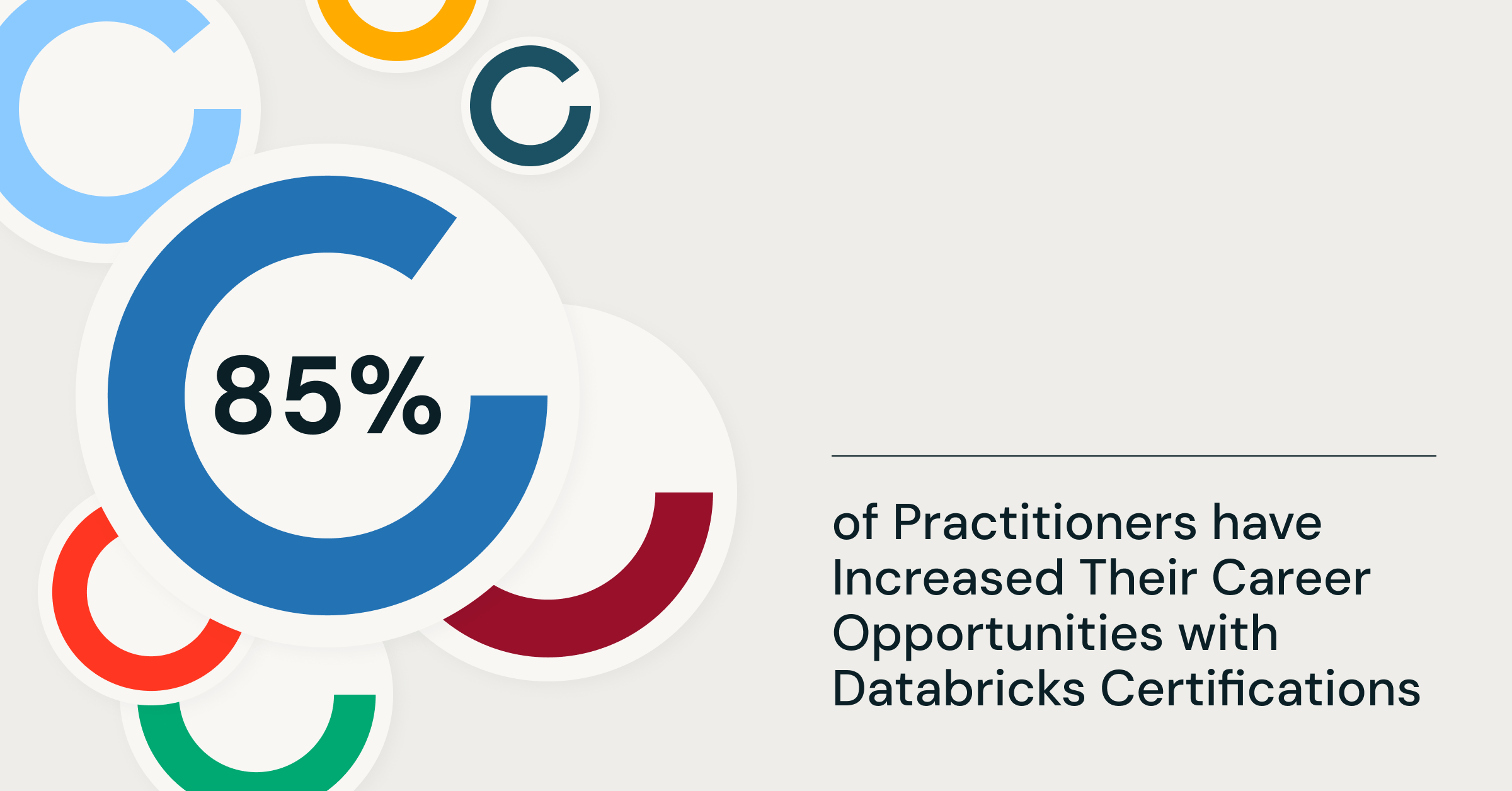
A Databricks certification is a credential that validates a practitioner’s ability to build and operate data and AI workloads on the Databricks Data Intelligence Platform. As organizations move more of their analytics and machine learning onto unified lakehouse architectures, these certifications have become a common way for professionals to demonstrate verified, platform-specific expertise rather than general familiarity.
Why Databricks certification has gained traction
Adoption of the Databricks platform has expanded across industries, and a recurring theme has emerged: technology alone does not deliver outcomes. The differentiator is human capability — professionals who can design, build, and scale data and AI solutions reliably. Certifications have evolved from a basic proficiency check into a widely recognized signal of technical depth, giving employers a consistent benchmark when evaluating talent and giving practitioners a structured target for skill development.
Because the exams are scenario-based and tied to production features rather than memorized definitions, passing one indicates hands-on competence with the tools an organization actually uses day to day.
The Databricks certification landscape
Databricks offers several role-based credentials spanning data engineering, data analysis, machine learning, generative AI, and platform administration. The data engineering track is among the most widely pursued and is split into two levels. The Data Engineer Associate credential covers foundational tasks such as data ingestion, transformation, and modeling, ETL with PySpark, and core platform components including Delta Lake, Unity Catalog, and Auto Loader. The Data Engineer Professional credential targets advanced work — designing secure, reliable, and cost-effective pipelines, applying schema management and governance best practices, and optimizing performance across diverse data sources.
Each exam is delivered online or at authorized test centers, costs roughly $200 USD per attempt, and remains valid for about two years before recertification is required. Databricks periodically refreshes exam content to reflect platform changes; the Data Engineer Associate exam, for example, was updated in 2025 to place more emphasis on declarative pipelines, Unity Catalog governance, and scenario-based problem solving.
What certification signals to employers
For hiring managers, a Databricks certification provides a degree of confidence that a candidate can be productive on the platform with less ramp-up time. It also helps standardize expectations across distributed teams, where verifying individual skill levels can otherwise be difficult. Practitioners frequently report that certification strengthens their credibility in technical discussions and supports the case for taking on higher-responsibility work.
Reported career and organizational impact
Surveys of certified practitioners commonly associate the credential with career advancement, broader role opportunities, and greater professional visibility. Industry salary aggregators place compensation for Databricks-focused data engineering roles among the higher tiers of data engineering pay, and several sources suggest certified professionals tend to earn more than non-certified peers in comparable roles. Exact figures vary widely by region, seniority, and employer, so these comparisons are best read as general trends rather than precise guarantees.
Organizations also report benefits. Teams staffed with certified practitioners often deliver projects more predictably, because shared, verified knowledge reduces rework and miscommunication. In that sense certification can function as a multiplier for both individual progression and overall team agility.
Limitations and what to watch
A certification is a snapshot of knowledge at a point in time, not a substitute for sustained hands-on experience. Because Databricks updates its platform and exams regularly, credentials expire and require renewal to stay current. Certification also reflects platform-specific proficiency rather than broad architectural judgment, and salary or promotion outcomes depend heavily on local market conditions and individual performance. Prospective candidates should weigh the exam cost and preparation time against their specific career goals rather than treating the credential as an automatic advancement.
Outlook
As data and AI continue to reshape how organizations operate, demand for practitioners who can demonstrate verified platform skills is likely to persist. For many professionals, certification offers a practical, structured way to strengthen technical capability and ensure consistent, high-quality work across teams and projects. Related coverage on this site examines how Databricks is applied in practice, including agentic AI workflows for healthcare referrals and LLM-powered governance and PII detection.
Further detail on exam objectives and current tracks is available through the official Databricks certification program.
