
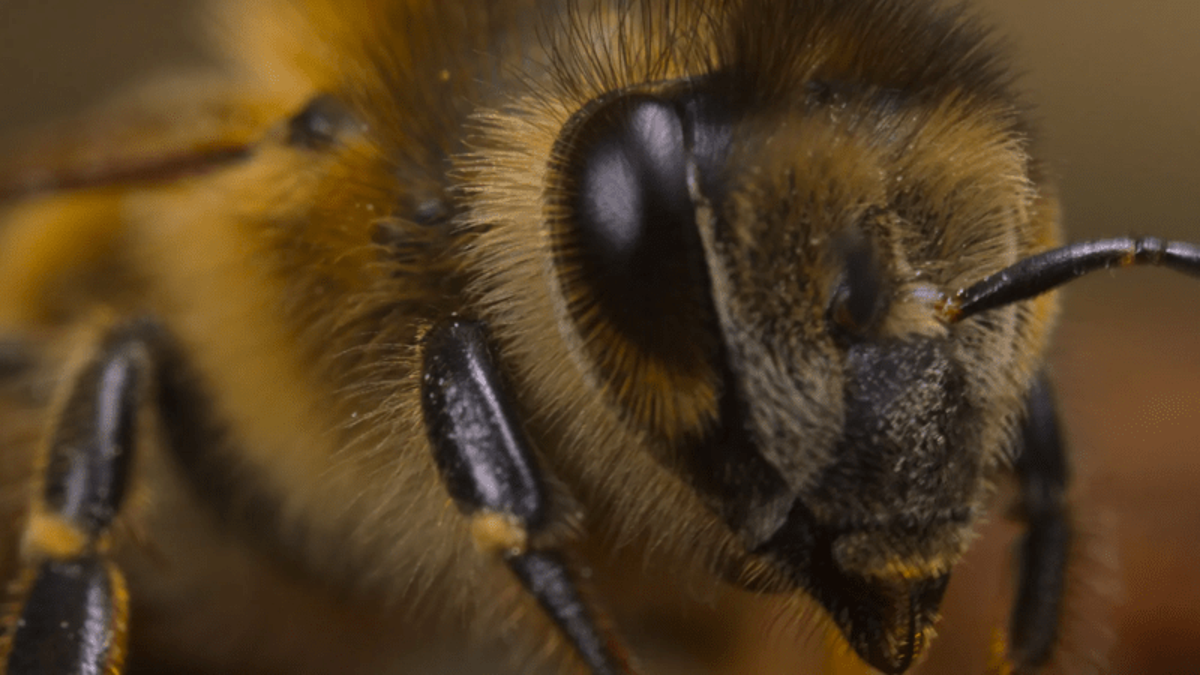
James Cameron is best known for blockbuster filmmaking, but his latest project turns the same technical ambition toward the inside of a beehive. The director is also a beekeeper, and a new documentary series gave him a closer look at bee behaviour than he had ever had before.
A filmmaker who is also a beekeeper
James Cameron, director of Titanic and Avatar, is among the most commercially successful filmmakers in history. Less widely known is that he is also a beekeeper: he runs an organic vegetable farm that includes roughly 300 beehives. Even so, working on a documentary about bees proved to be a revelation for him, and he has said there was a great deal about bee society he had not previously understood.
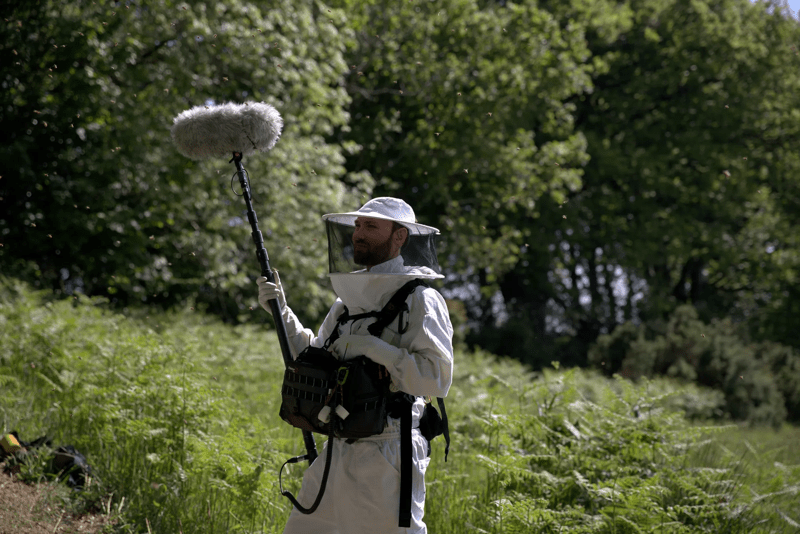
A sound operator recording the sound of bees in the field The mystery of the bees.
National Geographic/Tom Oldridge
What “Secrets of the Bees” shows
The documentary series, titled Secrets of the Bees, premiered on National Geographic and became available to stream on Disney+ and Hulu on April 1, 2026. It offers an intimate view of a colony preparing to survive the winter, surfacing inner workings that are normally invisible. Audiences see moments ranging from a close-up time-lapse of a larva metamorphosing into an adult bee to the way worker bees clear their dead by carrying them over the edge of the hive. A fuller account appears in Scientific American’s interview with Cameron.
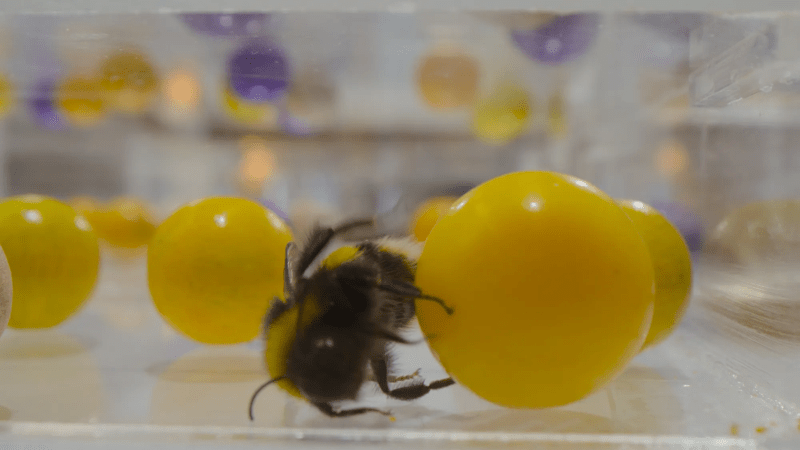
A buffalo-tailed bumblebee is moving around with wooden balls in the laboratory.
Cameron, who served as an executive producer, has described revising his assumptions about bee intelligence during the project. He had thought of bees as running relatively simple, automatic routines, but the footage revealed individuals that can learn and carry out specific tasks.
Bees that learn, cooperate, and differ
Scientists, farmers, and other experts help guide viewers through the behaviour on screen. The series highlights evidence that bees are highly cooperative — working together to solve puzzles in experiments and mounting coordinated displays to deter predators in the wild — and that individuals of the same species can show markedly different temperaments. Samuel Ramsey, an entomologist at the University of Colorado Boulder, served as a science advisor and producer on the series.
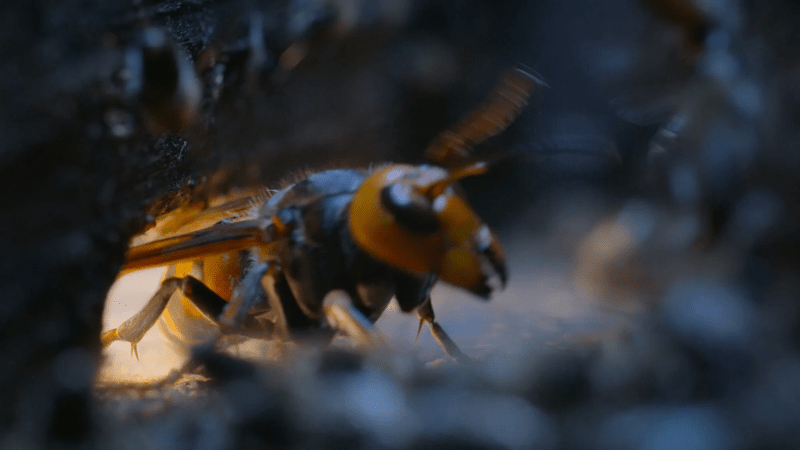
An Asian giant hornet manages to enter the hive of an Asian honey bee.
The technical challenge of filming bees
Capturing such behaviour required working around the limits of camera technology. Because bees are so small, a zoomed-in lens yields a very shallow depth of field, so the team had to balance the fine detail they wanted from each insect against keeping enough of the frame in focus, all without disturbing the colony. Specialist high-magnification lenses helped, but as one of the cinematographers noted, camera technology has advanced markedly over the past decade while the underlying physics has not. Custom rigs were designed to bring out and clearly record specific behaviours during filming.
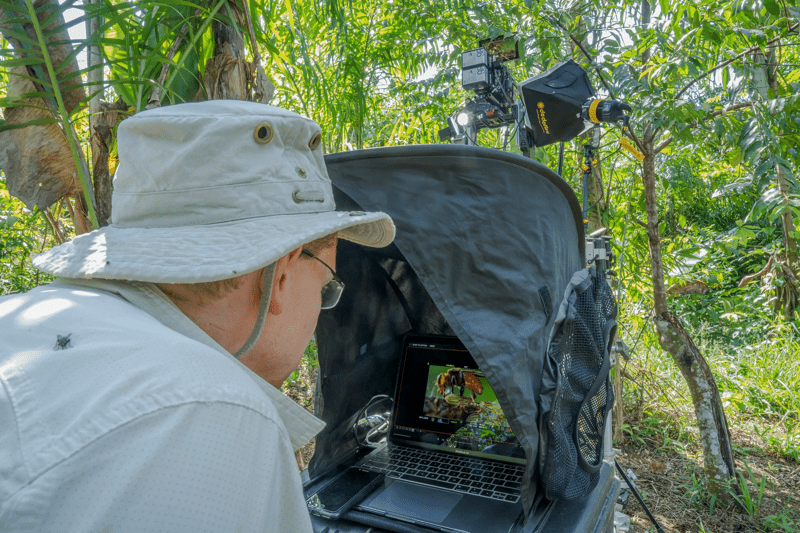
Brown shooting a scene of a fire bee (Oxytrigona tatayara) in a field The mystery of the bees.
National Geographic/Javier Aznar Gonzalez de Rueda
Why it matters
Beyond the spectacle, the series reframes bees as far more than pollinators — as social animals capable of learning, problem-solving, and cooperation. For a director long associated with technically ambitious filmmaking, the project pairs that craft with a personal interest in beekeeping, using new imaging techniques to document hive life in unusual detail.
