
AI-generated article. This article was researched and drafted using AI tools and published automatically, and its featured image was generated by AI. Facts are drawn from the sources cited in the text.
Most owners hear the word “agent” and picture the same thing: software that quietly does the work while they get on with the day. AI agents for small business are finally starting to deliver on that promise in 2026, but the specifics are where the money and the risk actually sit.
Over the past few months the big labs have stopped pretending their agents are the same product. They have made genuinely different bets about where an agent should live. Understanding that split is the difference between handing a task to something useful and handing your files to something you did not mean to.
Two places an agent can live
The clearest way to think about it, described in a 2026 comparison from Digital Applied, is that Anthropic, OpenAI and Google each made a different architectural wager: portable tool use, desktop-native background agents, and browser-anchored automation.
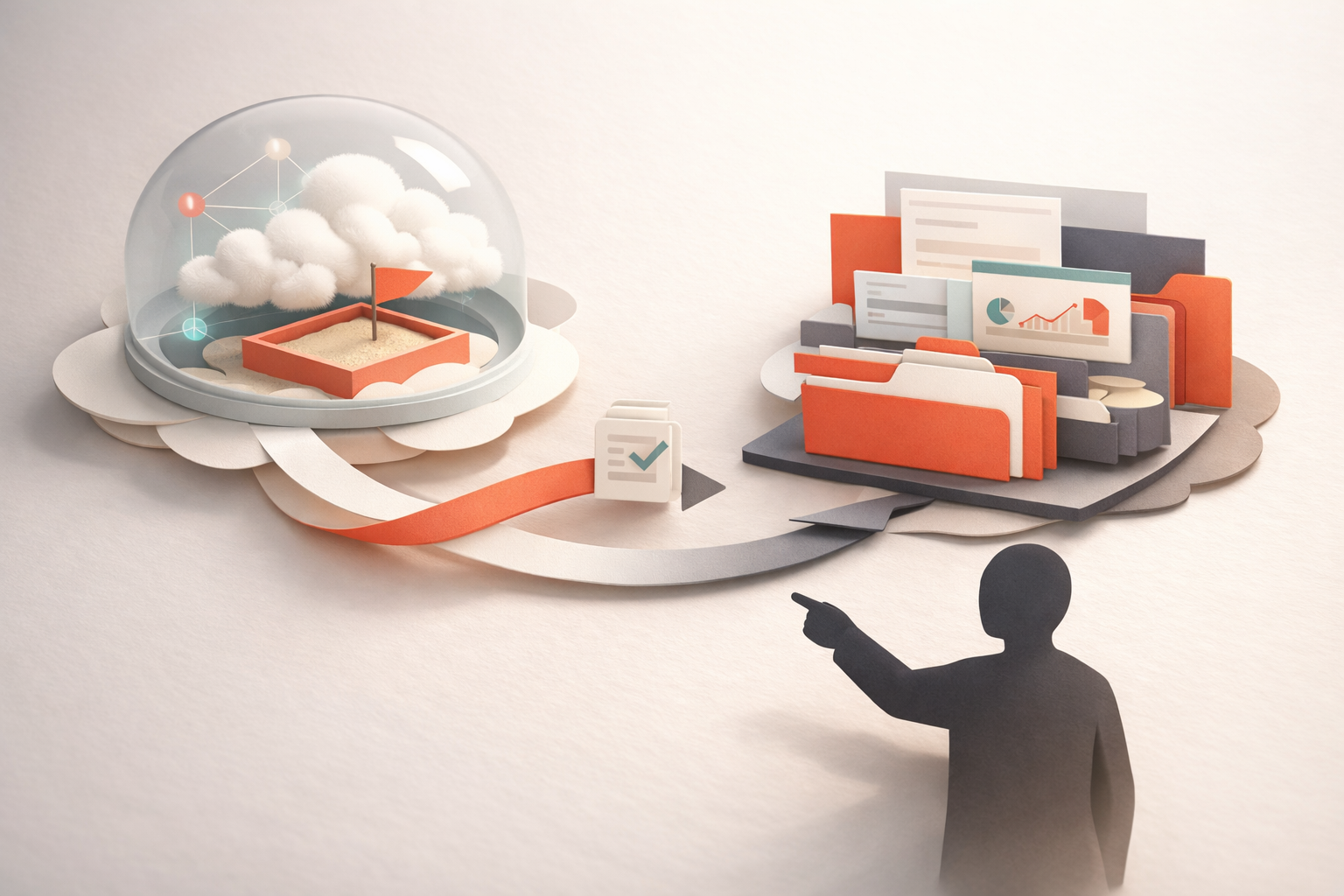
In plainer terms, there are two camps. A cloud agent spins up its own computer somewhere on a server. OpenAI’s ChatGPT agent, as the company describes it, launches a fresh cloud machine with its own browser and terminal, and it never sees your local files unless you upload them or connect a service. A desktop agent works the other way. Anthropic’s Claude, running its computer-use setup, drives apps and reads local folders on your own machine once you give it permission.
Neither is better in the abstract. Manus, in its own roundup of desktop agents, and Macaron, comparing Claude’s desktop tool with ChatGPT’s, land on the same practical rule: use the cloud agent when the work lives on the web and can run in a self-contained sandbox, and use the desktop agent when the work lives on your own computer and files.
Why the difference is a business decision, not a tech one
Here is where it stops being trivia. A cloud agent that cannot see your machine is safer by design, because there is less for it to touch. It can also run in parallel, while your laptop is closed, which is one reason persistent, cloud-run agents are being called the fastest-moving category of the year. The trade is that it only knows what you hand it.
A desktop agent is the opposite trade. It sees your real spreadsheets, your invoicing app, your folders, which is exactly what makes it useful and exactly what makes one confident mistake expensive. The same stretch of 2026 that brought sharp price drops on models like GPT-5.6 and Claude Opus 5 also brought a warning: these tools now reach into the parts of a business where a single wrong move can cost money, delete data, or send someone chasing the wrong answer for hours. That reach is also why where your customer data actually goes deserves a second look before an agent is let loose on it.
Both things are true at once. The tools are more capable and cheaper than they have ever been. They are also reaching deeper into the places where errors hurt. Naming both is not pessimism. It is how you decide what to let an agent near.
What AI agents for small business are allowed to touch
The more useful question is not “Claude or ChatGPT.” It is what a task is allowed to touch, and what happens if it gets it wrong. A task that reads public web pages and drafts a summary belongs in a cloud sandbox, where a mistake is cheap. A task that edits live financial records belongs nowhere near an unattended agent, on any platform, until a person has watched it do the safe version first. The same caution applies when an agent offers to run errands straight from your browser.
This is ordinary project thinking applied to software that acts on its own. Scope the task. Decide the blast radius. Keep a human on the steps that are hard to undo.
One small step this week
There is no need to pick a platform or rewire anything. Pick one task that is genuinely low-stakes, something like turning a folder of notes into a first-draft summary, or pulling details off a few public web pages. Run it once, watch what the agent actually does, and see whether the output saves real time. Starting there puts an owner well ahead of the ones still reading about agents without having watched one work. Every small tweak like this is progress.
The agents are not going to stop getting cheaper or more capable. The open question is quieter and more human: as the software gets easier to trust, how will a business decide which parts of itself it is still not willing to hand over?
