
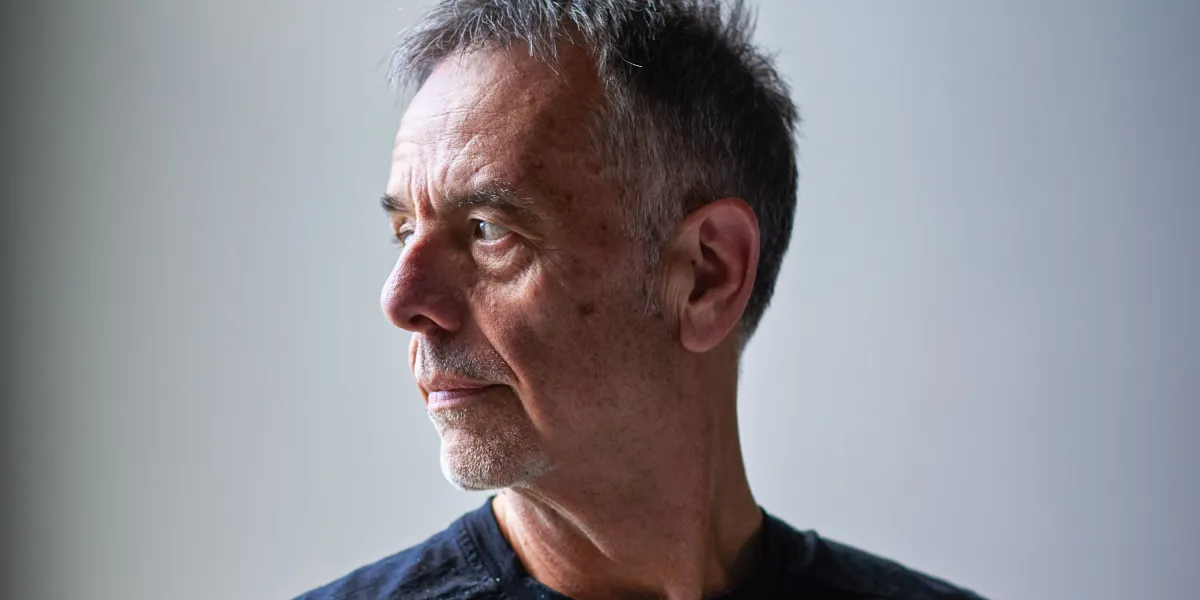
In April 2025, Ronald Deibert left all electronic devices at home in Toronto and boarded a plane. When he landed in Illinois, he took a taxi to a mall and headed straight to the Apple Store to buy a new laptop and iPhone. He wanted to minimize the risk of his personal devices being confiscated, as he knew his work made him a prime target of surveillance. “I’m traveling under the impression that I’m being monitored, exactly where I am at any given time,” Deibert says.
Deibert directs the Citizen Lab, a research center he founded in 2001 as “counterintelligence for civil society.” Based at the University of Toronto, the laboratory operates independently from governments or corporate interests, relying instead on research grants and private philanthropy for financial support. It is one of the few institutions that exclusively investigates cyber threats in the public interest, and in doing so, it has exposed some of the most serious digital abuses of the last two decades.
For many years, Deibert and his colleagues have held up America as the standard for liberal democracy. But this is changing, he says: “The pillars of democracy are under attack in the United States. For many decades, despite its flaws, it has upheld the norms of what constitutional democracy looks like or should aspire to. (That) is now under threat.”
Even though some of her fellow Canadians avoided U.S. travel following Donald Trump’s second election, Deibert enjoyed the opportunity to travel. As well as his meetings with human rights defenders, he also documented active surveillance during the height of student protests at Columbia University. Deibert took drone photos over the campus and noted exceptionally strict security protocols. “It was unconventional to move to the United States,” he says, “but I’m really attracted to world problems.”
Deibert, 61, grew up in East Vancouver, British Columbia, a gritty area with a fiercely countercultural presence. In the ’70s, Vancouver was full of draft dodgers and hippies, but Deibert points to American investigative journalism – the COINTELPRO surveillance program, the Pentagon Papers, exposing Watergate – as the seeds of his respect for anti-establishment sentiment. However, he never imagined that this fascination would turn into a career.
He says, “I had very little exposure because I came from a working-class family, and there weren’t many people in my family – in fact, no one – who had gone to university.”
Deibert eventually entered the graduate program in international relations at the University of British Columbia. His doctoral research brought him into an area of inquiry that would soon explode: the geopolitical implications of the budding Internet.
“In my area, a handful of people were starting to talk about the Internet, but it was very superficial and that disappointed me,” he says. “And meanwhile, computer science was very technical, but not political—(politics) was almost like a dirty word.”
Deibert continued to explore these topics at the University of Toronto when he was appointed to a tenure-track professorship, but it was only after he founded the Citizen Lab in 2001 that his work reached global prominence.
Deibert says what put the lab on the map was its 2009 report “Tracking Ghostnet,” which revealed a digital espionage network in China that broke into the offices of foreign embassies and diplomats in more than 100 countries, including the office of the Dalai Lama. The report and its follow-up in 2010 were among the first reports to publicly expose cyber surveillance in real time. In the years since, the Lab has published more than 180 such analyses, which have received praise from human rights advocates ranging from Margaret Atwood to Edward Snowden.
The lab has rigorously examined authoritarian regimes around the world (Deibert says both Russia and China have their names on the “list” except for their entries). The group was the first to expose the use of commercial spyware to monitor people close to Saudi dissidents Washington Post Before the murder of journalist Jamal Khashoggi, and its research directly informed G7 and UN resolutions on digital repression and sanctions on spyware vendors. Nevertheless, in 2025 U.S. Immigration and Customs Enforcement reactivated a $2 million contract with spyware vendor Paragon. The contract, which the Biden administration had previously placed under a work stoppage order, resembles steps taken by governments in Europe and Israel, which have also deployed domestic spyware to address security concerns.
“It literally saves lives,” Cindy Cohn, executive director of the Electronic Frontier Foundation, says of the lab’s work. “Citizen Lab (researchers) were the first to focus on technological attacks on human rights activists and democracy activists around the world. And they’re still the best at it.”
When recruiting new Citizen Lab employees (or “Laborers,” as they refer to each other), Deibert eschews stuffy, pencil-pushing academics in favor of brilliant, colorful personalities, many of whom have personally experienced repression from some of the same regimes the Lab is now investigating.
Noura Aljizawi, a researcher on digital repression who survived torture at the hands of the al-Assad regime in Syria, has researched the specific danger that digital technologies pose to women and gay people, especially when used against exiled civilians. he helped create security plannerA tool that gives personalized, expert-reviewed guidance to people looking to improve their digital hygiene, for which the University of Toronto honored them with an Excellence in Innovation Award.
Working for a lab is not without risks. For example, Citizen Lab fellow Elise Campão was followed and photographed after the Lab published a 2022 report that revealed digital surveillance of dozens of Catalonian citizens and members of parliament, including four Catalonian presidents who were targeted during or after their terms in office.
Still, the lab’s reputation and mission make recruitment fairly easy, Deibert says. “This good work attracts a certain kind of person,” he says. “But they’re also generally attracted to spies. This is detective work, and it can be highly intoxicating – even addictive.”
Deibert repeatedly draws attention to his fellow laborers. He rarely discusses the group’s accomplishments without referencing other staff as well as two senior researchers, Bill Marczak and John Scott-Railton. And on the occasion when someone decides to leave Citizen Lab for another position, this appreciation continues.
“We have a saying: Once a Laborer, always a Laborer,” Deibert says.
While in the US, Deibert taught a seminar on the work of Citizen Lab to graduate students at Northwestern University and gave a talk on digital totalitarianism at the Columbia University Graduate School of Journalism. Universities in the US have faced funding cuts and increased scrutiny from the Trump administration, and Deibert wanted to stay “in the mix” at institutions that he sees as encroaching authoritarian practices by the US government.
Since Deibert’s return to Canada, the Lab has continued its work to explore digital threats to civil society around the world, but now Deibert must also take on the US – a country that was once his benchmark for democracy but has now become yet another subject of his investigation. “I don’t believe an organization like Citizen Lab could exist in the United States right now,” he says. “The type of research we’ve pioneered is at risk like never before.”
He is particularly concerned about the increasing pressure on federal oversight bodies and educational institutions in the US. For example, in September, the Trump administration disbanded the Council of Inspectors General on Integrity and Efficiency, a government organization dedicated to preventing waste, fraud and abuse within federal agencies, citing partisan concerns. The White House has also threatened to withhold federal funding to universities that do not follow administration directives related to gender, DEI, and campus speech. Deibert says these types of actions undermine the independence of watchdogs and research groups like Citizen Lab.
EFF director Cohn says the laboratory’s location in Canada allows it to avoid many of these attacks on institutions that provide accountability. “Having Citizen Lab based in Toronto and being able to continue our work largely free from what we’re seeing in the U.S. could be extremely important if we’re going to return to a place of rule of law and protection of human rights and freedoms,” she says.
Finian Hazen is a journalism and political science student at Northwestern University.
