
Why does Venezuela have so much oil? Geology
Trump cites Venezuela’s oil resources as motivation for capturing the country’s leader – here’s the geology behind the news

President Donald Trump’s push to take control of Venezuelan oil has focused global attention on the South American nation’s vast reserves.
Trump has repeatedly cited Venezuela’s rich oil supplies as a motivation for the Jan. 2 military assault on the country and the capture of its leader Nicolas Maduro, who has since been charged with drug trafficking and weapons possession.
But how much oil does Venezuela have and why?
On supporting science journalism
If you enjoyed this article, consider supporting our award-winning journalism Subscribing By purchasing a subscription, you are helping ensure a future of impactful stories about the discoveries and ideas shaping our world today.
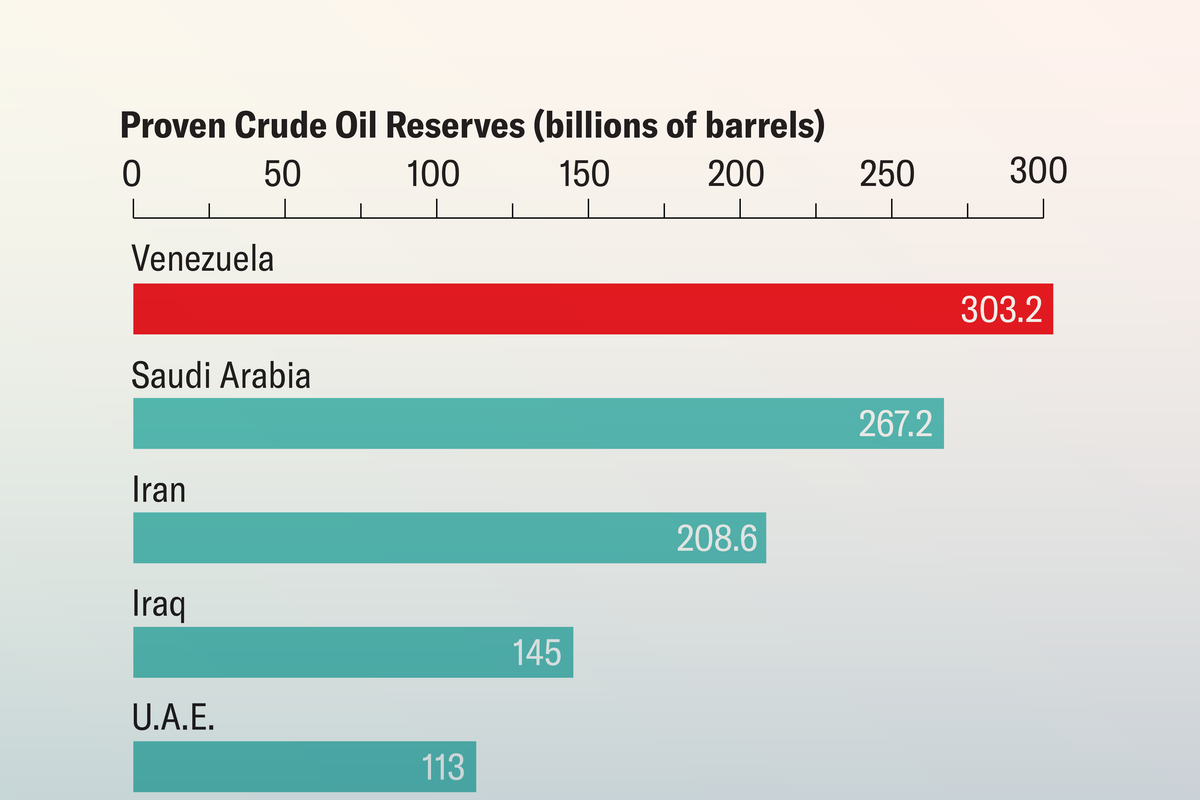
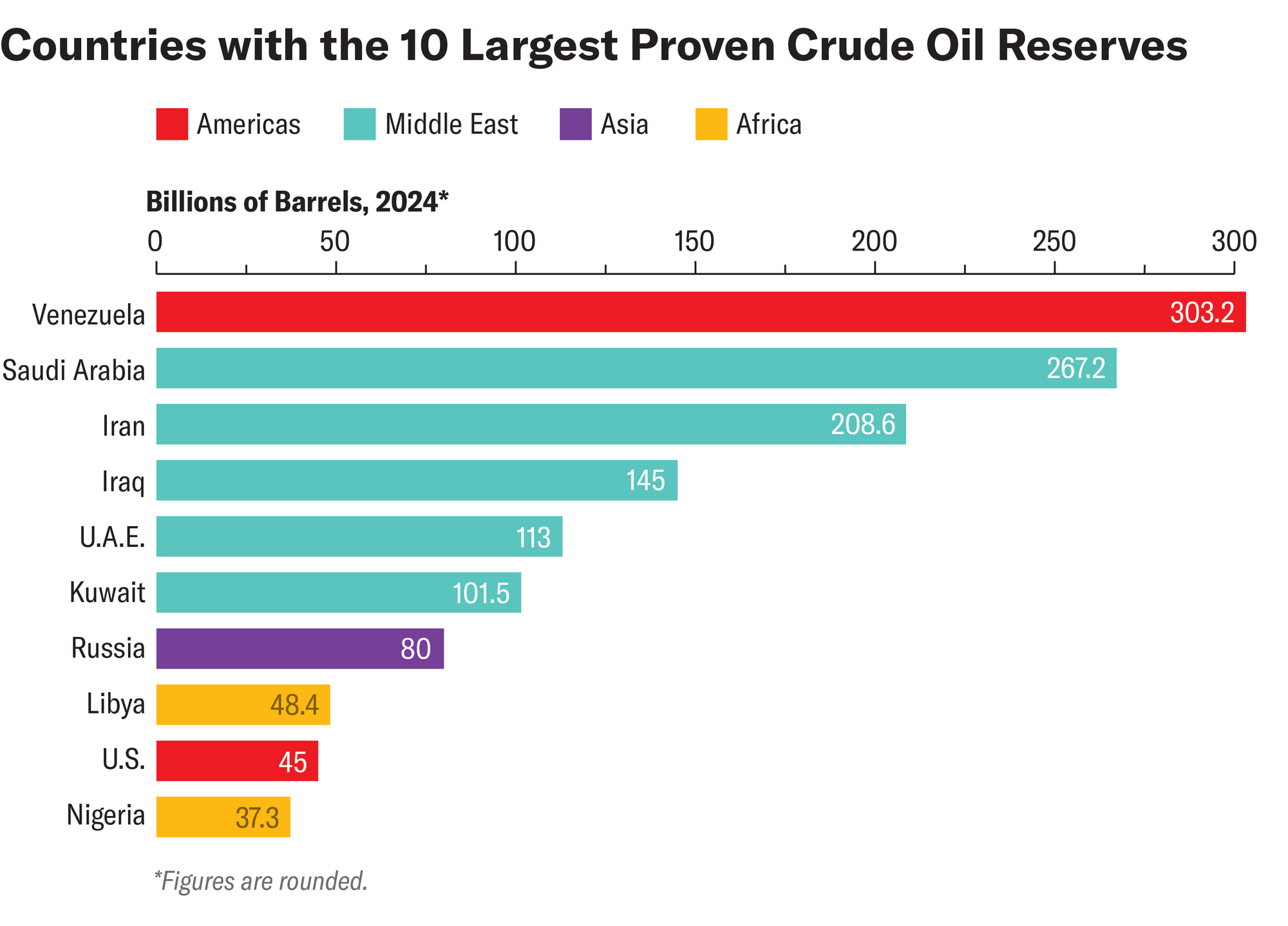
The country claimed proven crude oil reserves of over 300 billion barrels in 2024, the highest of any country. Saudi Arabia was the runner-up with more than 260 billion barrels, and Iran was second with more than 200 billion barrels. The global total was 1,566 billion barrels.
And the huge reserves are no coincidence. Geology is in Venezuela’s favor, says Luis Zerpa, a petroleum engineer at the Colorado School of Mines. “Geologically, its location is perfect,” he says, and like all fossil fuels, the country’s oil owes its existence to deep time and the planet’s dynamic surface.
Zerpa says the oil story begins when land in an area is pushed up, creating a low-lying basin nearby. Rock from the higher elevations is eroded into the basin, which is also filled with organic remains of plants and animals. Over millions of years, enough material accumulates above to raise the temperature and pressure to such an extent that the sediment turns into rock and the organic matter becomes oil and gas.
The balance of oil and gas depends on two factors. The first is how much rock forms above the material. The so-called oil window occurs at depths anywhere between 4,000 and 12,000 feet; Below this, organic matter is more likely to convert into gas. The second factor is the origin of the organic matter itself – marine plants are more likely to form oils, while terrestrial plants are more likely to form gases.
As oil and gas are formed and as tectonic plates move, the rocks around these deposits begin to break down. This frees the hydrocarbons from the source rock in which they were formed and enables them to move into more porous rock which then traps them in place.
Venezuela sits between the Caribbean and South American plates. And the Nazca Plate, which lies beneath the eastern Pacific Ocean, also shapes the region’s tectonic landscape. The shaking of all those plates lifted up the northern Andes and other highlands in the region – while simultaneously creating three sedimentary basins that have produced oil and gas: the Eastern Venezuela Basin in the north, the Maracaibo Basin in the northwest, and the Barinas-Apure Basin in the west.
Therefore, Venezuela’s proven crude oil reserves of over 300 billion barrels were formed. Here, “proven” means that engineers have drilled enough wells to accurately estimate the extent of oil and gas reserves in the country’s territory.
Getting that oil is a different matter. Fossil fuel production in Venezuela peaked at about 3.7 million barrels per day around 1970, before beginning a rapid decline in the late 1970s and continuing to decline through the 1980s. It improved here and there between the mid-1990s and early 2010s. But in 2025, the country produced only about 1.1 million barrels per day. analysts expect Reuters has reported that any political change in the wake of Maduro’s capture and arrest will barely increase that production for at least the next two years: aging infrastructure has severely hampered production, and it will take billions of dollars of investment and many years to fix.
It’s time to stand up for science
If you enjoyed this article, I would like to ask for your support. scientific American He has served as an advocate for science and industry for 180 years, and right now may be the most important moment in that two-century history.
i have been one scientific American I’ve been a member since I was 12, and it’s helped shape the way I see the world. Science Always educates and delights me, and inspires a sense of awe for our vast, beautiful universe. I hope it does the same for you.
if you agree scientific AmericanYou help ensure that our coverage focuses on meaningful research and discovery; We have the resources to report on decisions that put laboratories across America at risk; And that we support both emerging and working scientists at a time when the value of science is too often recognised.
In return, you get the news you need, Captivating podcasts, great infographics, Don’t miss the newsletter, be sure to watch the video, Challenging games, and the best writing and reporting from the world of science. you can even Gift a membership to someone.
There has never been a more important time for us to stand up and show why science matters. I hope you will support us in that mission.
