
Diageo’s new chief executive, Sir Dave Lewis, has cut the drinks group’s dividend and signalled that he is prepared to lower prices to win back shoppers, a marked shift from the spirits maker’s long-standing focus on premium brands.
Alongside its interim results, the FTSE 100 company reduced its dividend from 103.5 cents a share to a minimum of 50 cents, with the interim payout roughly halved. Lewis, the former Tesco boss who took over in January 2026, described it as a difficult decision intended to give the company the financial flexibility to invest, pay down debt, and become more competitive. In his first detailed public comments since taking charge, he was blunt about the company’s shortcomings, criticising what he called very poor customer service and signalling more investment behind mass-market brands such as Smirnoff vodka and Captain Morgan rum, where he argued Diageo had become under-represented and had lost market share as consumers’ budgets tightened.
Sales under pressure in the US and China
The results laid bare the pressures facing the business. Reported net sales fell by about 4 percent, to roughly $10.5 billion, in the second half of 2025, with particular weakness in the United States, Diageo’s largest market, and in China. The company guided to a further organic sales decline for the full year, a downgrade from its earlier expectation of broadly flat sales, and its shares fell sharply on the day of the announcement. China was a notable drag, with consumer sentiment and the local baijiu market hit by government restrictions, while softer spending weighed on US volumes.
Guinness a rare bright spot
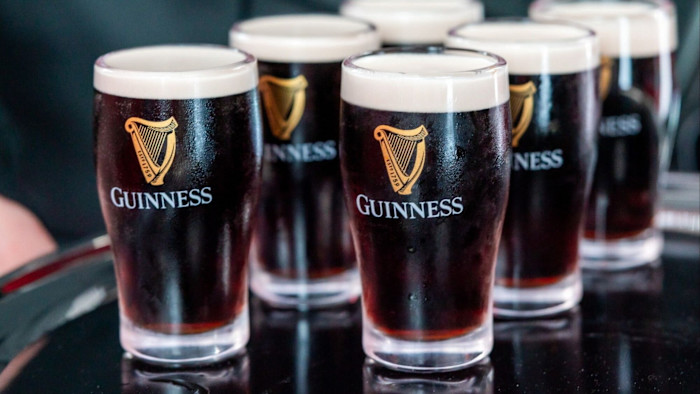
Not everything was negative. Guinness continued to outperform, with organic sales up about 10.9 percent in the half, making it one of the group’s fastest-growing brands. Lewis framed the difficulty of meeting demand as both a regret and an opportunity, pointing to capacity constraints, and said he would consider selling the brand only if appropriate and not cheaply. Interim operating profit slipped modestly, which the company attributed in part to US tariffs.
A turnaround job
Lewis arrives after a turbulent stretch for Diageo. His predecessor, Debra Crew, departed in 2025 following a period of investor unease and repeated guidance cuts. Known during his Tesco years for a cost-cutting reputation, Lewis now faces the task of reducing debt, reviving growth, and adapting to shifting drinking habits, all while navigating tariff uncertainty and weak demand in two of the company’s most important markets. The dividend cut and the pivot toward value and volume mark a clear break from the premium-led strategy of recent years.
What it signals for the sector
Diageo’s reset reflects a wider challenge across the drinks industry, where premiumisation, the strategy of selling pricier products to grow revenue without selling more volume, has run into tighter household budgets and changing tastes, including moderating alcohol consumption among some younger consumers. Cutting a dividend is a step that large, income-focused companies avoid unless they see no easy alternative, so the move reads as an acknowledgement that Diageo needs to rebuild from a more competitive price position rather than rely on its luxury image. For investors, the immediate cost is a smaller payout; the wager is that reinvestment and sharper pricing eventually return the business to growth. The strategy will take several quarters to judge.
