
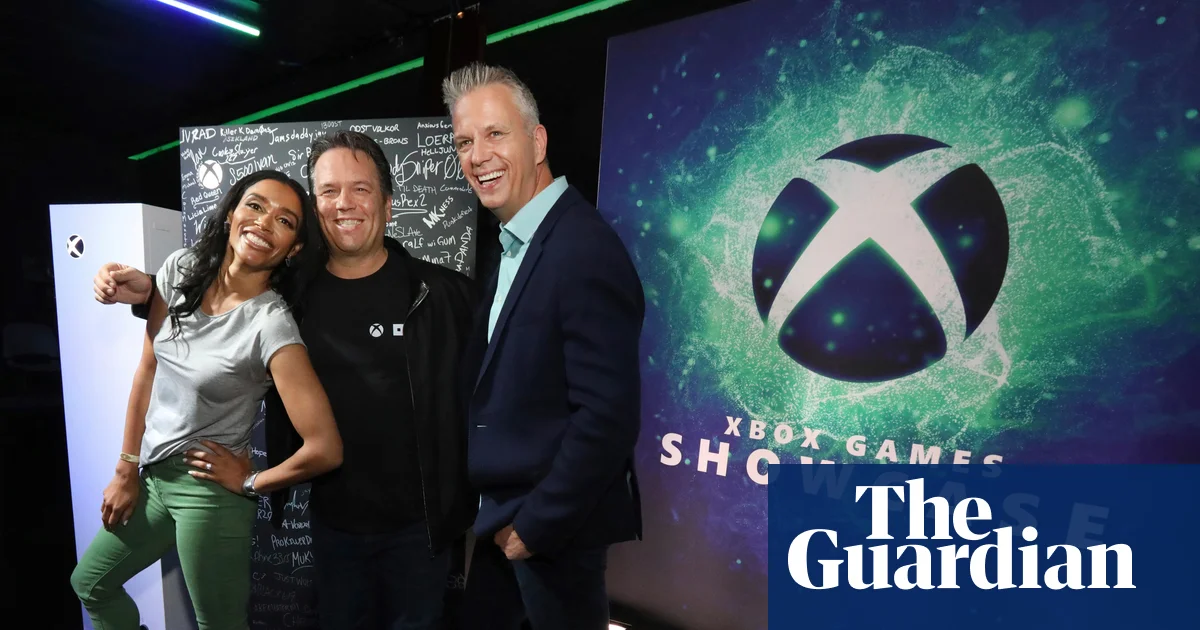
Microsoft has reshaped the leadership of its gaming business, and the change says as much about where the company is heading as about who is in charge. In February 2026, Microsoft announced that Phil Spencer, the CEO of Microsoft Gaming and the public face of Xbox for more than a decade, is retiring after 38 years at the company. Xbox president Sarah Bond, long seen as his likely successor, is also leaving. In their place, Microsoft promoted Xbox Game Studios head Matt Booty to executive vice president and chief content officer, overseeing the company’s roughly 40 studios, and named Asha Sharma, previously head of Microsoft’s CoreAI product group, as the new CEO of the gaming division.
The public messaging was warm. Spencer said he would stay on as an adviser into the summer before starting the next chapter of his life, and Bond framed her exit as the right moment for a personal and professional step. But the symbolism of the handover is hard to miss. For 25 years Xbox has been a fixture of the games industry, challenging PlayStation on hardware and, more recently, betting heavily on the Game Pass subscription and cross-platform play. Handing the division to an executive whose most recent role was running an AI product group signals that Microsoft is thinking about games less as a standalone business and more as one piece of a much larger corporate strategy.
An AI executive at the helm
Sharma’s background is the detail drawing the most attention. Her move from the CoreAI group to gaming has prompted concern among developers that the appointment is primarily about cost control and artificial intelligence, raising the prospect of further studio layoffs and of machine-generated content displacing human work. In a message to employees she reportedly sought to reassure staff that the division would not chase short-term efficiency or fill its games with low-quality, machine-generated content, and that it would protect the creative culture that built the brand. Whether those assurances hold will be one of the clearest tests of the new leadership.
The unease is not abstract. The games industry has endured a brutal stretch of layoffs and studio closures, and the wider debate over generative AI in creative work has only sharpened it. The question many developers are asking is whether AI-first leadership will treat the technology as a way to support creators or as a way to replace them, a tension that runs through the whole future-of-work conversation and is already visible in AI-assisted creative tools.
A business in search of direction
The leadership change lands at an awkward moment for Xbox. Hardware sales have fallen significantly in recent years, while the ambition of a dominant cross-platform subscription service has yet to fully materialise. At the same time, Microsoft, bolstered by its acquisition of Activision Blizzard, now ranks among the world’s largest game publishers by revenue. The result is a business that is simultaneously enormous and unsure of its next move: a top-tier publisher without a clear story about what the Xbox brand is for in a market it no longer leads on hardware.
Industry analysts read the appointment of an AI-focused leader as a sign that Microsoft wants Xbox to serve its broader ambitions rather than simply be funded by the rest of the company. That may be sound corporate logic, but it carries a creative risk: the big, strange, expensive bets that produced hits such as Minecraft and Sea of Thieves are exactly the kind of projects that look hard to justify when efficiency is the priority. Games are a hit-driven business, and hits rarely come from playing it safe.
Why it matters to players
For people who simply play games, the takeaway is that the values of the people at the top tend to shape what gets made. Leadership that prizes experimentation will greenlight odd, ambitious projects; leadership focused on margins and platform strategy may favour safer, more monetisable experiences. Microsoft’s decision to put a technology-and-AI executive in charge of Xbox is a bet that the future of gaming is bound up with the company’s wider platform and AI strategy. The coming slate of games, and how many studios survive to make them, will show whether that bet pays off for players as well as for shareholders.
What to watch
Several markers will reveal the direction of travel: whether Microsoft continues to cut studios and roles or stabilises its workforce; how aggressively generative AI is woven into development and into the games themselves; whether the company keeps funding original, risky titles alongside established franchises; and how it positions Game Pass and cross-platform releases as console hardware becomes less central. None of these will be settled quickly, but together they will define what Xbox becomes under its new leadership. As with much of the industry, this is ultimately a story about resources, priorities, and the perennial question of whether creative ambition can survive contact with corporate efficiency.
