
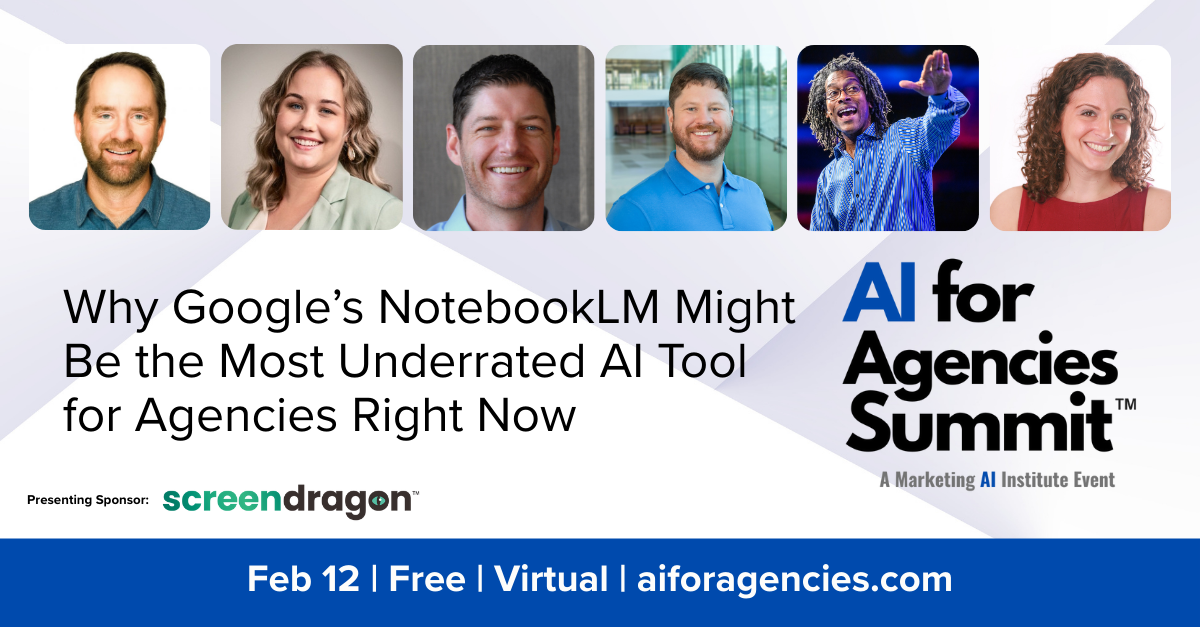
NotebookLM for agencies is an easy pitch to overlook amid the constant churn of new AI models and features. Yet Google’s source-grounded research assistant quietly addresses one of the biggest problems agencies face with generic AI tools: getting accurate, reliable answers from their own client information rather than from the open internet.
The real problem with most AI tools in agency work
Most generative AI tools are trained on large volumes of public data. Ask them a question and they draw on that general knowledge — which produces hallucinations rooted in vague internet information and generic responses that need heavy rewriting before a client can see them. For agencies this is more than an annoyance; it is a risk. Client work depends on brand guidelines, research and strategy documents, transcripts, briefs, reports, and the institutional knowledge that lives inside teams — exactly the material general-purpose chatbots were not built around.
What makes NotebookLM different
NotebookLM inverts the typical AI workflow. Instead of asking a model to reason from the internet, users upload their own sources — client documents, research reports, strategy decks, interview transcripts, brand guidelines, internal playbooks — and the tool works exclusively from that content, citing the specific passages behind each answer. The result is fast synthesis of the information that actually matters to the agency and its clients, with no filler from random web data.
The feature set has expanded steadily. Audio Overviews turn sources into podcast-style discussions in multiple formats and dozens of languages, and the newer Video Overviews generate narrated, animated explainers built from uploaded material — formats agencies can use both internally and, with care, in client deliverables. A free tier makes experimentation low-risk, with paid plans raising source and usage limits.
Seven agency use cases
At the AI for Agencies Summit in February 2026, Mike Kaput, chief content officer at SmarterX and the Marketing AI Institute, presented seven concrete ways agencies can put NotebookLM to work: accelerating research into industries, clients, and markets; synthesizing complex information into usable insights faster; supporting strategy development without losing context; building internal knowledge centers teams actually use; onboarding new hires in days rather than weeks; producing consistent, brand-aligned content quickly; and extending content offerings with audio and video overviews.
The common thread is that each use case grounds AI output in the agency’s own verified material. That directly addresses the accuracy and trust concerns that make many agencies hesitant to put AI anywhere near client work.
Why it matters now
A recurring theme among agency leaders working on AI adoption is that the winners will not be the firms using the flashiest tools, but those using AI to think better, faster, and more consistently. Removing friction around information — finding it, synthesizing it, keeping it current — frees time for the high-value strategic work clients actually pay for. Source-grounded tools like NotebookLM are a pragmatic first step because they improve existing workflows without requiring teams to trust a model’s general knowledge.
Limitations and what to watch
NotebookLM is not a complete solution. Outputs are only as good as the uploaded sources, so stale or contradictory documents produce stale or contradictory answers. Source grounding greatly reduces hallucination but does not eliminate misreading, so client-facing work still needs human review. Uploading client material to a cloud service also raises confidentiality questions that agencies should check against their client agreements and Google’s data terms; organizations that need full data control may prefer a self-hosted approach such as the one described in this review of Open Notebook, an open-source NotebookLM alternative. Feature limits and plan tiers also change frequently — Google’s Workspace updates blog is the reliable place to track what is current.
