
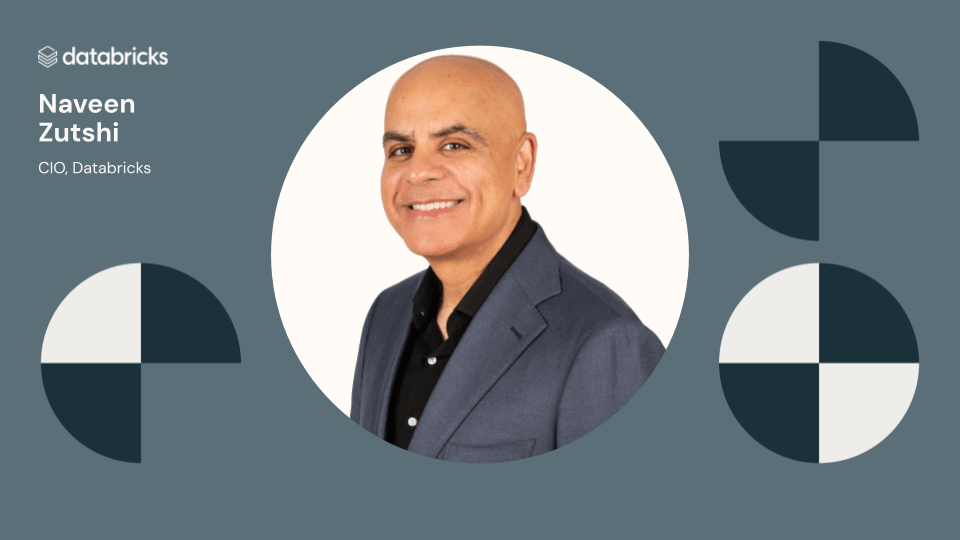
As enterprises move beyond pilots and proofs of concept, a new question is surfacing in executive conversations: when does AI stop being a series of projects and become part of how the business is actually run? In an interview published by Databricks, the company’s chief information officer, Naveen Zutshi — previously CIO at Palo Alto Networks and a senior technology leader at Gap Inc. and other large enterprises — laid out how he sees that shift unfolding. His central argument is that the inflection point is less about deploying more models and more about operational readiness.
AI Is Moving From Experiments to the P&L
According to Zutshi, a reliable sign that AI has matured inside an organization is that it appears in business KPIs rather than in isolated demos. Funding is a second signal. Where AI work once drew on discretionary or innovation budgets, it is increasingly a defined line item in the profit-and-loss statement, funded either directly by business units or centrally through the CIO or CTO organization. He notes that his own company has begun separating AI spend from general software-as-a-service spend, and expects tooling costs for AI to eventually sit alongside headcount and cloud as a major budget category. That budgetary shift, in his view, itself signals operational commitment.
The Real Obstacle: Legacy, Not Talent
Surveys of technology leaders routinely rank talent as the top barrier to AI progress, and Zutshi says he hears the same when he meets with peer CIOs. In his experience, however, the deeper root cause is legacy: accumulated legacy systems, SaaS sprawl, on-premises sprawl and architectural complexity built up over years of inaction or expedient decisions. Unwinding that complexity, he argues, does more to unlock AI than hiring alone.
Platform Decisions That Determine Whether AI Scales
Several architectural choices, in Zutshi’s framing, determine whether AI scales or stalls. A more unified, consolidated architecture simplifies management and improves security. Avoiding lock-in to a single model provider matters because frontier and specialized models are evolving quickly; an AI gateway or abstraction layer lets teams use multiple models and pick the best one for each task. He also urges treating AI as a core competency by investing heavily in observability, quality, validation and testing. Because development itself is accelerating, discipline shifts to testing — he suggests teams may spend the majority of their effort on validation and refinement rather than on building. He adds that context and persistence increasingly matter, since AI systems benefit from memory that lets them improve over time.
When Data and AI Are No Longer Separate Conversations
Zutshi cautions against keeping business executives at arm’s length from data and AI initiatives. In many companies AI strategy is led by data teams, but he frames it as a business imperative: without clean, high-quality, well-governed data, AI efforts underdeliver. Bringing business leaders into decisions about data quality and governance — especially for unstructured data — is, in his account, part of what separates programs that reach production from those that stall.
Defining Success Beyond the Hype
To judge whether AI is working, Zutshi focuses on four dimensions: capacity, effectiveness and revenue impact, quality of results, and risk reduction. For AI systems specifically, he emphasizes controllable input metrics. In a sales application, for example, he asks what share of data entry an agent now automates and how that ties to productivity, or what percentage of an agent’s recommendations are adopted and how their outcomes compare with manual approaches — comparisons that can be A/B tested. Cycle-time reductions and cost savings matter, he says, but only in the context of broader business outcomes.
A 12-Month Start, Stop, Continue
Asked what he would advise peers to start, stop and continue over a year, Zutshi’s list is direct. Stop “feeding the legacy beast,” stop treating AI governance and security as an afterthought, and avoid replacing SaaS sprawl with agent sprawl — pruning agents that are not adopted or do not deliver value. Start with a skills-based, incremental approach rather than wholesale replacement, and keep investing in data quality and governance. Above all, he argues, stay business-focused: begin with the user, the customer and the outcome, because technology alone does not create value.
The Working Inflection Point
The through-line is that the executive inflection point is about operational readiness, modern architecture, integrated governance, disciplined testing, measurable results and business alignment. AI becomes an operational capability, in Zutshi’s account, when it moves from experimentation to accountability — when it shows up in KPIs, budget lines and architectural decisions. Organizations that recognize the shift early, he suggests, will not necessarily deploy the most AI; they will be the ones structurally prepared to use it.
Limitations and What to Watch
These observations come from a single vendor executive whose company sells data and AI platforms, so the emphasis on unified architecture and heavy platform investment should be weighed against that commercial interest. The four success dimensions and input-metric approach are useful framing rather than validated benchmarks, and their relevance will vary by industry, data maturity and regulatory context. Claims that AI has “moved to the P&L” also reflect large, well-resourced enterprises; many smaller organizations are earlier in the curve, where the priority is often a few well-scoped use cases rather than enterprise-wide operating models. The durable, non-promotional takeaways — reduce legacy complexity, avoid single-model lock-in, invest in testing and governance, and tie AI to real business outcomes — hold regardless of vendor. Related reading on turning models into results includes this look at selective retrieval versus loading everything into context.
