
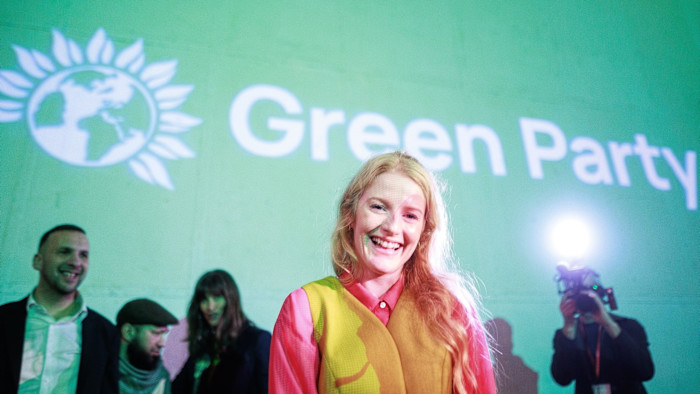
A parliamentary by-election in Greater Manchester delivered a notable result for British politics when the Green Party won Gorton and Denton, a long-standing Labour stronghold. The contest, held on 26 February 2026, was triggered by the resignation of the sitting Labour MP, Andrew Gwynne, on health grounds, and produced the Green Party’s first-ever by-election victory.
The result
Hannah Spencer, a former plumber and local councillor, won the seat for the Greens with 14,980 votes and a majority of 4,402 over Labour’s candidate, Angeliki Stogia, who received 9,364. Spencer became the first Green Member of Parliament for the North West of England. By one measure, the swing represented one of the larger Labour by-election majorities to be overturned in the post-war period, which is why the result drew attention well beyond the constituency.
Why commentators saw it as significant
By-elections are generally weak predictors of general-election outcomes, but they are often read as a snapshot of party standing. Several analysts framed the loss as a warning sign for Sir Keir Starmer’s Labour government, pointing to fragmentation on the political left and to the Greens building a more populist left-of-centre profile under new leadership. Commentary in the Financial Times and elsewhere suggested the Greens were drawing support from younger voters and from parts of Labour’s base dissatisfied with the government on issues including its stance on Gaza. The Green Party itself argued the win indicated it could compete for a substantial number of seats at a future general election.
These interpretations are contested, as such readings usually are. Supporters of the government can point to the limited predictive value of a single by-election, to local factors and turnout, and to the specific circumstances of the vacancy. The result is best understood as one data point in a fluid political picture rather than a settled verdict on the next general election.
Limitations and what to watch
A by-election held mid-term, on lower turnout and in unusual circumstances, does not map neatly onto national voting intention; historically, parties that win dramatic by-elections do not always sustain those gains. The analytical claims about why voters shifted — and what the result means for Labour’s strategy — are interpretations offered by commentators rather than established facts. The clearer, verifiable elements are the outcome itself and its place in the longer record of overturned majorities. Subsequent local and national polling will indicate whether the result reflects a durable trend or a one-off protest vote.
Details of the result are available from the by-election record and reporting by ITV News.
